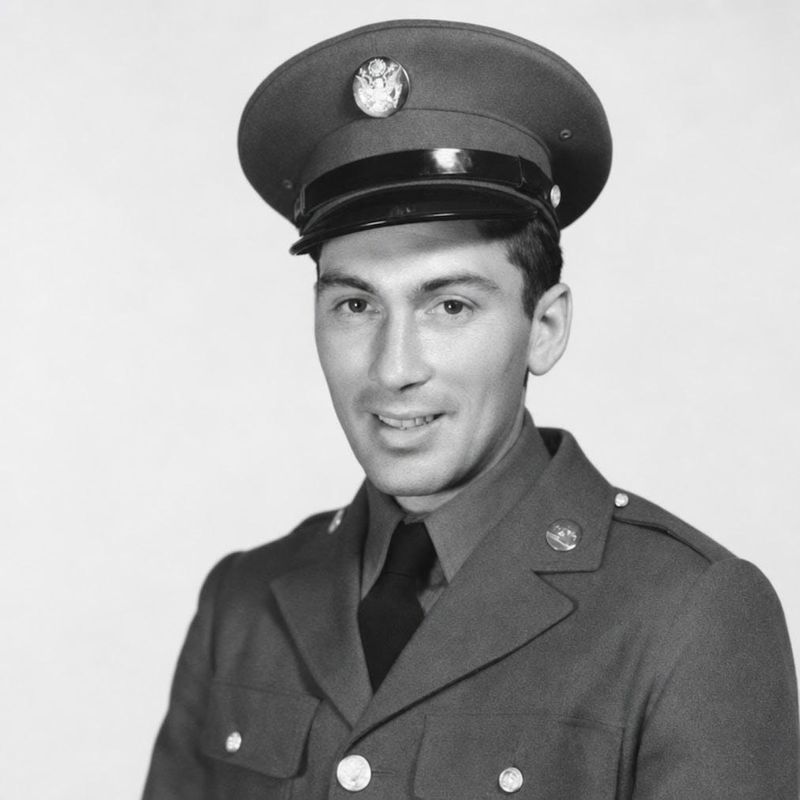
In November 1942, Pvt. Warren Decker and the rest of the 2nd Battalion of the 503rd Parachute Infantry were readying for their first combat assignment. On Nov. 2, the battalion received orders to move at once to Great Torrington, near Plymouth, England. On Nov. 7,, the 520 paratroopers loaded onto 37 planes bound for North Africa for Operation Torch. The men didn’t realize it yet, but the Army had reorganized them from the 503rd to the 509th Parachute Infantry.

At night on Nov. 8, they made their jump into North Africa. Their objective was to seize the airport at Oran. After two hours of fighting, the airport was taken. On Nov. 17, the troopers were moved to Maison Blanche Airport, near Algiers. Three days later, the 2nd Battalion was once again loaded onto planes for a jump. This time, the objective was an airstrip at Tebessa, in Algeria. Once they were on the ground, they captured the airport. For the next 21 days, they fought off repeated attacks by the Germans. According to the book “Stand in the Door” by William Campbell Jr., the 2nd Battalion suffered casualties of 11 dead and many wounded before reinforcements arrived to relieve them.
The next job given to the 2nd Battalion was to cut off German Gen. Erwin Rommel’s retreat. To do this, they needed to destroy the El Djem Bridge. The Air Corps had tried to destroy the bridge, but it was unsuccessful. The bridge spanned a dry riverbed. It was 50-60 feet high and supported by six stone supports that were 20 feet thick at their base. Since the Air Corps couldn’t bomb it, a plan was devised for the 2nd Battalion to blow it up. The plan called for 33 volunteers to be dropped 75 miles behind the German lines. They would then travel to the bridge and blow it up. Once that was accomplished, they would travel to a designated spot and use their radio to call for a pickup. That was the original plan, but over the next few days, it changed.
The first change was that there would be no air evacuation after the bridge was destroyed; instead, the men would have to make their way back to American lines on foot. Now, the mission was viewed as a suicide mission. The battalion commander didn’t think the bridge was worth the loss of his men being sent on a one-way ride. He couldn’t cancel the mission, but he could pick who went, so he chose some who were considered to be “least missed” or “most easily replaced.” One sergeant took the place of a lieutenant and a corporal. The radioman was no longer needed, so he didn’t have to go, and the original mission leader was replaced by a lieutenant who had just arrived from the U.S. This changed the number of men for the mission to 31.
On Dec. 26, the 31 men, including Warren Decker, met for their final briefing. It was at this point that the men learned they would have to walk back. They were then fed a “deluxe Air Corps breakfast.” Campbell wrote, “Remarks about a last meal for the condemned were subdued – it was not funny.”
Doug Stout is the local history coordinator for the Licking County Library. You may contact him at 740-349-5571 or dstout@lickingcountylibrary.org.
This article originally appeared on Newark Advocate: Newark paratrooper faced a WWII suicide mission in North Africa | History
Reporting by Doug Stout, Guest columnist / Newark Advocate
USA TODAY Network via Reuters Connect
By Doug Stout, Guest columnist | USA TODAY Network