Lake Erie, enfeebled compared with its vigorous distant past but far from the dead water it was 60 years ago, offers riddles without clear solutions.
Its messages – positive and negative, major and minor – aren’t especially coherent. Nobody can cipher them all.

Humbling though it is to acknowledge, human perception is not unlimited in scope. To be human is to be restricted like the blind men of verse who, based on what they touched, each imagined an elephant to be something other than an elephant.
When people touch Lake Erie or are touched by it, they experience a part, but not the historical whole. In short, it’s insufficient to conclude the lake is thriving because it produces so many millions of walleyes that catching them most days is easy.
THE GREAT OUTDOORS: More on Ohio hunting and fishing
Likewise, reports that midge and mayfly hatches cover the spring lakeshore with a blanket of chitinous bodies offer evidence, but not proof, that the lake no longer requires continual care.
True, the fact that smallmouth fishing is good, that saugers and lake sturgeon seem to be on their way back, that charter-boat fishing businesses are doing well, that boaters have been given numerous festive ports of call, that there’s plenty on the water to do, and that not one river has caught fire for years offer grounds for positivity.
Nonetheless, not all of the lake’s signals point to a wholesome future.
Fishery biologists have yet to unravel the mystery of the shrinking yellow perch population, particularly east of Huron, where the lake gets deeper and the perch fishing once got hotter in late summer and early fall. Anglers from all parts of Ohio took to perch fishing in central basin water during prime years.
Whether the result of predation, of a string of ill-fated hatches imposed by weather, of dead zones sucked free of oxygen by decomposing algae or of something else entirely, yellow perch currently are losing the game of biological chess.
Yellow perch also face strong competition from species brought recklessly from elsewhere.
Invasive species take up resources that were formerly the exclusive sphere of native fish. On top of this, some of the mussels released in ship ballast feed on healthy microfauna and spit the unhealthy back into the water.
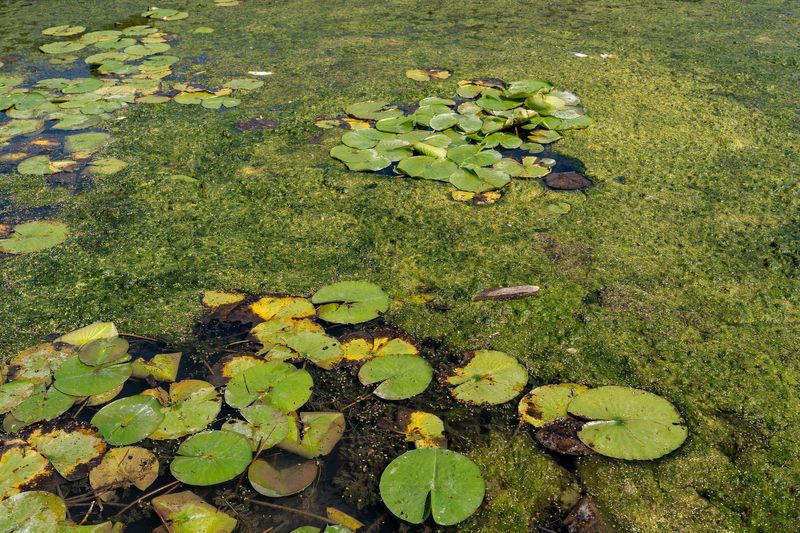
Also among the damaging hordes are cyanobacteria, aka blue-green algae, which sometimes turn large swaths of the lake into a green soup that can make fish toxic and breathing the local air hazardous. Last August at its peak, a harmful algae bloom (HAB) covered about 400 square miles of the western lake.
The early 2026 forecast called for a moderate bloom. An update is scheduled on June 25.
Caution should be exercised when eating fish taken from waters affected by harmful algae, the Ohio Department of Health advises.
Further, because of mercury contamination, no more than one 4- to 6-ounce portion of fish taken from Ohio waters should be eaten per week, the department cautions. Fish absorb a range of industrial chemicals, pharmaceuticals and microplastics, some of which accumulate and pass into creatures that dine on fish.
The prime riddle endures about the limits of the lake’s resilience. Also unanswered is why humans allowed infestations of nuisances such as common carp, sea lampreys, white perch, spiny water fleas, round gobies and scores of other harms?
This article originally appeared on The Columbus Dispatch: Algae blooms, invasive species among challenges for Lake Erie fish
Reporting by Dave Golowenski, Special to The Columbus Dispatch / The Columbus Dispatch
USA TODAY Network via Reuters Connect
By Dave Golowenski, Special to The Columbus Dispatch | USA TODAY Network