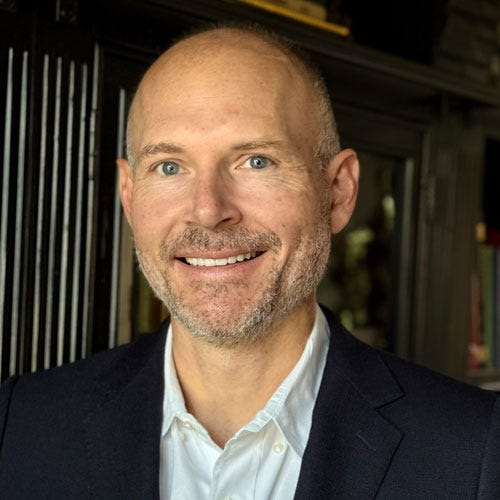
Brendan Steinhauser is CEO of The Alliance for Secure AI.
Artificial intelligence has given us much to consider and debate. How do these powerful machines think and create art? Should they be trusted to make decisions? Do we actually want AI in the loop?

One thing we should all be able to agree on, though, is that AI systems are not actual people. And yet, bringing sentient AI to “life” is one of Silicon Valley’s primary goals. Like their counterparts around the nation, Ohio lawmakers are weighing what should be done in the name of humanity.
For years, companies like Google and Elon Musk’s xAI have sought to push the limits of AI development, probing the possibilities of self-aware machines that can act in accordance with their own thoughts, emotions, and motives.
AI consciousness is a serious consideration for Silicon Valley CEOs.
Falling in love with AI
Many Americans are willing to accept the risks posed by AI sentience, even in the most intimate ways.
According to studies by chatbot company Joi AI, 80 percent of Gen Zers would marry an AI, and 83 percent said that AI “love” could replace human connections.
Another study, this one by Vantage Point Counseling Service, revealed that nearly a third of American adults have admitted to having an “intimate or romantic relationship” with an AI chatbot.
Indeed, Google searches for “feelings for AI” and “fell in love with AI” have seen more than 100 percent spikes in recent months.
Where does that leave American society, especially the most important institution we have—the family? There is much that we do not know (nor does Big Tech), but there is real cause for concern. Fortunately, there are elected officials at the federal, state, and local level who are not waiting around for AI to gain more and more power over mankind.
Instead, they are holding Big Tech accountable and scrutinizing those who may not have the best interests of humanity in mind.
Should AI have the right to marry in Ohio?
One example is Ohio state representative Thaddeus J. Claggett, who recently introduced House Bill 469.
The bill, now referred to the Ohio House Technology and Innovation Committee, would declare AI systems non-sentient and prohibit them from obtaining legal personhood in the state.
In other words, Rep. Claggett’s proposal would prohibit AI systems from the rights and privileges afforded to human beings, including owning property, serving in corporate leadership roles, being held criminally liable, or even marrying humans, with the goal of preventing the misuse of AI across sectors and clarifying the liability associated with such technology.
It almost feels ridiculous that Claggett’s bill is even necessary, but AI has brought about situations we never thought would be possible.
As AI capabilities continue to improve exponentially, and human-level Artificial General Intelligence inches closer to reality, we live in a world where the “impossible” could soon be possible.
Should AI run for office or vote?
One decade ago, befriending a digital companion was barely a possibility, let alone engaging in a romantic relationship.
Yet, in the world that some in Silicon Valley are trying to build, AI could decide to “pull the plug” on its terminally ill human spouse. AI could hire and fire human workers, deciding their economic fate.
This year’s mass layoffs at Amazon are just a preview.
AI could theoretically start a company, earn billions of dollars, and then contribute to AI candidates for political office, ensuring AI political dominance in Ohio or even nationally.
Now is the time to fight back against the rise of the machines—before these AI systems gain too much influence.Leaders like Claggett can see the not-so-distant future, and they are right to stand up for humanity. If we do not pursue policies like H.B. 469 and similar proposals in other states, we could very well see AIs with the right to marry, enter contracts, or vote.
At this rate, is it unreasonable to think we could see people arguing for self-defense rights for robots or a robot’s right to be a surrogate for human beings?
I, for one, love humanity too much to sit idly by. And I am not alone: Supported by state policymakers across America, there is now a growing AI awareness movement that educates the public about the implications of this advanced technology and advocates for effective safeguards that protect different segments of society—from vulnerable teenagers and concerned parents to workers who fear displacement.
From child safety to financial security, we have every reason to question Big Tech’s push for advanced AI at all costs, even as Silicon Valley deploys hundreds of millions of dollars to silence dissent.
Now is the time to ask ourselves and each other what kind of future we truly want, especially for future generations that will have to reckon with our advancing AI society. Is this really what we want?
Our voices will not be silenced in Ohio or anywhere else. We must ensure human agency and accountability in the development and use of AI systems. AIs are simply not people—not now, not ever.
Brendan Steinhauser is CEO of The Alliance for Secure AI, a nonprofit organization that educates the public about the implications of advanced AI. An early Tea Party organizer, he worked with I was an early tea party organizer and worked with local groups in Columbus, Cleveland, Dayton, and Cincinnati.
This article originally appeared on The Columbus Dispatch: I love humanity too much to let machines take over. Ohio, stop AI marriage, rights | Opinion
Reporting by Brendan Steinhauser, Guest Column / The Columbus Dispatch
USA TODAY Network via Reuters Connect