A seven-year legal battle over who should receive 14 IVF-created frozen embryos — the divorcing Summit County wife or husband — could come to an end.
A modified Summit County Domestic Relations Court order would grant the wife the embryos. She can use them to become pregnant herself or by using a surrogate. In exchange, the husband wishes to forfeit all rights over children born of the embryos and denies all financial responsibility.

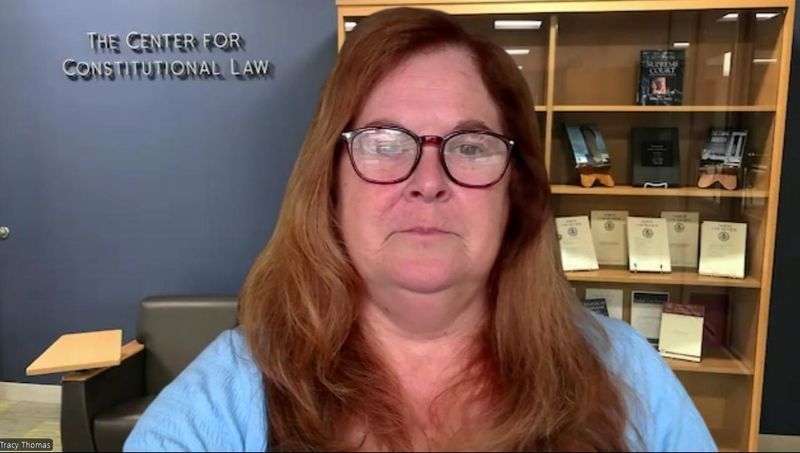
“I actually think this is the right decision all around,” explained Tracy Thomas, a University of Akron School of Law professor whose specialties including family law. “This is new and novel ground, but I think easily answered in the affirmative in favor of the mother.”
The Ninth District Court of Appeals issued its second ruling in the case on March 4, largely affirming the Summit County Domestic Relations Court order. The appeals decision, written by appellate Judge Jill Flagg Lanzinger, allows the wife to use a surrogate.
The ruling comes two years after the appellate court first heard the case and the Ohio Supreme Court declined to hear it.
Attorneys for the husband and wife could not be reached for comment.
Are frozen embryos life or marital property?
The Ninth District Court of Appeals previously determined that frozen embryos are not marital property that can be doled out like items in a home. Instead, an appellate judge said embryos are “life, or the potential for life,” describing them as “life in one of its earliest stages of development.”
Despite this determination and a second appellate ruling, the legal status of frozen embryos remains uncertain.
Thomas said the courts will likely continue to rely on clinic agreements couples sign at the start of in vitro fertilization; these pacts determine what happens to the embryos in the event of a divorce.
How can the wife use the embryos?
Handed down by Visiting Judge Joseph Giulitto in Summit County Domestic Relations Court in 2025, the court order, also known as the “proposed amended decree regarding embryos only,” grants the wife all 14 frozen embryos to be used for pregnancy.
Giulitto initially ruled the wife could only use the embryos on herself to achieve pregnancy, but Lanzinger overruled him in March 2026, writing that the wife could use a surrogate. The decision to grant the wife the embryos remains in place.
“The right to use the embryos for surrogacy is expressly provided for in our new Ohio Constitutional Reproductive Rights Amendment. So that the trial court denying the right of surrogacy would be a constitutional violation,” Thomas explained.
The trial court noted that the appellate court did not decide whether the wife can donate the remaining embryos to a third party who wants a child.
What does this mean for the husband?
From the start, the husband wished to have no connection with the embryos and any children born of the embryos. He wanted the embryos to be donated to a third party who wanted children, but an appellate court ruling determined the wife should receive all 14 embryos.
Court documents show that, in this latest agreement, the wife gets the embryos. In exchange, she agrees that the husband forfeits his rights as the biological father.
Thomas described the husband’s wishes as “contrary to the basic precepts of family law.”
“We don’t let people do this, even by agreement,” she said. “There is considered an interest of the state in ensuring the welfare and protection of the child independent of the marriage and beyond the private interests of the two parties.”
The husband requested that any children born of the embryos never know his name or that he is their biological father. His name would also not appear on their birth certificates. The wife would tell any children that an anonymous donor had conceived them. Giulitto ruled that these demands are lawful and enforceable.
The husband’s request to give up his parental rights can only be terminated through adoption by a third party or through juvenile court, Giulitto wrote in a court order.
The husband also requested that he have no financial responsibility for the children, including child support, medical expenses and health insurance. Giulitto ruled this was unenforceable.
“At best, Defendant, Mother, may elect not to pursue Plaintiff, Father, for child support and other financial responsibilities,” Giulitto wrote.
The husband wanted to disinherit any children born from the embryos, but as a domestic relations judge, Giulitto said he has no jurisdiction over inheritance. That falls to the probate court.
Thomas said if the husband were considered a sperm donor, he would have no legal rights or obligations to the child. The child also would have no inheritance rights. But because the husband intended to donate sperm for IVF to the wife, and not an anonymous person, he falls short of that designation.
How did the appellate court previously rule?
The case dates back to 2019, when the Summit County couple filed for divorce, three years after they married and one year after they underwent in vitro fertilization to produce 14 embryos.
By 2021, a Summit County Domestic Relations judge had determined half the frozen embryos went to the husband. The other seven went to the wife.
But the wife appealed the decision, claiming the pre-IVF contract was ambiguous. In 2024, Ninth District Court of Appeals Judge Donna Carr ultimately tossed out the contract and granted the wife all 14 frozen embryos.
Carr determined that frozen embryos are “life, or the potential for life,” describing them as “life in one of its earliest stages of development.” Carr drew on the state policy that “to prefer the preservation and continuation of life whenever constitutionally permissible.”
In exchange, the husband’s wishes “should be incorporated into the amended decree,” Carr ruled. “(The) Wife expressed during the hearing that she would abide by the Husband’s wishes.”
The husband appealed to the Ohio Supreme Court, which declined to hear it.
Bryce Buyakie is an Akron-based reporter who covers the courts and public safety for the Beacon Journal. He can be reached by email at bbuyakie@gannett.com or on X @bryce_buyakie.
This article originally appeared on Akron Beacon Journal: Divorcing Summit Co. couple nears resolution in battle over embryos
Reporting by Bryce Buyakie, Akron Beacon Journal / Akron Beacon Journal
USA TODAY Network via Reuters Connect