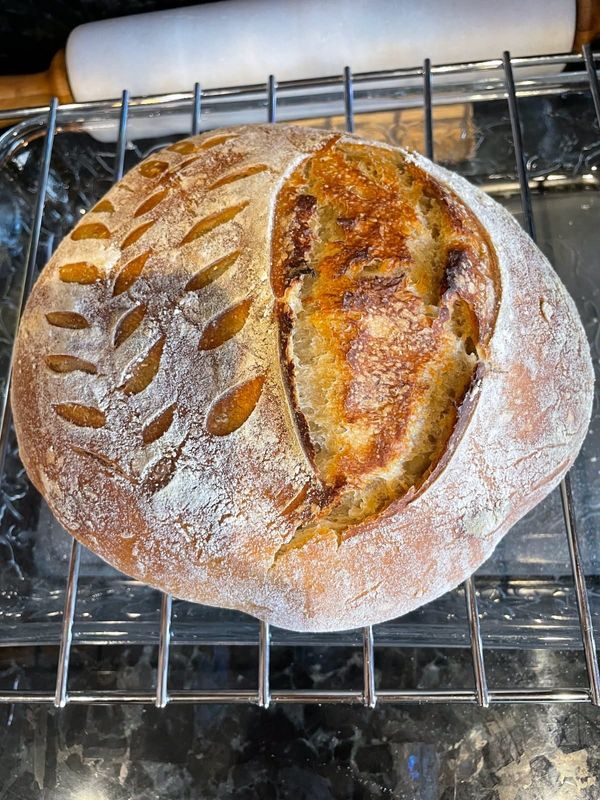
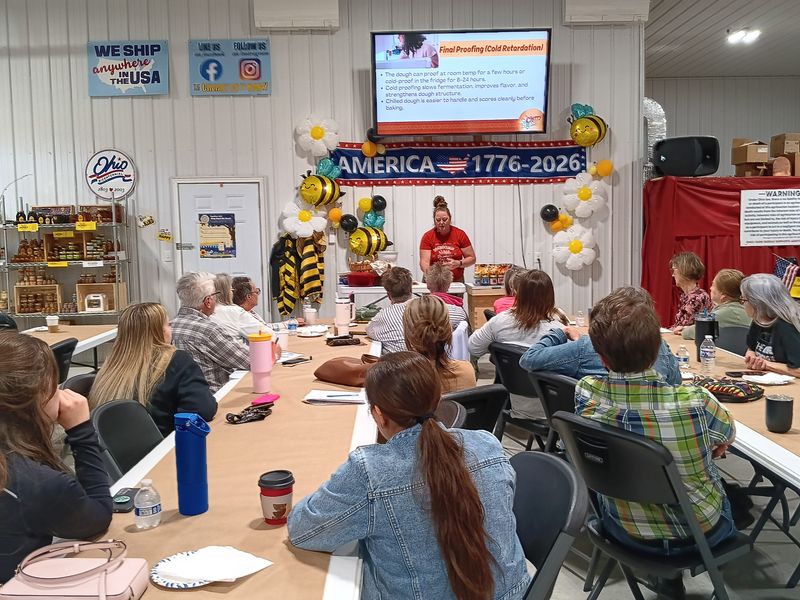
BELLEVUE – More than 30 men and women turned out to learn the secrets of heritage baking to make a successful sourdough bread at a rural honey store this month.
Tami Wiley, who owns Cherry City Honey with her husband Gary, said her store has been offering heritage skill classes at its 1000 CR 312 Bellevue location.

“This is our second year,” Wiley said about offering old-skill classes at the shop. To learn how to make a sourdough starter and bread, she had to do her own research. Now she has an original “starter” she made named “Judy” after her late mother, and she keeps a portion of it every time she bakes sourdough. A bread or sourdough starter is a combination of flour and water that grows yeast to naturally leaven the bread.
Workshops added as customers expressed interest
Wiley added about offering workshops at the honey store, “We just thought everyone one is getting back to basics.”
She said she had to learn sourdough from scratch and enjoyed learning the skill. Having a honey business, she had to learn beekeeping plus how to infuse natural flavors into the honey they offer, such as blueberry and peach.
Offering heritage skills classes may have begun last year, but the store expanded in 2026 with this being the 250th anniversary of America.
In March, staff taught a class in making a sourdough starter from scratch, which drew about 30 students.
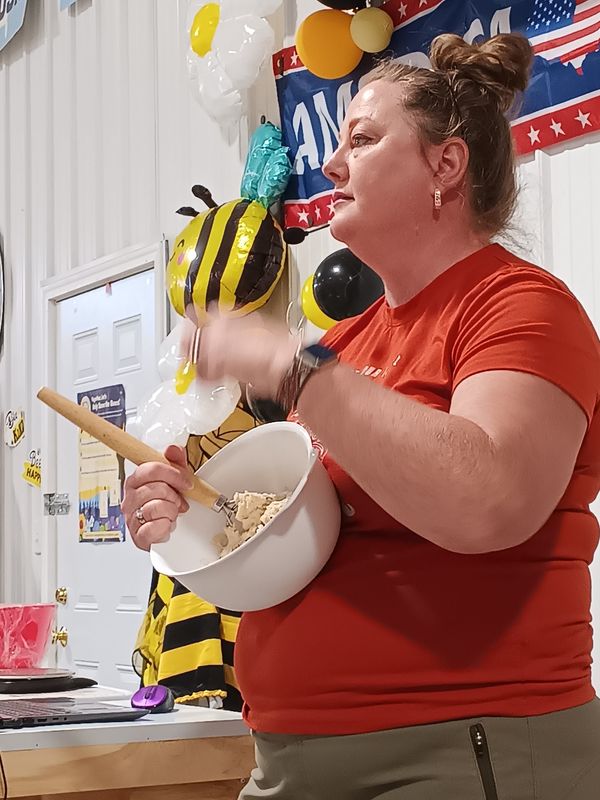
On April 8, Jaime Garza, the marketing and event planner, taught “Sourdough Bread Making” again to nearly 30 men and women who wanted step-by-step guidance for a starter from creation to a loaf of baked bread.
Flour used in sourdough will change texture
Garza talked about how to mix different flours for a sourdough and offered her own baking and dough tips. Flours may vary from white, bread, red wheat, rice and others.
“If you ever do dough, don’t put it down the sink,” she warned her class. Garza shared that the shop now has a 5-gallon bucket where staff can discard dough when needed, as it can challenge modern plumbing.
She also talked about the various tools used to make a loaf of bread: spatulas, bowls, baskets, parchment paper and other inexpensive items.
“You have to have a good thermometer,” she stressed about wanting to check the temperature of the bread while baking to make sure it is done. The interior temperature of the bread must be 200-205 degrees to be done baking. Garza said the recipe may list the time it takes to bake, but the bread’s interior temperature is key to avoid a soggy bottom crust.
She talked the class through an eight-step process: Bulking up, mixing the dough, resting the dough, stretching and folding the dough, bulk fermentation, shaping the dough and inclusions, final proofing the dough and baking.
As Garza demonstrated the process, a PowerPoint presentation spelling out each step was displayed over her head. Wiley said the same presentation was emailed ahead to everyone who was attending the class so they could read through the steps.
For Garza’s class, her crowd learned about autolyse, which is mixing water and flour until there is no dry flour and the dough is sticky and allowed to rest for 20-60 minutes. Then there was fermentalyse, where the starter, salt, honey and small inclusions are added to the dough and it begins to ferment.
She also demonstrated stretching and folding the sourdough, and bulk fermentation lasting four to six hours so the dough will rise at room temperature.
Garza’s class offered exact details for a very challenging bread which can vary in texture depending on weight measurements for ingredients (all done in grams), type of flour used, items added for flavor, hydration, type of pan used for baking and the time allowed to proof.
Dough needs to rest before it can rise
She also said that allowing the dough to rest in the refrigerator at key points before baking can deepen the flavor, as can the amount of water added.
Another key to make the bread more flavorful is to let it cool before cutting. With a family that loves fresh bread, it has been hard for her to let the bread to cool at home, she added.
Another key point in sourdough is folding the dough and shaping it. Bakers cannot knead sourdough, as kneading will knock the air out of the loaf.
Some of the people who took the course traveled to learn the sourdough skills.
“I’ve done quite a bit of baking,” Pat Carey of Maumee said, who drove an hour to learn the secrets of a good sourdough.
Debbie Steinbeck of Marblehead said she had come to previous classes at Cherry City Honey. “We came to the tallow class,” she said. Steinbeck also came for the sourdough starter class in March, but had not tried baking a loaf yet.
A woman who lived around the corner from the honey store, Dianne Adams, said she also had come for the sourdough starter and a tallow class.
Classes on heritage skills will continue at Cherry City Honey monthly through the end of 2026. The class on May 9 will be homemade butter and a June 20 class will be on tallow salve.
On July 11, the store will offer an American 250 presentation. Wiley said that that workshop can be booked any time by a group throughout this year. Other upcoming classes will include flower arrangements, sourdough granola, pumpkin puree and snacks, a cookie make and exchange and dried soup gift giving.
While the Wiley business owns 60 bee hives and between 1.2-4.8 million honeybees, not every workshop involves honey. Even so, the shop offers visitors many options of flavors and types of honey. There are infused honey flavors, plus all the supplies needed for raising bees in the store and a full range of products displaying bees or made with honey. Full list of products is online at cherrycityhoney.com.
Contact Rebecca Brooks at 419-334-1059.
This article originally appeared on Fremont News-Messenger: Baking sourdough bread takes skill, commitment and knowledge
Reporting by Rebecca Brooks, Fremont News-Messenger / Fremont News-Messenger
USA TODAY Network via Reuters Connect