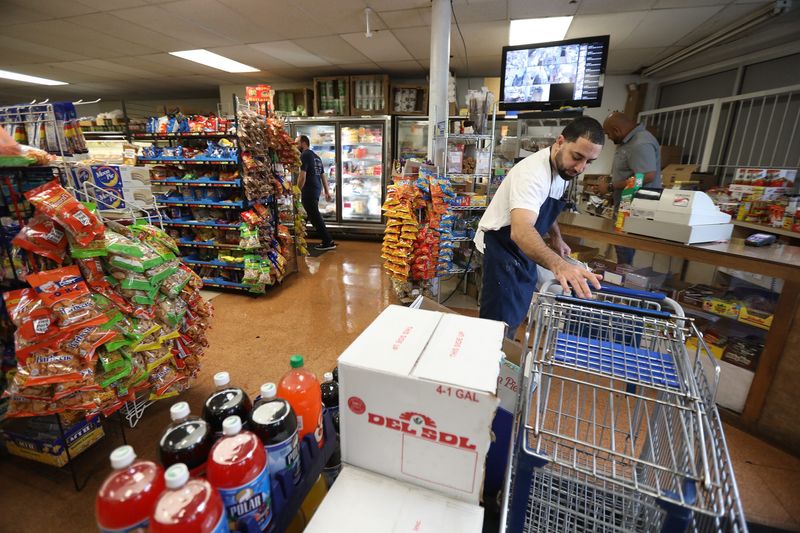
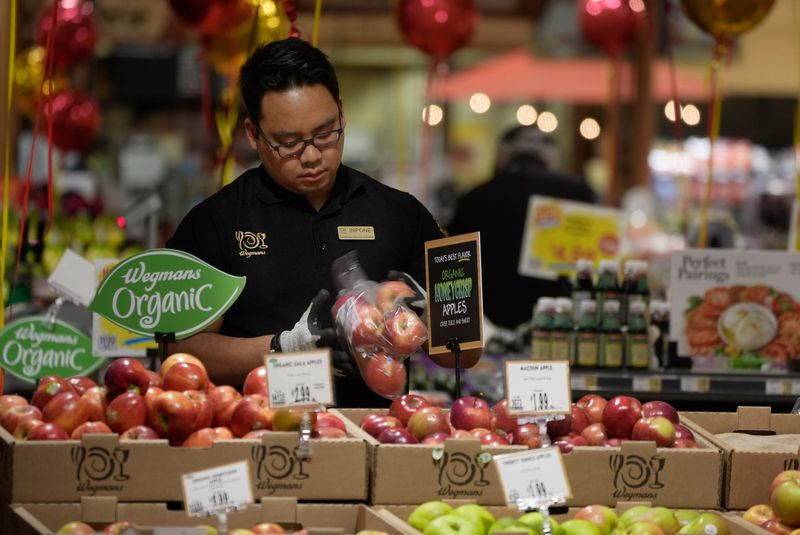
You’ve certainly noticed the difference at the supermarket each week. The price tag on a weekly grocery store trip has surged in recent years. But how big of a bite are groceries taking from your household’s monthly budget?
According to a new WalletHub study, people living in some of the poorest states tend to spend the most on basic food items.

The survey evaluated the impact of grocery costs on American households across all 50 states, analyzed 26 common grocery items, such as meat, dairy, fruits, vegetables, frozen foods and cleaning products. Their costs were combined and compared to the state’s median household income to see where people spend the most.
According to the study, Mississippi is the state where groceries take the biggest share of the median family income each month. At the opposite end of the spectrum, Massachusetts is where groceries take the smallest share of median household income each month, the report said.
New York landed 34th on the list.
“Grocery affordability isn’t just about how much items on the shelf cost – it’s also about how those prices compare to what people earn,” said Chip Lupo, Wallethub writer and analyst.
“States like Mississippi, West Virginia and Arkansas actually have relatively low grocery prices overall, but because they also have some of the lowest median household incomes in the country, residents end up spending the largest share of their earnings on food – as much as 2.6% of monthly income in Mississippi.”
Lupo said, “By contrast, residents of higher-income states like Massachusetts and New Jersey spend only about 1.5% of their income on groceries. With grocery prices up nearly 30% since 2019 and income growth lagging behind, families in lower-income states are feeling the greatest strain, making careful budgeting and smart shopping more important than ever.”
But why are prices rising?
Everyday staples like beef, coffee, eggs and fresh produce have skyrocketed due to issues beyond their control including inflation, supply chain disruptions, tariffs and the weather. According to the U.S. Department of Agriculture, grocery prices have risen by nearly 30% since 2019.
“In 2026, prices for all food are projected to increase by 3.0%, with a 0.3 to 5.9% prediction interval. At the same time, food-at-home (grocery and supermarket) prices are predicted to increase 1.7%, with a prediction interval of -2.3 to 6.0%,” according to the U.S. Department of Agriculture’s Economic Research Food Pricing Index.
The main cause for the rise is labor and materials for products. Materials costs have been on the rise due to tariff increases and labor costs have been increasing due to the deportation of workers, especially low-wage work done by recent immigrants, according to William Masters, a food economist and professor at Tufts University in Massachusetts.
“Since wages for most Americans have not gone up as much as prices, purchasing power has declined,” he said.
In turn, many families prioritize purchasing essential items, often cutting back on healthier, fresh foods in favor of cheaper, processed options.
States where consumers spend more of their budget on groceries
States where groceries take the biggest share of the median household income each month:
States where consumers spend less of their budget on groceries
States where groceries take the smallest share of median household income each month:
41. California 1.66%
42. Washington 1.66%
43. Virginia 1.63%
44. Colorado 1.61%
45. Connecticut 1.61
46. Utah 1.58%
47. New Hampshire 1.56%
48. Maryland 1.55%
49. New Jersey 1.51%
50. Massachusetts 1.51%
What does New York’s ranking mean?
New Yorkers landed 34th on the list, with a note that 1.89% of the median monthly household income is spent on groceries. That means that in 33 of the 50 states, a higher portion of the household income is spent on groceries than in New York.
6 ways to save at the supermarket
Regardless of where you live, everyone can use tips for saving at the supermarket. Here are some money-saving grocery strategies:
Contributing: USA Today
This article originally appeared on Rochester Democrat and Chronicle: See how much New Yorkers spend on groceries compares to rest of the US
Reporting by Victoria E. Freile, New York Connect Team / Rochester Democrat and Chronicle
USA TODAY Network via Reuters Connect