As the Elmira Historian, I’ve always felt that our city was short-changed when we changed our name from Newtown to Elmira. Had we kept the Newtown moniker, we could have had a “Welcome to Newtown – settled in 1788” sign instead of the “Town of Elmira incorporated in 1808,” or the “City of Elmira incorporated in 1864.”
The name change cut off 76 years of post-colonial bragging rights.

If we start from known-Native American history, Elmira dates to the autumn of 1730 when Red Jacket, the wise orator, sent couriers to the Five Nations and convened a council at Pine Plains (the Chemung County area), a well-known place of assembly near today’s eastern end of Water Street and Interstate 86. Elmira was then called Ka-na-we-o-la, or “(severed) head on a pole.” The native village once had 20 well-built houses. General John Sullivan’s army destroyed what remained of the village in 1779.
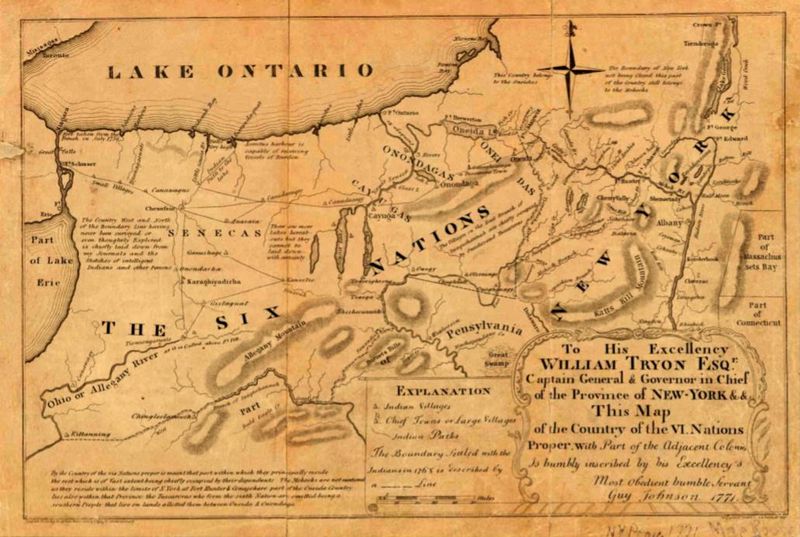
Cartographer Guy Johnson drew the first map of our area in 1771, called “Country of the Six Nations.” Chemung County was still a blank space on the map. In 1783, Matthias Hollenback opened the first local trading post near today’s Clarion Inn on East Water Street. Hollenback’s trading post was the only store within 20 miles.
For most of the year, a Durham boat on the Susquehanna and Chemung Rivers provided the transportation for goods from Hollenback’s large warehouse in Wilkes-Barre. When the weather was terrible, Hollenback’s employees resorted to using packhorses. His store offered coffee, guns, gunpowder, brown sugar, chocolate, blankets, soap, cloth, candles, whiskey, and more.
A few new settlers arrived after the 1786 Treaty of Fort Stanwix, which, theoretically, made our region safe for white settlers. The Iroquois were to remain in western New York. The villages of Newtown, Wisnerburg, and Dewittsburg combined into the “Village of Newtown” in 1790.
At its earliest dates, Newtown had no bridges over the Chemung River. Inns and taverns served nut brown ale that kept locals and visitors happy. It was not uncommon to see Native Americans strolling down River Street (now Water Street). Wolves howled in the nearby hills.
According to legend, Captain Nathan Teall came to Newtown around 1794 and opened Teall’s Tavern on Sullivan Street near East Water. One of the frequent guests was State Assemblyman Judge Emmanuel Coryell, who lived somewhere between Athens and Owego. At the time, Judge Coryell was head of a committee to change Newtown’s name, as there were several other towns in the state already named Newtown.
According to the Star-Gazette on June 27, 1939, “One night in 1806, little Elmira Teall, Nathan’s youngest daughter, climbed into his (Coryell’s) lap and went to sleep. Noticing her beauty, Judge Coryell thought it matched the surrounding countryside, and later, according to the story, asked the Board of Trustees to change Newtown’s name to Elmira. The name ‘Elmira’ is said to come from Spanish words of Moorish origin, ‘El Mira’ meaning beautiful outlook.”
Our main street in the earliest times was Sullivan Street, named for General John Sullivan, who fought in the Battle of Newtown. We had the amenities of a new village: a courthouse (also served as a church), taverns, post office, mills, and Hollenback’s store.
Down the road, in Chemung, New York, their sign reads “Established 1788.” Wellsburg dates to 1788. Van Etten dates to 1794. Owego dates to 1786.
— Elmira city historian Diane Janowski writes a monthly column.
This article originally appeared on Elmira Star-Gazette: On Elmira’s earliest history, including how it got its name in 1806
Reporting by Diane Janowski, Special to the Star-Gazette / Elmira Star-Gazette
USA TODAY Network via Reuters Connect