Accountants get slammed with work during tax season.
For farmers, it’s harvest time; for retail workers Christmas and for caterers wedding season.

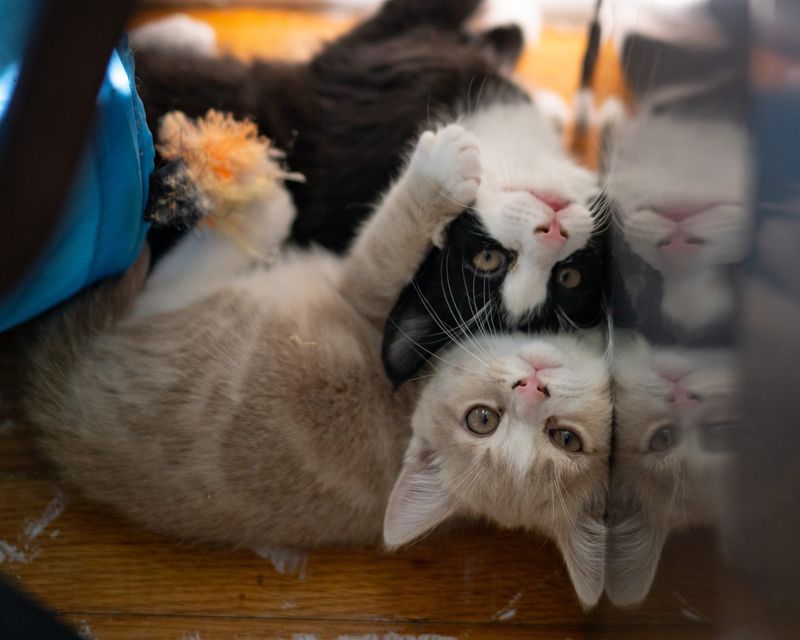
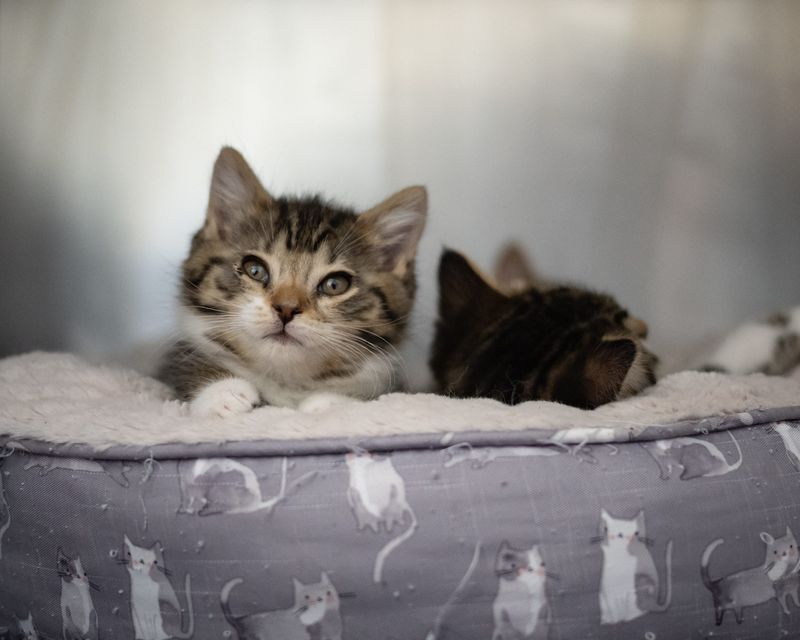
For staff in animal shelters and at rescue organizations, it’s kitten season. And kitten season is now.
NBT Bank employees found that out the hard way when they found a carrier with two cats and three kittens near the bank’s Utica branch on Genesee Street one morning in late April. An employee said he spent two hours on the phone trying to find a rescue that could take the cats.
He did in the end, but all the way in Cooperstown at the Susquehanna SPCA.
Kitten season starts in warm weather when cats start mating and having kittens with the first big influx of mostly newborn kittens showing up in local shelters in late April or early May. The season lasts into the fall, although fewer kittens are born as the season progresses. But the shelters are full of older kittens waiting for adoption.
“Just so many kittens come in,” said Melissa DeMartino, shelter manager at Anita’s Stevens-Swan Humane Society in Utica.
The shelter had 68 cats on May 7. Asked how many were mothers or kittens, DeMartino figured it out by counting the adult cats without babies because it was faster. There were 14 adult cats without kittens.
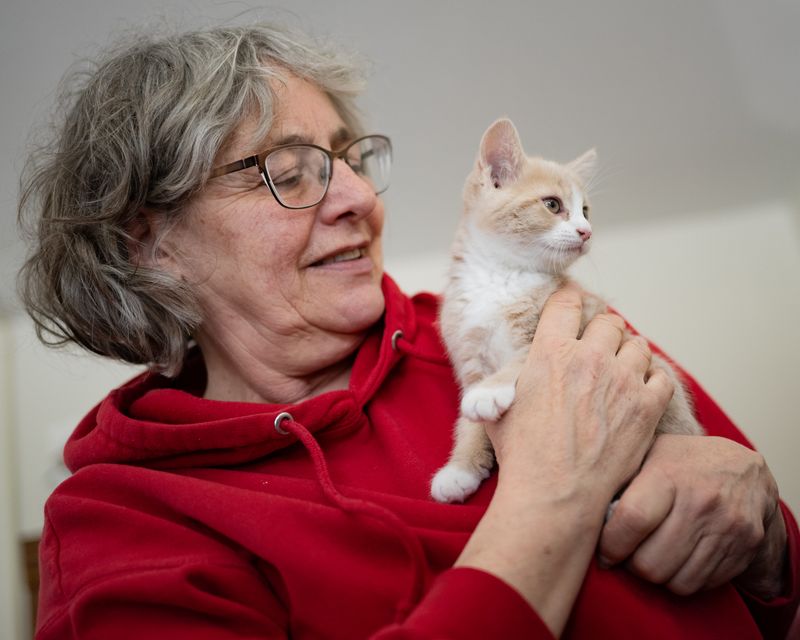
About a dozen foster homes have also taken in a little of kittens, some with mothers and some without, for the shelter. DeMartino herself has five kittens at home that need bottle feeding around the clock.
The shelter is “pretty much” at capacity, she said.
Squeezing in as many kittens as possible
Last year, 59% of the cats entering shelters nationwide were kittens under the age of five months, according to data collected by Shelter Animals Count, a program of the ASPCA.
In the past, many shelters tucked dog crates, ferret houses or rabbit hutches into spare corners to squeeze in as many cats as they could.
The Humane Society of Rome currently has about 65 cats and kittens, but in the past, it would sometimes squeeze in as many as 100 during kitten season, Shelter Manager Robin Kaminski said.
Those days are over, though. New state shelter regulations — the Companion Animal Care Standards Act, passed in 2022 — kicked in on Dec. 15. The regulations are meant to improve the welfare of animals in the humane system.
But some of the act’s requirements are also limiting how many cats and kittens local shelters can help during kitten season, employees said.
About the new regulations
Dr. Jessica Price owns Clinton Pet Vet in Clinton and founded the CPV Rescue and Sanctuary in Clinton. The shelter had about 30 or 35 cats as of May 8.
“Is it at capacity? Beyond,” she said. “I have rescues at the hospital waiting to go over to (the) rescue when they are healthy enough and when there is room.”
There is a litter of kittens that have been weaned at the hospital and a mother cat nursing two litters, Price said. The rescue is even holding a kitten shower fundraiser from 1 to 4 p.m. on May 30.
The new regulations, Price said, are “making the whole process a bit more difficult and time consuming.”
The regulations limit the number of cats and kittens shelters can take in by setting strict standards for the size and condition of housing — meaning no more dog crates stuck in a corner. And shelters have to have enough housing units for every cat even cats who roam freely in a cat room, Kaminski said.
Other regulations restrict, for example, how many kittens can be housed together: no more than two litters with no more than 10 kittens no matter how big the enclosure is.
The new rules also call for more space overall, enrichment for every animal every day and more socialization. It all, on the one hand, adds up to more cost and more work for staff, shelter employees said.
On the other hand, the new conditions are good for the dogs, cats and other animals who live in shelters.
“It does help the animals,” DeMartino said. “They are a lot less stressed.”
Overcrowded shelters do make it hard to house animals in a healthy way, agreed Kaminski. Some cats stop eating, she said. “It’s not a better life,” she added.
The strain on shelters
Many shelters have networks of foster homes that help to increase the number of animals they can help.
Foster families help year round with dogs, cats or other animals that need socialization, special care or time out of the shelter due to stress.
During kitten season, fosters keep kittens too young for adoption out of shelters. That’s safer for the kittens. It frees up shelter space. And kittens often get more socialization time and get exposed to more things, such as dogs and little kids, in a foster home, Kaminski pointed out.
Some local shelters adopt out kittens starting at eight weeks, when they are old enough for some of their shots and usually big enough to be spayed or neutered. But some shelters hold off until kittens are 12 weeks old so they can get a rabies shot before adoption.
But, there are issues beyond shelter capacity. “As the kittens increase, our operational costs increase,” said Patricia Usherwood, executive director of Wanderer’s Rest Humane Association in Canastota.
And veterinary care is the top cost.
Kittens need vaccines, dewormer, flea treatment, antibiotics or other medications and, of course, spay or neuter surgery before adoption. Some of that can be provided by the veterinary technicians that most shelters have on staff. And a few shelters have vets either on staff or vets who come in every week.
Either way, all that care can cost a lot of money. But for shelters without a dedicated vet, it can be hard to line up enough vet care.
Most vet practices are already overwhelmed just trying to fit in all the surgeries for their own clients’ pets, Kaminski said. The shelter has to keep kittens in foster care until they can get spay/neuter appointments for them, she said.
“Then everything backlogs again,” she added.
More cats in the shelter also simply means spending more on food and other supplies.
It also means staff spend more time on care, especially with the new regulations and their requirement for enrichment and socialization, and on cleaning.
“(Kittens) make huge messes that require a lot of extra time for cleaning,” Price said. “Many kittens from stray mothers also tend to come in with severe intestinal parasites that sometimes take weeks (or) months to clear, specifically coccidia, which is difficult to get rid of. All of my rescues need to have multiple negative stool samples before they are moved from the hospital to the rescue.”
Many shelter workers also extend their work days by bringing work home with them — in the form of tiny, hungry balls of fur. Most shelters reported having employees who either foster a litter of kittens or bring newborn kittens home overnight for the around-the-clock feedings needed during the first weeks of life.
One staff member at Wanderer’s Rest is currently bottle feeding three litters at home, Usherwood said.
There is, of course, an emotional toll as well. Price said she has to say no to helping a cat every day.
“And it breaks my heart,” she said. “Saying no is the hardest thing. I have to try to triage who needs my help fastest. I tend to take the severely sick, injured, etc. because I am a veterinarian and since I work for myself and am privately owned, I can provide care and don’t have to try to stick to a stringent budget in order to provide adequate care.”
Everything costs both time and money, but she’s willing to donate her time and professional skills, she said, “to help those who need me the most.
How the public can help
Local shelter staff suggested numerous ways that area residents can help to ease the strain of kitten season and help shelters to help more cats and kittens:
“All of those things impact our daily operations,” Usherwood said. “It’s hard because we try our very best to educate our community on spay and neuter. But it’s always going to be a topic of discussion and we’re always going to have to prepare for the influx of kittens.”
Other changes that would help
Price has worked at her Clinton practice, which she bought in 2015, for 24 years.
“There are definitely more strays, more calls to surrender, more kittens during kitten season (than in the past), “she said. “Spay/neuter has gone down, I have noticed, as costs of supplies, medications, anesthetics, etc. has increased substantially over the last few years.”
There’s widespread agreement that the area could use more low-cost spay and neuter programs that make the procedures more affordable for struggling pet owners. 4PetSake Food Pantry in Mohawk does provide assistance to pet owners who meet income eligibility guidelines in Herkimer, Oneida and Montgomery counties.
Wanderer’s Rest in Canastota receives an annual ASPCA grant that lets it help income-qualified pet owners in the area.
But most counties do not have enough or large enough programs to meet the whole need.
Things may be looking up, though. The Humane Society of Rome is building a new shelter with a surgical suite, which should be completed early next winter, Kaminski said. The plan is to have a veterinarian on site, she said.
And the goal is to get funding so that the humane society can provide low-cost vet care, including spay and neuter, and a trap-neuter-release program, Kaminsky said. Trap-neuter-release, commonly called TNR, is a population management program for feral cats who are not tame enough to live in homes. Young feral kittens can be successfully socialized, but socialization becomes far more difficult as the kittens grow up.
In TNR, residents trap feral cats; take them to a vet or clinic to be spayed or neutered and to get some basic shots, including rabies; and then release them back to the same area from which they were taken. A human custodian is supposed to feed and keep an eye on the cats, who are usually marked as part of a managed cat colony with a notch on their ear.
But, TNR programs are affected by the shortage of local spay-neuter programs.
This article originally appeared on Observer-Dispatch: Kitten season at local shelters: Big eyes, big ears, big challenges
Reporting by Amy Neff Roth, Utica Observer Dispatch / Observer-Dispatch
USA TODAY Network via Reuters Connect