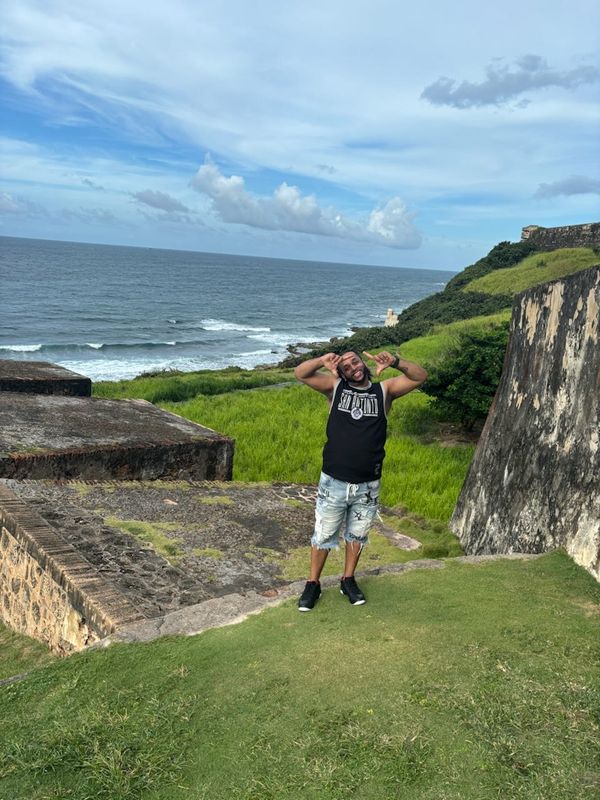
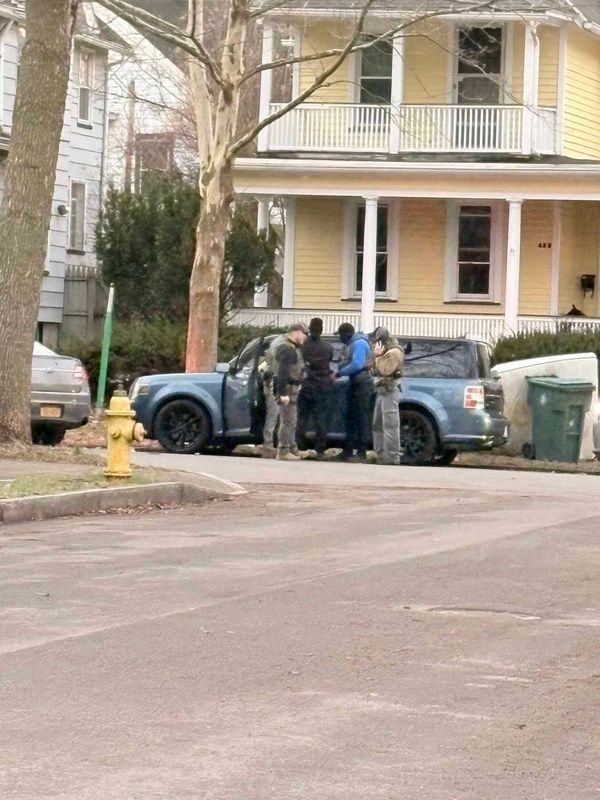
Mohamed Jeylani was sipping a cup of freshly brewed coffee, waiting for his car to warm up early one morning this winter, when an immigration agent brandishing a handgun yanked the man’s car door open and arrested him.
It was Christmas Eve. The Trump administration called Jeylani’s arrest “a Christmas gift for every American,” part of ongoing efforts to detain and deport violent criminals. His record shows a different story.

After Jeylani served six months in a bootcamp-style rehabilitation program for a non-violent offense in 2019, a federal immigration judge blocked his immediate deportation, ruling the Somalian refugee was likely to be persecuted or tortured if sent back to his native country. Jeylani at the time was released from ICE custody on a monitoring plan.
His family said they were blindsided by his arrest late last year, unaware that he had become a renewed target under the Trump administration’s crackdown on immigration.
Four months later, the Rochester man is still sitting in a detention center in Indiana. Federal officials have so far failed to produce a plan to deport him. And his case is one of more than 40,000 habeas corpus petitions nationwide, where a historic number of immigrants have argued they are being unlawfully detained by the Trump administration.
“I think this case is representative of the predictable and natural results of this state of chaos that we’re living in,” said Sarah Decker, an attorney with the Kennedy Human Rights Center, which has taken on Jeylani’s bid for release. “The Trump administration has gone about immigration enforcement with such a high degree of cruelty and has basically perpetuated this campaign of lies about who these people are … These are not the worst of the worst.”
ICE did not immediately respond to a request for comment.
Inside an ICE arrest in Rochester NY
Jeylani’s case offers a new window into ICE operations in Western New York.
The 39-year-old was arrested just after 7 a.m. Christmas Eve in his Monroe Avenue neighborhood as he prepared to leave for his job managing a local hotel. The mother of his children, Ciara Hill, was still in bed when her phone rang.
She could hear the garbled chatter of a police radio in the background as Jeylani hastily told her what was happening. Could she bring his green card? The pair are no longer romantically involved, but have known each other for two decades and remain close friends and co-parents.
“It was scary,” she said in a phone interview. “I didn’t know what was going to happen. I didn’t know if they were just trying to deport him. I didn’t know how soon … It seems like they’re capable of doing anything they want.”
His car was surrounded by at least four unmarked vehicles and 10 ICE agents, according to the habeas petition filed in his case. Some wore plain clothes; other sported military gear. All were masked and had their guns drawn.
One of the officers allegedly told Jeylani his arrest was part of a planned operation. Another said he was being detained and brought to Batavia to verify his identity, but that he would be released later that day. The immigration agents did not allow Jeylani to contact the assigned officer monitoring his previous order of supervision.
By the time Hill made the 12-minute drive to his apartment, Jeylani and the ICE agents were gone.
Attorney says ICE ignored protections around arbitrary re-detention
The man’s attorneys are not arguing that Jeylani cannot be deported. He has no pathway to legal status.
Rather, Decker said her team believes the Trump administration has violated established federal law that outlines the process for re-detention and removal once someone has been released from ICE custody ― stripping Jeylani of his rights.
Federal officials could revoke Jeylani’s order of supervision if he did not comply with regular check-ins, committed another crime or if the government secured new, imminent plans to deport him, Decker said. None of those conditions were met before he was re-arrested. He was not given a bond hearing. And even if ICE is able to find a third country willing to accept Jeylani, Decker said, he must be given notice and the opportunity to request a fear-based protection.
His case follows a pattern of unprecedented enforcement tactics that have led to a sharp rise in habeas petitions nationwide. Immigrants filed more habeas cases in the first 13 months of the Trump administration than in the past three administrations combined, according to data collected by ProPublica.
“That process is really important and what we’re seeing, especially with this administration, is that they are just rampantly violating people’s due process rights,” Decker said. “They’re taking into custody people like Mr. Jeylani ― who have been living for years in full compliance ― and arresting them either at ICE check-in appointments, or off the street, at their homes, at their workplaces.”
She called his prolonged detention inhumane and prohibited by the Supreme Court. Jeylani was transferred 500 miles away to the Miami Correctional Facility in Bunker Hill, Indiana, one week after his arrest. The Trump administration has touted the “Speedway Slammer” as a maximum-security prison housing some of the worst undocumented criminals detained by ICE.
Jeylani’s criminal history includes unlawful possession of a stolen vehicle and impaired driving. He completed his sentence several years ago.
“Changes in government priorities alone do not constitute a change in circumstances,” she argues in the petition. “To release and detain individuals on such whims, and state publicly a desire to keep ‘the worst of the worst’ in a state-operated correctional facility renders ICE detention punitive in nature and illegitimate.”
‘Their dad was taken from them’
Back in Rochester, Hill described the aftermath of an immigration arrest.
She spent weeks stumbling through threads of information from local advocacy groups and nonprofits, unsure of how to best fight Jeylani’s detention, until she was finally connected with the Kennedy Human Rights Center. Many detained immigrants lack access to attorneys that can file habeas petitions or cannot afford them.
“It gives us hope,” she said, weeping over the phone. “I am able to finally cry tears of joy instead of tears of hurt and fear.”
She speaks with Jeylani by phone daily and has noticed his mental health decline. For weeks, he refused to eat the paltry bologna sandwiches offered during meal times because he is Muslim, and she worried and wondered if the commissary funds she sent were making their way to his account. He was recently granted a kosher diet.
On the phone, he always asks first about their four children, ages 10-18. They were shaken by his arrest.
“He tells me to tell them he loves them,” she said. “That God’s going to answer their prayers, he’ll be home soon. That can be a bit emotional because he is a great dad. He really is. And now Christmas will always be remembered as the day that their dad was just taken from them for no reason.”
— Kayla Canne covers community safety for the Democrat and Chronicle with a focus on immigration, police accountability, government surveillance and how people are impacted by violence. Follow her on Instagram @bykaylacanne. Get in touch at kcanne@gannett.com.
This article originally appeared on Rochester Democrat and Chronicle: ICE arrested him on Christmas Eve. Months later, he’s still jailed
Reporting by Kayla Canne, Rochester Democrat and Chronicle / Rochester Democrat and Chronicle
USA TODAY Network via Reuters Connect