New York state has played a center-stage role in the pursuit of women’s suffrage and gender equality, acting as a hub for some of the nation’s earliest reform movements. Activists like Elizabeth Cady Stanton, Hester C. Jeffery and Susan B. Anthony helped craft that legacy, often working from canal towns that connected people, politics and ideas across the region.
Many would say that New York state was a hotbed for the promotion of women’s rights dating back to the 1840s, but what are the details that support that characterization? It is a question worth considering as the region celebrates America 250.

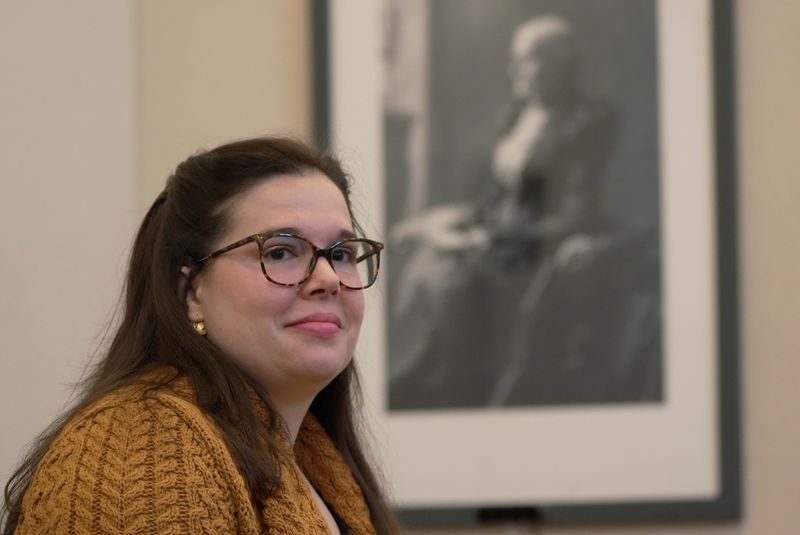
For Allison Hinman, president and CEO of the Susan B. Anthony House, the area has always been referred to as the Burned-Over district due to the many social movements moving through the area.
“You’ve had a lot of people that were really tapped into the political and the social climate here in central and western New York,” Hinman said. “You have William Seward, that’s serving as a United States senator, a New York state senator and governor, that’s right in Auburn, and the Erie Canal that’s not just transporting goods and people but it’s also sharing ideas, that’s part of the reason why you’re seeing a lot of these ideas being shared throughout the area.”
Hinman also mentions that during the 1850s this is when Susan B. Anthony gets involved and travels extensively as she’s aware of what’s happening in Seneca Falls.
Anthony traveled anywhere from 8,000 to 13,000 miles a year working for human rights and for enfranchisement of all.
“I personally think her advocacy starts when she’s a teenager and she’s seeing the pay disparity between men and women in education,” Hinman said. “She’ll travel around New York State to education conventions demanding women be paid the same as men and she’s doing that as a teenager. She’s also getting involved in temperance and abolition and then the women’s rights movement.”
Looking at the time period from the 1850s and into the early 1860s, right before the Civil War starts, Anthony is honing her organizing skill set and also delivering speeches when it comes to women’s rights.
Hinman describes how Anthony travels to Albany, Syracuse, Buffalo and Rochester, all of which are canal towns in New York State, and how she is met with a lot of resistance from the communities that she is speaking to.
Hinman also recounts instances that show how Anthony and other activists were met with resistance.
“When they stop in Auburn for a women’s convention, they’re actually ran out of the courthouse that they had secured and Martha Coffin Wright will allow the convention to continue at her home on Genesee Street in Auburn,” Hinman said. “When there in Albany, the mayor actually sat on the stage with a shotgun in his lap so that they could proceed. Susan B. Anthony was speaking about John Brown’s work and Martha Coffin Wright writes that Frederick Douglass stood at the edge of the stage, with his arms crossed, basically saying, you know, bring it on.”
Hinman described how activists and abolitionists during this time period were determined and how their lives were on the line for the work that they were doing and the change that they wanted to see.
This article originally appeared on Rochester Democrat and Chronicle: How New York helped launch the women’s rights movement | Exclusive
Reporting by Kerria Weaver, Rochester Democrat and Chronicle / Rochester Democrat and Chronicle
USA TODAY Network via Reuters Connect
By Kerria Weaver, Rochester Democrat and Chronicle | USA TODAY Network