As New York basks in the glow of the Knicks’ world championship, the energy of World Cup soccer and the opening of a new stadium for the Buffalo Bills, there’s growing consensus across the Empire State about another massive sporting spectacle.
It’s time to think about hosting the Winter Olympics and Paralympics.

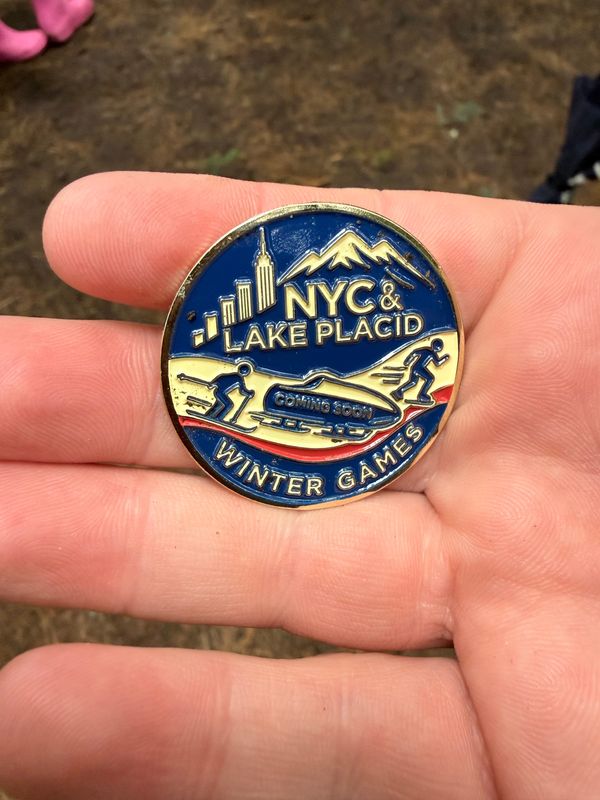
The possibility of a third winter Olympiad for the Empire State — one shared by Lake Placid, which hosted the third and 13th games, in 1932 and 1980, and New York City, arguably the most influential city on the planet — is worth exploring, Gov. Kathy Hochul said, launching an exploratory committee to test the state’s capacity to host the world.
The concept — first surfaced by upstart young Democrats in the state Assembly, Bobby Carroll of Brooklyn and D. Billy Jones of the North Country, and nurtured through four years of conversations, conjecture and advocacy — is ready for testing.
“If not now, when?” Hochul asked me in an exclusive interview after she named an exploratory committee to assess whether a New York City-Lake Placid Olympic Winter Games, most likely in 2042, could be organized and executed with success.
The myriad challenges of such an endeavor need testing. These key questions should be priorities for the exploratory committee:
Hochul tapped a roster of state, city and local officials to join the exploratory committee tasked with answering those questions. Heading the team is Ashley Walden, CEO of the Olympic Regional Development Authority, or ORDA, the state government agency that operates the 1980 Olympic venues in Lake Placid, including Whiteface Mountain Ski Center and Mount Van Hoevenberg, home to a world-class sliding track, biathlon stadium and Nordic ski course.
“This takes years and years of work and preparation,” Hochul said in her USA TODAY Network interview. “So why not get started now and capture that magic of the Miracle on Ice, as well as seeing how New York City could put us together in a very competitive way when we’re trying to win the selection a few years from now. So, I said, ‘There’s no time like the present. Let’s get started.’”
What could a NYC-Lake Placid Olympics really look like?
The concept — based on close observation of the International Olympic Committee’s assessment of recent winter Olympic bids and affirmed by the multi-venue example set at this year’s Milan-Cortina Olympics — is easy to understand.
New York will host crowd-drawing sports with athletes who can compete indoors: events including hockey, figure skating and curling. Lake Placid, with Whiteface Mountain Ski Center, the sliding track and Nordic ski center at Mount Van Hoevenberg and ski jumps, would host skiing in multiple disciplines, bobsled and luge.
The Olympic spirit in Lake Placid is a driving force.
The Adirondack village, home to just 2,300 people, saw then-Gov. Franklin D. Roosevelt open the third Olympic Winter Games in February 1932. Two generations later, it witnessed the spectacular gold-medalist U.S. Hockey Team permanently ensconced in sports history for its triumph in 1980 over a U.S.S.R. powerhouse, The Olympic spirit and the dream of another winter games persist in the village — the Olympic Center that was home to the Miracle is in the middle of town, next to the speed-skating oval where Eric Heiden captured five Olympic gold medals right in front of Lake Placid High School
ORDA, formed in the aftermath of the 1980 games to steward Lake Placid’s athletic venues, was then and remains now a singular force in the community’s economy. It hosts World Cup competitions each winter in a host of disciplines. Athletes from across the globe train and compete in Lake Placid.
With investment from New York taxpayers, ORDA has overseen a $750 million investment in Lake Placid’s venues over the last decade. The Olympic legacy sites hosted the FISU Winter Games — a collegiate Olympiad — in 2023.
Winter sports, training and competition, have fueled the quiet, enduring hope of a new Olympic journey for four decades.
Then, of course, there is the Big Apple.
New York City has never hosted an Olympiad, winter or summer. It remains a worthy candidate for either.
“New York is where the world already comes,” Carroll said, arguing in an interview that the city is built to manage large crowds at multiple indoor venues, with a complex and flexible public transit system providing an ideal base for a multi-destination host. “This exploratory effort is an important first step in understanding what a future Winter Olympic bid could mean for our economy, infrastructure, tourism industry and New York’s place on the world stage. I’ve long believed New York City and Lake Placid can tell a uniquely New York story, one of urban and rural communities coming together behind a shared vision.”
Carroll points, as he did in an op-ed for USA TODAY earlier this year, to the distances the Milan-Cortina games managed as athletes competed across an archipelago of venues and communities in northern Italy.
And the comparison is real.
Door to door, the distance between Madison Square Garden and Whiteface is 293 miles — a 5-hour drive. That’s roughly equivalent to the 252-mile trek between Milan’s hockey arena and Cortina’s curling venue.
Milan-Cortina hosted an Olympics. What could stop NYC and Lake Placid?
Distance, then, should not be seen as an obstacle.
Could cooperation between the North Country and the city pose challenges?
Yes, maybe. Or no, maybe.
Given Democratic control of most parts of New York state government, and the North Country’s deep heritage as a Republican stronghold, regional politics could ooze into the discussions about partnering for a Winter Games. On the other hand, the reality has long been that the purse strings that invest in the Olympic facilities in Lake Placid have been held by Albany’s ruling Democrats. When it comes to winter sports and tourism for the Adirondacks, politics could recede into a welcome background.
Hochul, a Democrat from Buffalo, said she hoped shared possibilities around economic development could drive cooperation.
The governor was sanguine about a potential bid’s capacity to jump-start investment in high-speed rail to connect the North Country with the metropolitan region. The governor said a potential Olympic bid could lead to the reinvention of closed state prisons in the Adirondacks. Sprawling prison properties hold dual promises, Hochul said. Ripe for redevelopment for workforce housing in a region whose tourism economy is fueled by middle-class labor, they can be redeveloped to house athletes first — and workers later.
“Instead of having to build hotels,” Hochul asked, “why don’t we look at some possibilities that’ll have a long-term benefit for the region?”
As Hochul — and everyone I’ve spooken to about this opportunity for New York — has said, the sucess of the bid will, all other factors aside, come down to money. Can we muster the right balance of public and private investment to pull off a bid that drives economic development in Lake Placid and New York — and in a way that serves vastly different interests in each place?
Hochul pointed to Los Angeles’ experience in securing its bid for the 2028 Olympic Summer Games.
“I’ve talked to people involved in that,” Hochul told me. “You need the support of successful business leaders who can help finance the whole initiative.”
Hochul’s voice dropped as her frankness rose.
“It’s very expensive,” she said. “And it’s far more than can be put on New York taxpayers. I can tell you that right now.”
What comes next?
Walden, the ORDA CEO who will lead the Olympics-Paralympics exploratory committee, said the group will look hard at the many questions that must be answered before a complex bid is undertaken.
“It’s important to us to do this work, to really dig into some of the details, to find out where the strengths and weaknesses are,” Walden said. “And … at the end of that time, research and work, [we will evaluate a] recommendation to some more work or to move to a bid committee.”
Jones, the former assemblyman from the North Country who collaborated with Carroll on early parts of the Lake Placid-New York City proposal, emphasized the need for Lake Placid and New York City officials to collaborate.
The latter, he suggested, will need to take a lead role to bring a bid to fruition.
“To have this be successful, to go into an Olympic bid process, we’re going to need a vast amount of resources,” Jones told me. “We’re going to need resources from all across the country, and especially from New York City. Being from the North Country, the resources to make this happen are in New York City.”
The possibility of New York City and Lake Placid partnering to pursue a new Winter Olympiad is potent. A successful bid could deliver a defining civic project that could define our state for the 21st century. The exploratory committee must find a way to answer the tough questions it faces — and deliver.
Ed Forbes is senior director for opinion and engagement for the USA TODAY Network Northeast, working with publications including lohud.com and The Journal News, the Democrat and Chronicle, and NorthJersey.com and The Record. Email: eforbes@usatodayco.com
This article originally appeared on Rockland/Westchester Journal News: A new Lake Placid-NYC Winter Olympics needs money. Find it | Opinion
Reporting by Ed Forbes, Rockland/Westchester Journal News / Rockland/Westchester Journal News
USA TODAY Network via Reuters Connect
By Ed Forbes, Rockland/Westchester Journal News | USA TODAY Network