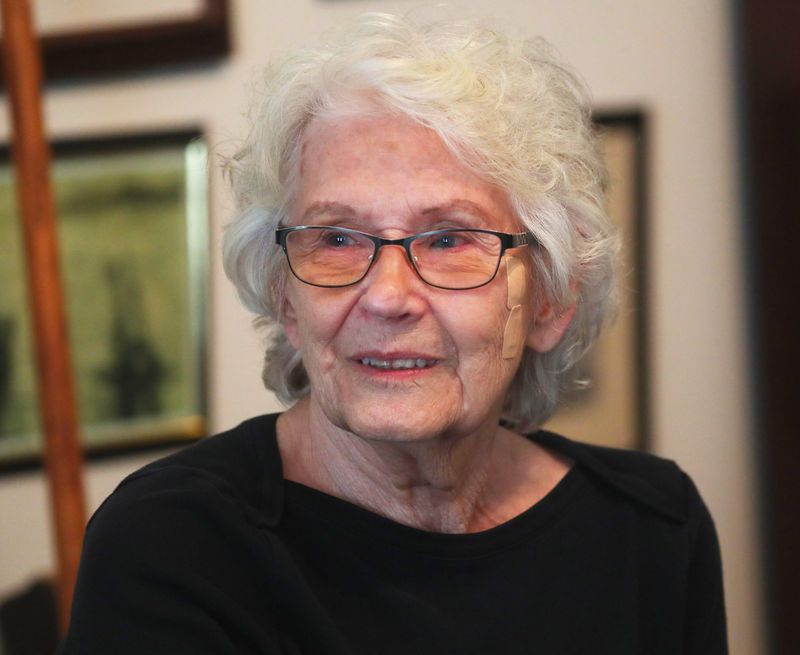
It was Yvonne Laube’s worst fear come true.
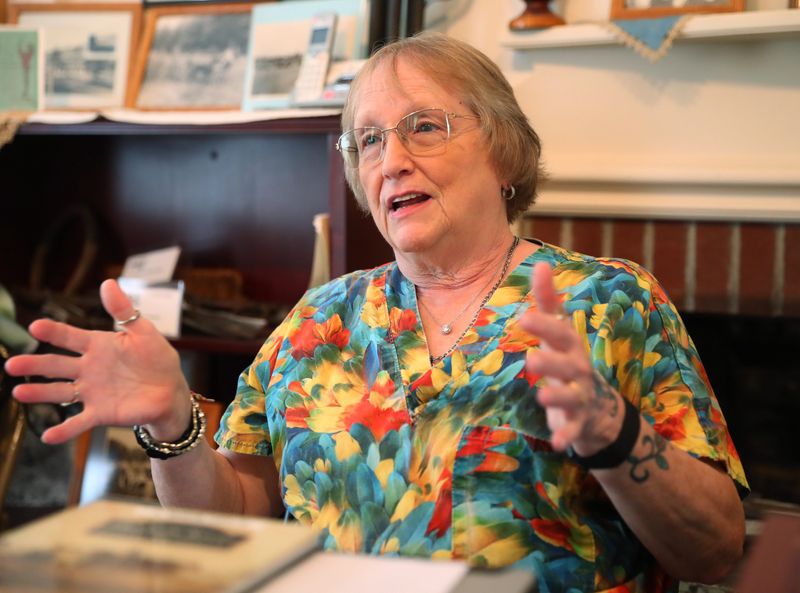
Standing outside ShopRite in the Hudson Heritage shopping center on June 3, the Town of Poughkeepsie’s Historic Preservation Commission member watched as flames swept through the Hudson River Psychiatric Center and raced toward the main administration building.

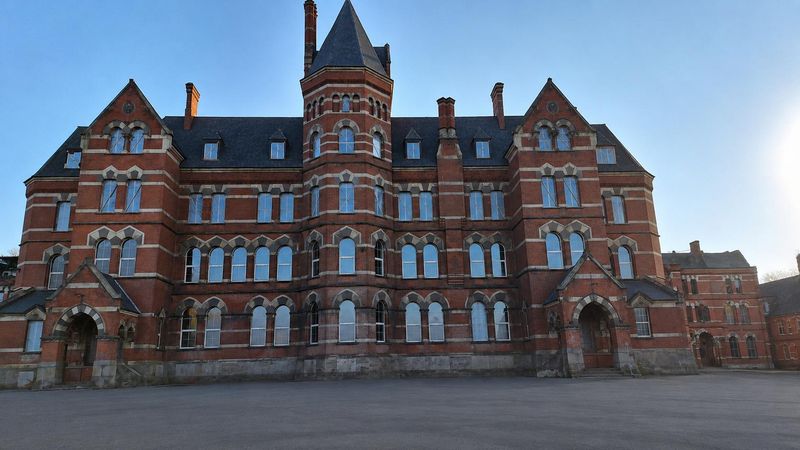
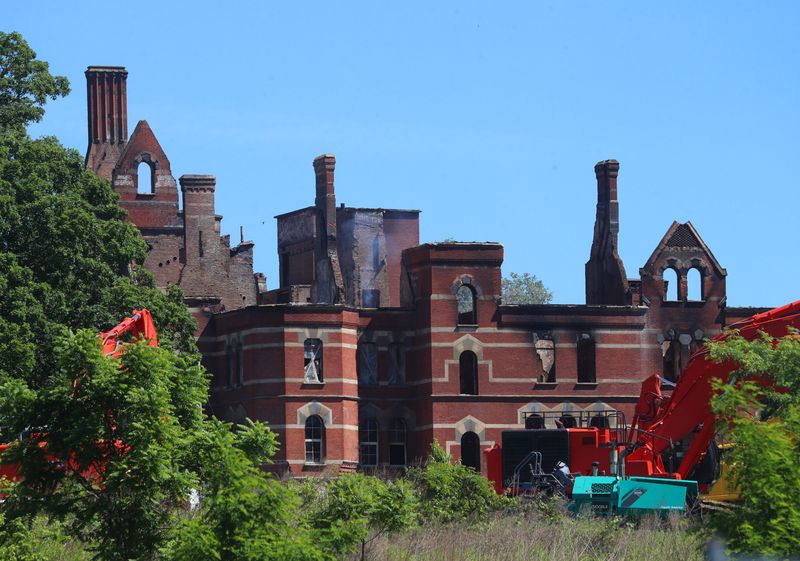
That building, she knew, was a National Historic Landmark. It had survived other fires, in 2007 and 2018, but this one looked different.
“It was a burnout,” Laube said. “It was like a rocket stove, just shooting flames up out of the roof.”
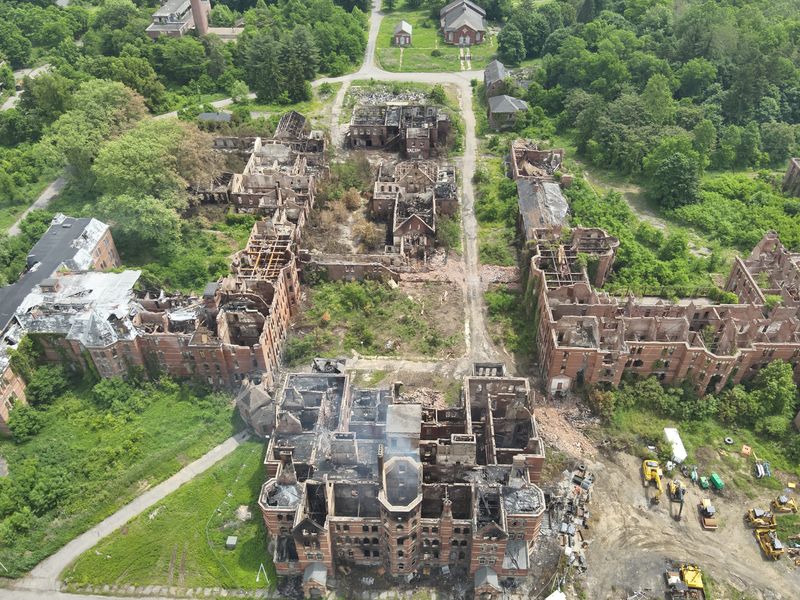
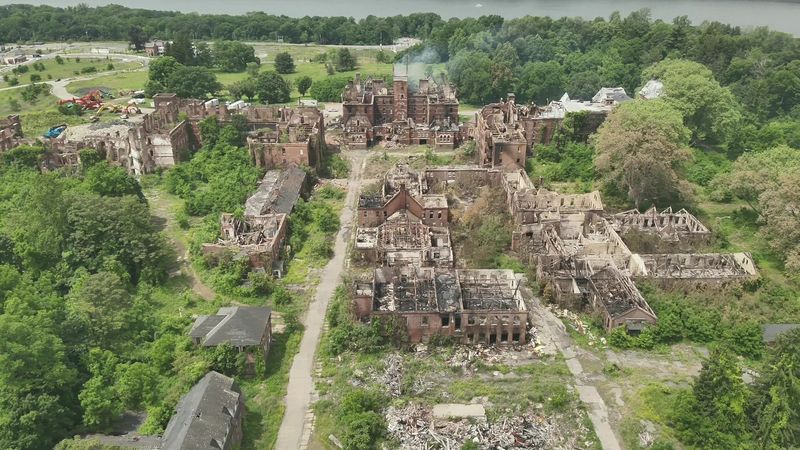
Fire investigators have not yet determined the cause of the fire that tore through the campus that day. Crews spent days battling the blaze — along with a second major structural fire that erupted at the site — and weeks managing flare-ups.
The Hudson River Psychiatric Center — its name was changed from Hudson River State Hospital in the 1970s — sits at an intersection of cultural and historic significance. Its past shaped American mental health history. Its future may include major modern development.
If it can be saved.
Hospital embodies ‘critical Hudson Valley and national history’
The Poughkeepsie site’s story began as one of 80 psychiatric facilities constructed in the 19th century under the Kirkbride Plan, a design by physician Thomas Story Kirkbride.
The first patients were admitted in 1871. The facility closed 141 years later on Jan. 25, 2012.
A distant relative, Robert Kirkbride knows this site not only holds symbolic cultural and local history, but is part of broader American history and the nation’s mental health history.
“The building, in its parts and its whole, embody critical Hudson Valley and national history,” Kirkbride said.
A spokesperson and founding trustee for PreservationWorks — the nonprofit national advocacy group that is committed to the preservation and adaptive reuse of historic Kirkbride Plan buildings across America — Kirkbride hopes to reignite local passion for this site’s significance. Laube also volunteers for PreservationWorks.
Despite prevailing stigma around mental health institutions, Joe Galante, author of “Hudson River State Hospital (Images of America),” said the Poughkeepsie facility embodied the true definition of an asylum — from the Latin term meaning sanctuary.
The High Victorian Gothic style was designed to show people were valued and cared for with dignity, as were the grounds, designed by landscape architects Frederick Law Olmsted and Andrew Jackson Downing with influence of Calvert Vaux — Olmsted and Vaux are credited with the design of Central Park in New York City.
“It was beautiful,” said Linda Hacksteiner, a 1963 graduate of the hospital’s nursing school who worked there for a total of 50 years. “The patients loved it.”
Both Hacksteiner and Lynn Rightmyer, a 1975 graduate of the Hudson River State Hospital School of Nursing who worked at the psychiatric center for a total of 25 years, are in the HRSH Nurses Alumni Association and help run the HRSH Museum on the state-owned, Route 9G side of the hospital.
Rightmyer called the fire “heartbreaking” to witness.
“It just makes you want to cry when you see how beautiful the building used to be,” she said.
The scale of the original property was sprawling, running from the Hudson River at the Quiet Cove Riverfront Park to past Route 9G. Before being owned by the state, it was mostly owned by James Roosevelt, father of President Franklin D. Roosevelt.
Treatment at the hospital, including family-style meals and occupational therapy, was meant to get patients back to their lives. They could also learn or continue skills to set them up for that transition.
Galante described the hospital as a self-sufficient parallel world, keeping patients engaged in what was essentially a little town while providing all life’s basic necessities, some of which they might not have had before.
“It’s a symbol of American psychiatry,” Galante said. “…It’s a piece of American history.”
This model was seen across the Kirkbride Plan hospitals — it was part of an era of social reform for treatment of poorer classes in society, Galante wrote, not confinement.
What’s happened since hospital closed
EnviroFinance Group LLC purchased the hospital property in 2013 with big plans for it, including a shopping center, housing and historic preservation. So far, only one phase of that plan has been completed.
After the 2018 fire, a new roof was installed, but that’s not all that was burned, according to Ed Elanjian, CEO at EnviroFinance Group.
In the main administration building, new windows were blown out, sealed doorways and entrances were engulfed, and the fences surrounding the main administration building were knocked down during firefighting operations.
“After the 2018 fire, we put a new roof and trusses and supports over the main administration building, as well as new windows,” he said. “We spent millions on that new roof.”
Recent change to the plans before the fire
In the past decade, Kirkbride said, five different Kirkbride Plan hospitals have been preserved and adapted to begin new lives. Poughkeepsie’s is still awaiting revitalization.
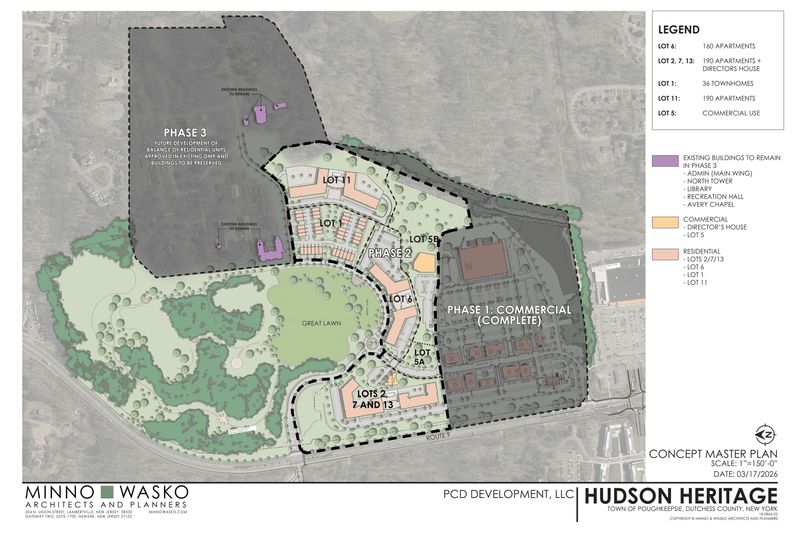
The Hudson Heritage shopping center next to the former psychiatric center was always the first portion of the plan. It was completed in 2024.
What happens next, according to Elanjian, is addressing the portion from Route 9 to the administration building — considered phase two — followed by the actual preservation and adaptive reuse of six buildings from the hospital. This, he said, was always a three-part plan.
Though it was originally planned to become a large commercial medical office building, Elanjian said a change was proposed to phase two in April to instead create 540 apartments, 36 townhouses including some affordable housing, and 16,000 square feet of commercial space.
Construction is planned to begin by the end of 2026 and will involve bringing viable utilities and a sewer system to the site. Phase three’s preservation, including many moving parts, will be worked on in the background of phase two.
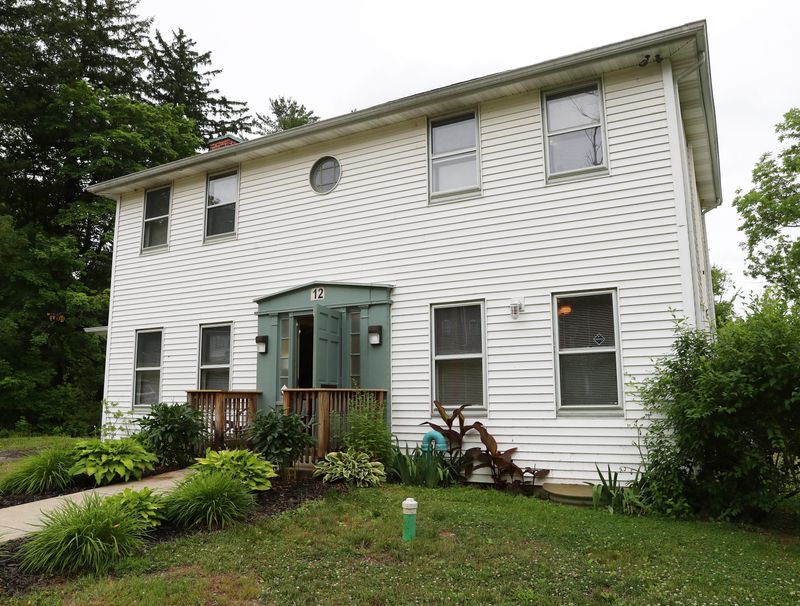
The plan will also include the preservation of the former “Director’s House.”
Five other buildings are to be preserved in the project’s third phase, including three smaller buildings behind the main administration building: the library, the amusement hall and the Avery Chapel. Those three were not impacted by the fires.
The final two buildings — the main administration building and the north tower, the northernmost section of the north wing — were severely scorched.
“Our goal is to preserve these six buildings for adaptive reuse,” Elanjian said.
The south wing, deemed unstable, will be demolished.
If Elanjian could, he said, he would have already started construction on the housing.
“We can’t just sit there and hold our breath for another 10 years,” Elanjian said. “We’ve got to get something done.”
What did security look like at the site before the fire? What about now?
All the remote, non-electric cameras on site were destroyed in the fire, Elanjian said, and the group is currently working toward reestablishing a fencing perimeter, clearing the brush and attempting to reseal the buildings.
The group has had security guards at the site since 2013, he said, augmented by cameras and selective fencing around the buildings. Manned security, through a third-party company, is there mid-afternoon and overnight until the start of the next work day, when the site superintendent comes back in when the adjacent shopping center opens.
Kirkbride is also a professor of architecture at Parsons School of Design in New York City and has taken students on trips to see the former hospital over the past four years with permission from the developers.
Security at the site, he said, was “remarkably sparse” on his last visit. He and his group have also seen people flying drones over the campus and one security guard, which he does not think is enough for a historic landmark. The fire, Kirkbride said, was “almost inevitable.”
Elanjian said the group recently doubled security and will be putting in higher fencing.
Their priority, he said, is ensuring the buildings’ condition doesn’t get worse.
“We’ve been fighting this battle now for 12 years,” Elanjian said.
Town of Poughkeepsie Supervisor Rebecca Edwards said in an email statement she and other officials are working with the developers to implement security and future planning for the site.
We still don’t know the cause of the fire, yet
For now, what sparked the hospital fire isn’t publicly known.
“We’ve got to let the fire department, the police department, do their work,” Elanjian said
Fairview Fire District Chief Justin Bohlman said in a June 22 email statement there were no new updates at the time beyond what had been previously shared.
Here’s what we know: on June 3, a prolonged and complex structure fire broke out at the psychiatric center, devastating the north, main administration building and south wings
Five days later, on June 8, another structure fire blazed through the main administration building. Both fires were contained, but four firefighters required medical evaluation — all were expected to recover.
Flare-ups at the scene have persisted, and crews were continuing to battle with lingering hot spots weeks later.
What is clear, according to Rightmyer, is there “wasn’t a whole lot left in there to burn” in the south wing, besides the trees and shrubs growing inside.
The fire damage has, however, heightened safety risks at the site, Elanjian said.
People could be “seriously hurt, or they could inhale toxic substances by going into these buildings,” Elanjian said.
These asbestos-filled buildings, under the right precautions, can be safely decontaminated, he said.
When the building collapses like it has, the result is a “giant slurry,” Elanjian said, of collapsed floors, asbestos tiles and water used to put out the fires comingled with rubble.
“The overall message is let’s get the facts before you draw conclusions, and then let’s try to work collaboratively, with as broad a group as we can, to figure out where to go next,” Elanjian said.
What lies ahead?
The 30- to 90-day plan moving forward includes PVEDI Engineering, a third-party company hired by Elanjian.
The group is already underway with a structural stability review to understand which buildings are safe to enter and how far to set back the fencing, so nothing falls on someone standing at the fence line.
A third-party historic architectural review will follow to assess the fire’s impact on the administration building and north tower.
“If we can still preserve those features,” from the High Gothic architecture, to the highly detailed great windows and intricate brickwork, “that’s the best we can hope for,” Elanjian said.
Elajian said he’s under the impression it’s not yet known whether the burned buildings are a total loss.
“Let’s not leap to that conclusion,” he said.
The group will present its findings to the town after the reviews, expected by the end of the summer or early fall.
For those buildings designated for demolition, Laube and Kirkbride hope these historical architectural fragments are carefully extracted and preserved. They also hope a memorial could be made in honor of the patients and staff who lived and worked at the hospital for over a century.
“At the heart of all of it, whatever can be preserved from the Kirkbride hospital should be preserved and find a new life,” Kirkbride said.
“We refuse to call the building lost,” he said. “…We haven’t lost it yet.”
Nickie Hayes is Breaking & Trending News Reporter for the Poughkeepsie Journal. See her most recent articles here. Contact reporter Nickie Hayes: NHayes@poughkee.gannett.com, 845-863-3518 and @nickieehayess on Instagram.
This article originally appeared on Poughkeepsie Journal: Hope remains for burned Hudson River Psychiatric Center. ‘We haven’t lost it yet.’
Reporting by Nickie Hayes, Poughkeepsie Journal / Poughkeepsie Journal
USA TODAY Network via Reuters Connect
By Nickie Hayes, Poughkeepsie Journal | USA TODAY Network