While funding for the Department of Homeland Security hangs in the balance amid a budget standoff over immigration enforcement, longstanding funding concerns for the World Trade Center Health Program finally appear solved.
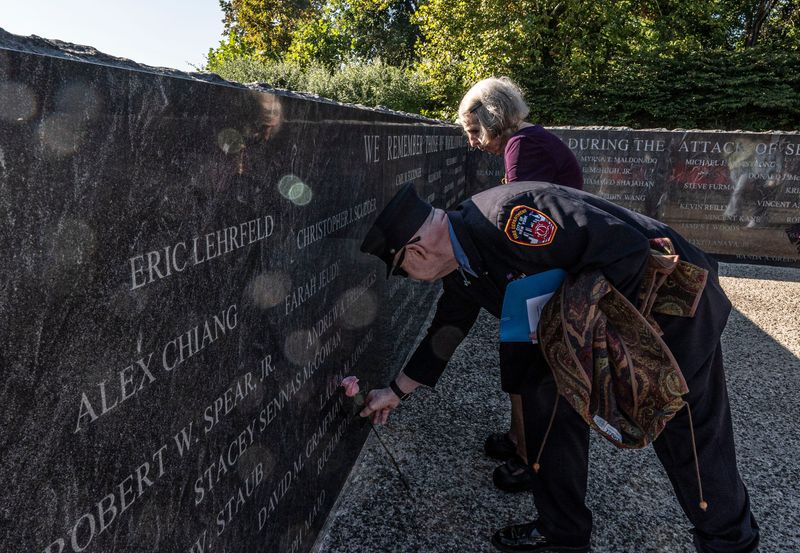
The secured funding comes as the 25th anniversary of the Sept. 11, 2001 terrorist attacks approaches. As of 2026, three times as many people have died of 9/11-related illnesses than perished at the World Trade Center, the Pentagon, in Pennsylvania and on the four hijacked jets.

The 9/11 Responder and Survivor Health Funding Correction Act was included in a new round of government funding signed Feb. 3 by President Trump.
Meanwhile, Congress continues to hammer out a deal on reforms to DHS, which includes ICE and Border Patrol amid backlash over the agencies’ actions, including the killings of two U.S. citizens in Minnesota.
But the WTC Health Program’s cyclical shortfalls have been fixed.
The program’s perpetual history of fiscal shakiness stems from the grim reality that more 9/11 responders and survivors are seeking treatment for illnesses attributed to the toxic exposures that occurred on and after the Sept. 11, 2001, terrorist attacks.
Without the funding fix, the program would have likely faced service cuts by 2027.
Peace of mind, but work ahead
Finally securing long-range funding provides peace of mind, said Benjamin Chevat, executive director of Citizens for the Extension of the James Zadroga Act.
The next step, Chevat said, is to ensure the program is fully staffed.
HHS has maintained past program staffing cuts were restored.
But Chevat said the cyclical firings and re-hirings at the WTC Health Program and U.S. Centers for Disease Control under U.S. Department of Health and Human Services Secretary Robert F. Kennedy Jr. created chaos and staffing losses.
He also expressed concern in delayed progress for key research, which would ensure the best health outcomes for the 9/11 community.
Rocky road to secure 9/11 healthcare
The path to permanent funding for the WTC Health Program has been lined with political pitfalls.
In December 2024, the WTC Health Program funding fix collapsed along with an omnibus spending plan that folded under political pressure by then President-elect Trump and Elon Musk.
In February 2025, another round of cuts by the Department of Government Efficiency, or DOGE, then run by Elon Musk, were made and restored amid a bipartisan outcry. Similar cuts, and restorations, occurred in April 2025.
But funding shortages have plagued the program practically from its beginning. Sick 9/11 responders have trekked to Washington, D.C., multiple times over the years to lobby for more aid.
The recently signed legislation was sponsored by U.S. Rep. Andrew Garbarino, a Long Island Republican, and U.S. Sen. Kirsten Gillibrand, a New York Democrat.
“Ensuring our 9/11 first responders and survivors have the resources they need to cope with the long-term health effects from toxic exposure has been one of my top priorities for my entire tenure in Congress,” said Gillibrand, who joined the House in 2006 and was appointed to the Senate in 2009.
U.S. Rep. Mike Lawler, a Pearl River Republican, and U.S. Sen. Charles Schumer, a New York Democrat, were among co-sponsors in their respective chambers.
What WTC Health Program funding secures
The legislation changes the funding formula for the WTC Health Program, which provides 9/11 responders and survivors with monitoring and treatment for certain illnesses that have been linked to the toxins that permeated lower Manhattan during and after the Sept. 11, 2001 terrorist attacks.
The WTC Health Program is administered by National Institute for Occupational Safety and Health, which is part of CDC.
The WTC Health Program was established as part of the James Zadroga Health and Compensation Act that was signed into law in 2011.
That legislation also established the 9/11 Victims Compensation Fund. The two programs are distinct, but to qualify for the VCF, a person needs certification by the WTC Health Program.
WTC Health Program funding now is expected to be secured through 2090, when the program sunsets.
Losses from 9/11 illness 3 times more than deaths from attacks
The World Trade Center Health Program has now classified 69 cancers as linked to exposure to Ground Zero’s toxic swirl. Various respiratory health issues, and post-traumatic stress disorder, are also listed by the program.
As of 2026, more than 9,000 deaths have been attributed to 9/11 illness, advocates have documented, which more than triple the 2,977 deaths from the attacks.
The WTC Health Program provides quarterly reports on the status of the program and its patients. Data from the most recent report, published Feb. 1 and based on data through Dec. 31, 2025, includes:
This article originally appeared on Rockland/Westchester Journal News: 9/11 health program finally wins permanent funding as Trump signs bill
Reporting by Nancy Cutler, Rockland/Westchester Journal News / Rockland/Westchester Journal News
USA TODAY Network via Reuters Connect