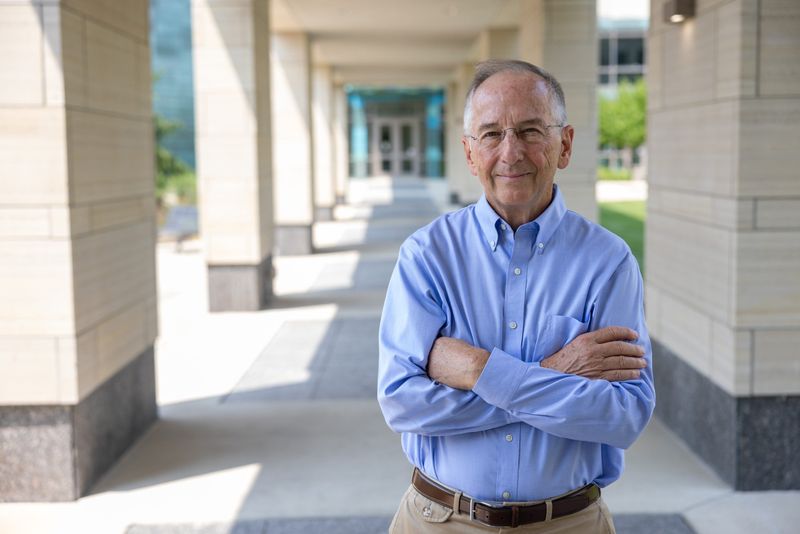
A longtime University of Iowa professor’s life-changing cystic fibrosis research was honored with one of biomedicine’s most prestigious awards — an accolade so distinguished it’s often referred to as the “American Nobel.”
Dr. Michael J. Welsh, along with two other scientists, won the 2025 Lasker-DeBakey Clinical Medical Research Award for their work on therapies that have lengthened and bettered the lives of patients with cystic fibrosis.

A genetic disorder that causes thick mucus to inhibit organ functions, cystic fibrosis most often effects the lungs where chronic infections lead to progressive destruction.
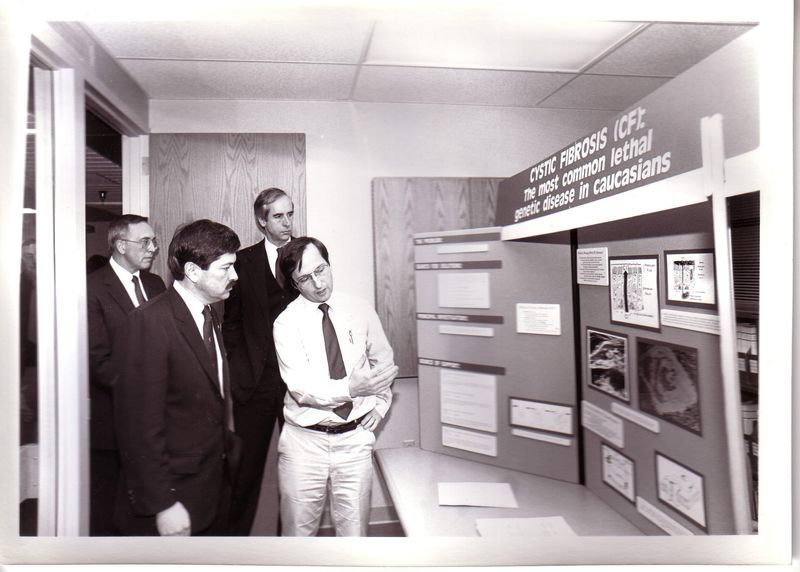
When Welsh started his medical career nearly 50 years ago, cystic fibrosis was a terminal disease, with patients rarely seeing their 30th birthday. Today, when cystic fibrosis patients are given the therapies based on Welsh’s work, life expectancy can be well into the 80s, as the University detailed in a news release about the award.
Specifically, Welsh’s research changed the fundamental understanding of a critical protein, known as CFTR, and how it is transformed by a gene mutation in cystic fibrosis patients, resulting in a breakdown of the body’s usual protective systems and preventing the normal hydration of airways.
With that knowledge, Welsh’s team proved that if cooled down, the mutated CFTR protein could be “corrected” in a sense, a key discovery that allowed scientists to explore the possibility of a more permanent fix to the protein’s damage, according to the release.
Using Welsh’s results, the two other honored scientists — Jesús (Tito) González and Paul A. Negulescu, who were employed by Vertex Pharmaceuticals — worked for decades to develop Trikafta, “a triple-drug combination” that made cystic fibrous manageable for about 90% of those diagnosed, the University release says.
“Mike Welsh’s work exemplifies how fundamental science — driven by curiosity, collaboration, and purpose — can lead to transformative innovations and therapies,” Dr. Denise Jamieson, the university’s vice president for medical affairs, says in the news release.
While Welsh said that he is “incredibly honored to receive this award,” he points to the collaborative science and the many unnamed researchers who made the groundbreaking work possible.
“For me, it is truly a celebration of our entire scientific enterprise,” Welsh said in the release. “It’s a celebration of what we do and an acknowledgement of the importance of our collective endeavor to understand how things work and how to use that knowledge to improve people’s lives.”
Indeed, enhancing the lives of cystic fibrosis patients has always been a central driver to Welsh’s work.
He traces the impetus for his lifelong pursuit to a clinical patient he met as a medical student in the 1970s.
The young girl was coughing and so short of breath she could only speak in short staccato sentences during Welsh’s exam, he said in a previously published profile.
“I learned about all the things that she couldn’t do because of her disease,” Welsh said.
“It was sobering,” he added, “because I learned that she probably was never going to make it to her teens, and if she did make it to her teens, she wasn’t going to make it out of her teens.”
A Marshalltown native, Welsh went to the University of Iowa for his undergraduate and medical studies, joining the school’s faculty in 1981.
His official titles at the university include being the director of the Pappajohn Biomedical Institute at the Carver College of Medicine and the Roy J. Carver Professor of Internal Medicine and Molecular Physiology and Biophysics. He also holds appointments in the neurology and neurosurgery departments and memberships in many outside professional associations.
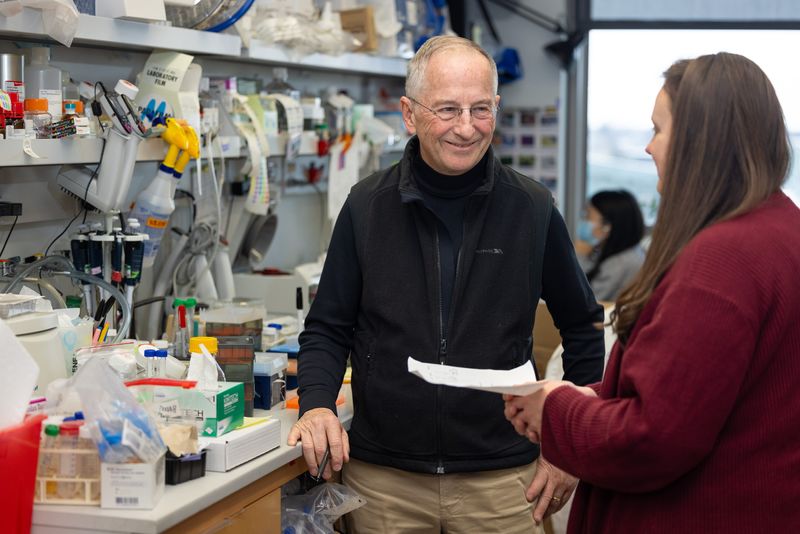
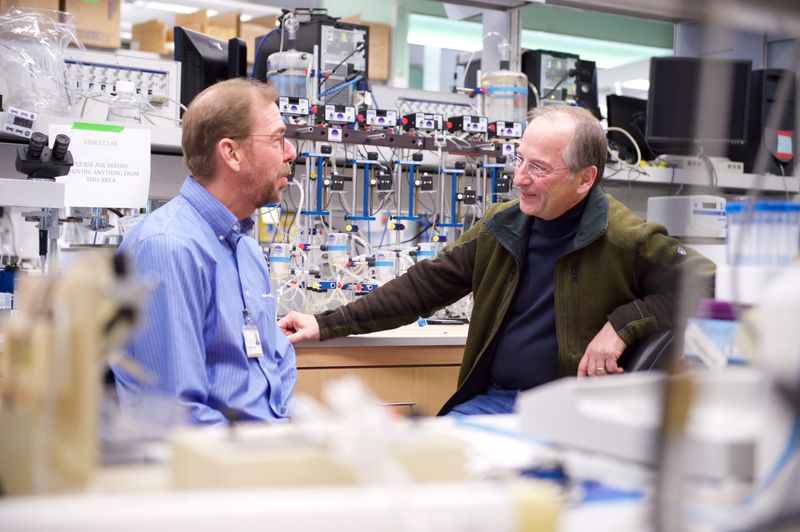
In addition to his team members, Welsh credits the University setting for giving him time and space for research — including an “in-lab sabbatical” that came at a critical juncture for his experiments — as well as federal grants and philanthropic funding.
“Without this financial support, scientific progress and the development of the next generation of scientists, who will tackle additional diseases, would not be possible,” Welsh previously said.
Established by celebrated research advocates Albert and Mary Lasker, the Lasker Award winners will be honored at a gala this fall and the three honorees in the clinical category will split a $250,000 honorarium.
While the Lasker Award may be a new zenith, Welsh’s work is far from complete, as he says in the release.
His protein analyses led to discoveries that could impact the care and management of Parkinson’s disease and Alzheimer’s disease. Outside of the lab, his research and the stories of some of the patients whose lives have been changed by Welsh’s studies — including a woman who is now running — will be featured in a documentary premiering at the medical school on Sept. 30.
And there are still 10% of cystic fibrosis patients who aren’t candidates for the Trikafta treatments, he says.
“We need to continue our work to find solutions that help those people.”
To learn more about Welsh and his tenure at the University of Iowa, visit UIHealthcare.org. And for more information about the Lasker Awards, including winners in other categories, go to LaskerFoundation.org.
Courtney Crowder, the Register’s Iowa Columnist, traverses the state’s 99 counties telling Iowans’ stories. Reach her at ccrowder@dmreg.com or 515-284-8360.
This article originally appeared on Des Moines Register: University of Iowa doctor wins ‘American Nobel’ for significant cystic fibrosis research
Reporting by Courtney Crowder, Des Moines Register / Des Moines Register
USA TODAY Network via Reuters Connect