Dylan Lampe, in the fashion of born-and-raised Iowans, loves Kum & Go, the former Des Moines-based convenience store chain that leaned into online fun with its name.
“People grew up with the brand,” said Lampe, 41, a longtime Des Moines resident. “The euphemism was funny. Everybody was in on it.”

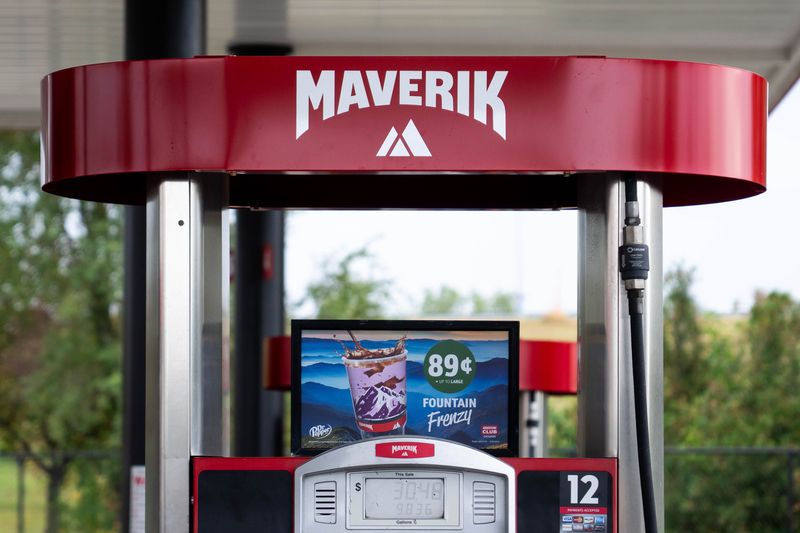
But the Utah-based Maverik chain, which bought the roughly 400-store Kum & Go chain in 2023, buried the name in a massive rebrand completed last fall.
Any time Lampe scrolls through social media and sees a post from the defunct chain’s accounts, operated by their new owner, he leaves a comment. And he’s no cheerleader.
“Maverik profiting off the Kum & Go name while wanting NOTHING to do with it is a slap in the face,” Lampe wrote in response to a Facebook post touting the Salt Lake City company’s new line of Kum & Go T-shirts.
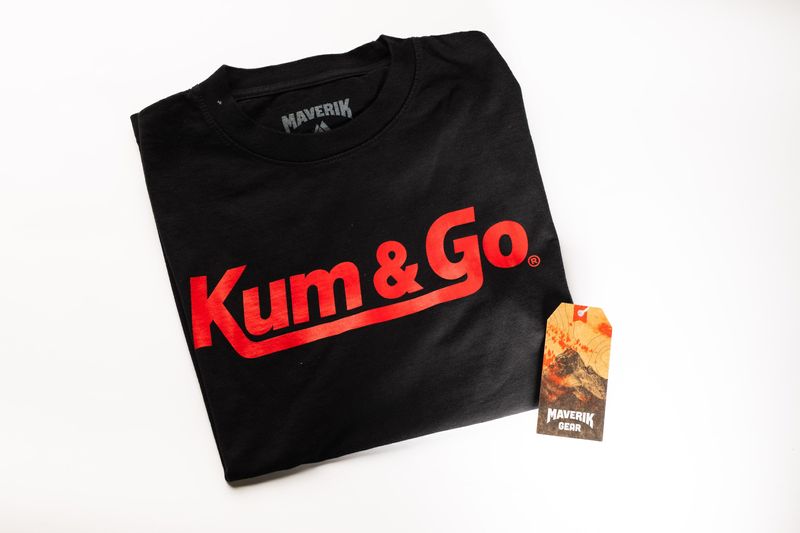
The shirts are a mash-up of the brand’s past and present, with the classic five-letter-and-ampersand logo printed in bold on the front while the Maverik label is displayed inside the collar.
“It pisses me off,” Lampe said. “I just want somebody to notice.”
He is especially bitter over the way Maverik went about its takeover. Initially, the company said it was open to keeping the classic name alive. It also received financial incentives from the Des Moines City Council to maintain a regional office in the city with 250 employees. Their ranks included veteran Kum & Go employees, some of whom were Lampe’s friends.
Most ended up losing their jobs in rounds of layoffs as Maverik consolidated operations in Utah, with the bulk of the city incentives forfeited.
And, of course, there are the shirts, once a staple among boundary-pushing celebrities like Johnny Knoxville, who sported one in his 2006 “Jackass” sequel.
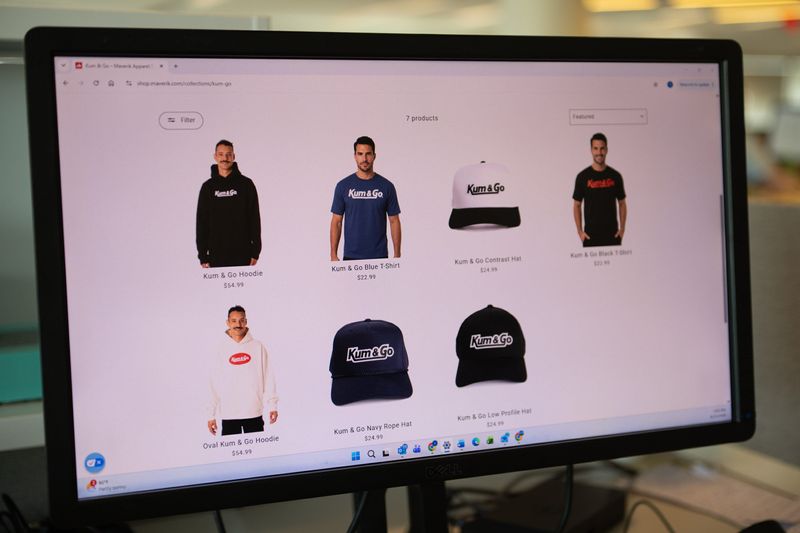
Kum & Go’s playful and edgy social media accounts have pivoted since late 2025 to promoting the line of Kum & Go hats, T-shirts and sweatshirts priced from $23 to $55. You can’t buy them in Maverik stores, but the company plans to keep selling the apparel online, according to spokesperson Michelle Monson.
The posts are often met with criticism or jokes.
“You need hats that say Kame & Went,” one Facebook user wrote in March.
“Profiting off a brand you killed is so weak,” said another.
The company did not respond to a question about the criticism.
When Kum & Go merchandise was being phased out of newly rebranded stores around the Des Moines metro, Lampe secured what he believed would be the last of the branded gear from his friends inside the company.
Now, the shirts and hats appear to be Maverik’s only remaining tie to the Kum & Go name.
A fading identity
Maverik’s self-described identity as “Adventure’s First Stop,” accented by an M stylized as a mountain range and photo murals of outdoorsy scenes in its stores, contrasts with the image Kum & Go built. Its social media accounts spun jokes about online trends and offered staunch support of progressive causes, particularly when it came to LGBTQ rights.
That identity is gone with employees like former director of communications Ariel Rubin, who helped shape it, and the ownership of the Krause Group, which supported it. It’s also been wiped from the internet.
“We did a lot of cool stuff,” said Rubin, now living in Toronto and working for a New York-based tech company. “Our Kum & Gay Rights campaign was a huge campaign. It was totally organic, went super viral. We used to make fanny packs in Hebrew and Spanish and Arabic. It was pretty groovy. We had a Hanukkah party once in Omaha, and a gas station made latkes.”
Since the change in tone and activity, Kum & Go ― now shortened to K&G in its online logos ― has lost 20,000 followers on Instagram, TikTok and X since the Register last reported the brand’s following in January 2024.
Maverik, meanwhile, has found new fans, gaining 34,400 followers over that period with videos of rock climbing and camping in the desert, along with plugs for typical convenience store fare like sodas and snacks.
But even with the growth, and accounting for both brands’ Facebook followers, Kum & Go’s social media following remains larger than that of the brand that subsumed it at 387,000 to 298,400.
When the Kum & Go purchase was announced in 2023, some industry experts expected Maverik to maintain both identities. David Marcotte of Kantar Consulting went so far as to suggest Maverik might rebrand all of its stores as Kum & Gos.
But Maverik executives believed customers would prefer its name, veteran marketing industry analyst Mitch Morrison reported on the convenience store trade website CSP in 2024. He said it may have had something to do with the double entendre that elicited sophomoric laughs and incredulity for decades.
‘People love these shirts’
There seems to be a robust market for Kum & Go merchandise: Despite a trademark still maintained by Maverik, the logo is printed on shirts sold across the internet, often by independent sellers on websites that allow for customized designs, like Redbubble and Artistshot.
“People love these shirts,” Rubin said. “They want a Kum & Go lighter, they want a Kum & Go hat, like, it’s kind of a no-brainer. I’m sure this is a little cash cow for” Maverik.
When news broke that Maverik was abandoning the Kum & Go name, ears perked up at Des Moines’ irreverent T-shirt maker Raygun. Back in the days of Krause ownership, Raygun, under contract, printed specialized Kum & Go shirts, including gay Pride merchandise, and held design competitions.
Raygun founder and CEO Mike Draper said he joked with employees about starting a Kum & Go line if Maverik allowed the trademark to expire. Given that it hasn’t, Raygun has stuck to its usual jokes: “Kame & Went,” “Kame & Took It” and “So local, I still call it Kum & Go.”
Draper said he is puzzled by Maverik’s decision to sell merchandise of the brand it folded.
“I really don’t get it from a branding standpoint,” he said. “They should fully lean into the Maverick stuff ― it just muddles the messaging to have the old brand in the store with the new brand. It would do more to irritate loyal customers.”
The Kum & Go name originated in 1975 as a way to make use of the initials of co-owners William Krause and Tony Gentle, Krause’s father-in-law. They founded the company with a single store in the north Iowa town of Hampton in 1959.
Despite its embodiment of his family history, Krause grandson and Gentle great-grandson Tanner Krause, Kum & Go’s former CEO, expressed indifference about Maverik’s rebranding in a recent interview with the Des Moines Register.
“They own the intellectual property,” Krause, now head of central Iowa’s Boys’ and Girls’ Clubs, said. “It’s theirs to do as they please.”
Rubin acknowledged the sense in selling an in-demand product.
“I guess the question’s like, ‘Who cares?’” he said. “The bottom line is, these sell, so keep it on the website.”
Rubin seemed to care very much as he scrolled through the social media posts.
“They ruined my beautiful boy,” he said.
So, too, when he reached the online merchandise storefront.
“These losers,” he said as he viewed the apparel.
Lampe said he feels misled by the retirement of a brand he sees as an Iowa staple.
“I think that the employees and the Des Moines community were led to believe that there would be a meaningful future in the community for Kum & Go and the brand,” he said. “But instead, we’ve watched jobs disappear and the brand be phased out, and the culture that made Kum & Go so special has essentially been treated as disposable.”
Staff writer Courtney Crowder contributed to this article.
Israel Schuman covers retailing and jobs for the Des Moines Register. Reach him at ieschuman@registermedia.com.
This article originally appeared on Des Moines Register: Maverik continues sale of Kum & Go merchandise despite shelving brand
Reporting by Israel Schuman, Des Moines Register / Des Moines Register
USA TODAY Network via Reuters Connect
By Israel Schuman, Des Moines Register | USA TODAY Network