Reducing library service would hurt the community
At a Des Moines City Council work session June 17, City Manager Scott Sanders and Finance Director Nick Schaul laid out their proposed cuts to library services and other city services as they developed the fiscal year 2028 budget. I was among the many residents who packed the council chambers to register opposition to the proposed cuts to our libraries.

I am writing to advocate for the essential role the Des Moines Public Library system plays in residents’ lives and to express my concerns about potential cuts. Our libraries are not merely repositories for books; they are vibrant community centers that promote learning, foster connections, and provide invaluable resources to all citizens. Besides checking out materials, using computers and getting help from staff, community members study in the library, socialize in the library, read in the library without checking out materials, and consider and use the library as their meeting place. Many people lack access to private or public transportation to visit other libraries.
Reducing hours or closing entirely would disproportionately affect families, seniors, and marginalized communities who depend on these services the most. Des Moines has a storied history of championing access to public education and civic engagement. Our city was instrumental in establishing the Library Bill of Rights, a legacy that compels us to protect, not diminish, our library services. Investing in our libraries is a commitment to fostering thriving neighborhoods and empowering all residents.
Let’s urge the mayor, elected representatives, and the city manager to say, “Hands off our libraries.” Every branch must remain open, operational hours safeguarded, and vital programs fully funded.
Anita Fleming-Rife, Black Child Development Institute-Iowa president
Ballyhooed water quality law doesn’t add up to much
We need to keep the new Farm to Faucet water quality funding legislation in perspective. The legislation calls for $312 million in funding over 12 years. That amounts to $26 million per year – or roughly $1 per farmed acre in this state annually. And the money isn’t new. The law mostly shuffles some priorities. The classic metaphor of “rearranging the deck chairs on the Titanic” applies here.
Let’s please elect legislators who grasp the magnitude and urgency of our water and cancer crisis. It is, of course, valuable to do our best to clean up our mess, but we need to address preventing the mess. Let’s do both of those things with real dollars and thoughtful policy. The time is now.
Patricia Boddy, Urbandale
Iowa’s SNAP restrictions have been smart and effective
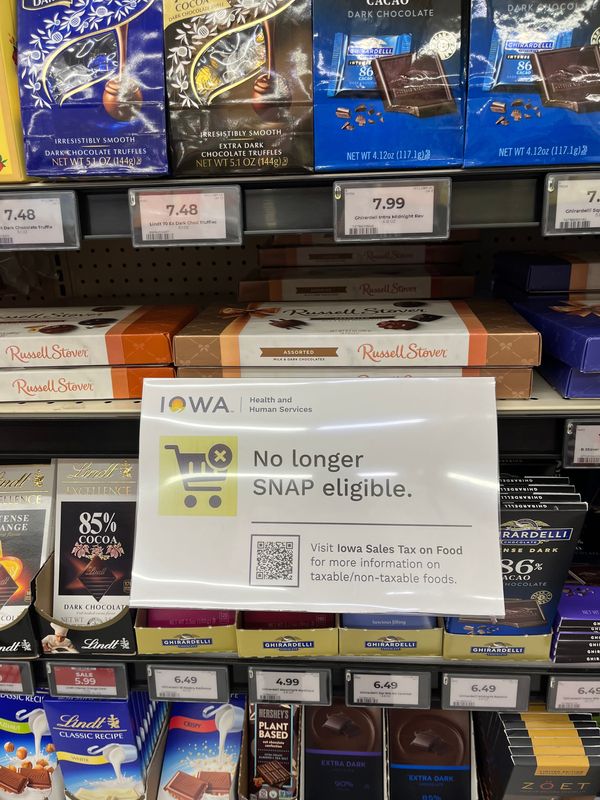
So much hoopla about the newly implemented Supplemental Nutrition Assistance Program restrictions. About the only thing I have ever agreed with Gov. Kim Reynolds on are the new SNAP regulations that eliminate soda, gum, and candy from the items that can be purchased.
And now that we are a few months into these new regulations, there hasn’t been any real issues with folks suffering from physical or mental issues from having the state not pay for these snacks.
The N in SNAP stands for NUTRITION, and while there are some nutrients in candy, like peanuts and dairy, there is zero nutrition in chewing gum and soda, which is merely sugar dissolved in water.
If we’re being honest, we’ll admit that no one ever went hungry because SNAP wouldn’t pay for those items. And to continue the honesty, these limits are not a ban on these items for poor folks. They can have all the gum, soda, and candy they want. The new rules simply shift the financial responsibility from the state to the individual, who can buy them using their own money.
With 40% of adults and 20% of children considered obese, why would we hand out these items to folks for free? It would be like buying an alcoholic another drink.
Restricting these benefits ensures that the program remains focused on its core mission of providing essential nutrition.
John Moore, Newton
This article originally appeared on Des Moines Register: Iowa’s SNAP restrictions have been smart and effective | Letters
Reporting by The Register’s readers, Des Moines Register / Des Moines Register
USA TODAY Network via Reuters Connect
By The Register's readers, Des Moines Register | USA TODAY Network