Iowa’s two candidates for governor are laying out policy prescriptions they hope will reverse the state’s sky-high cancer rates and resonate with voters as they head into the November midterm elections.
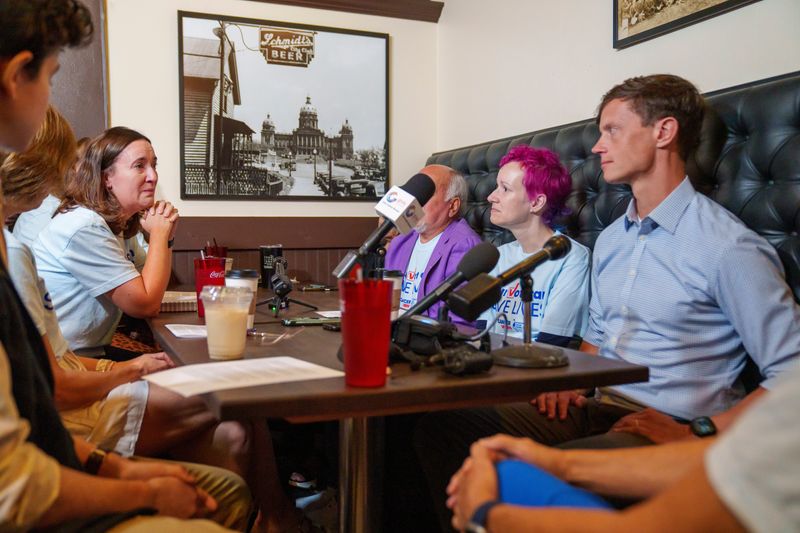
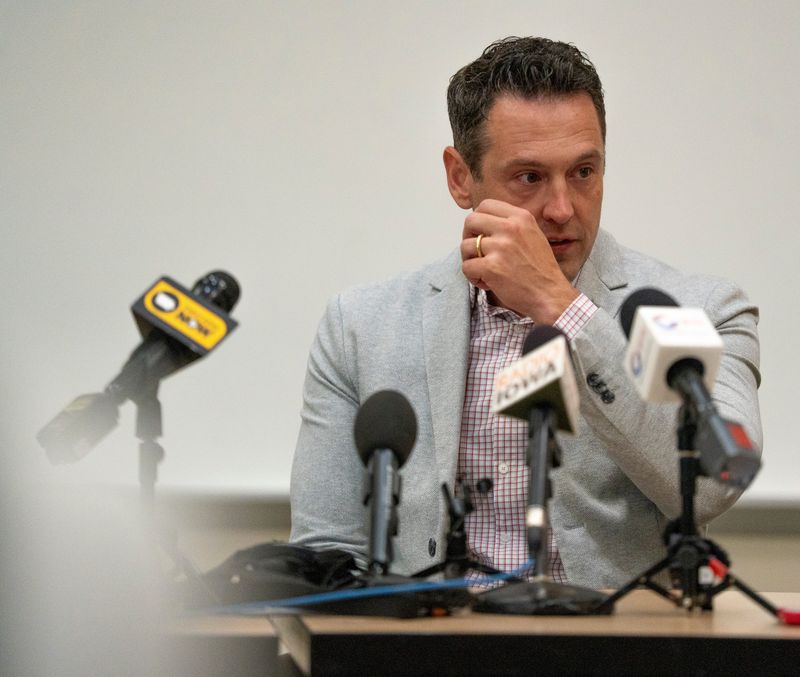
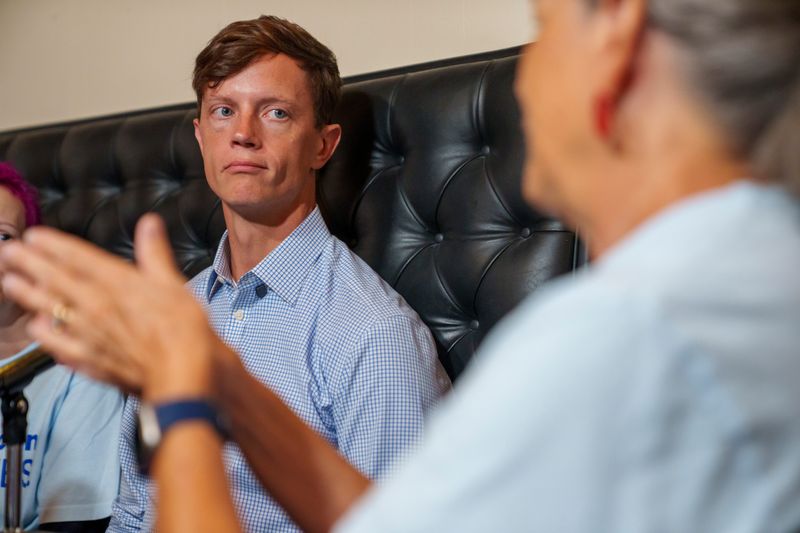
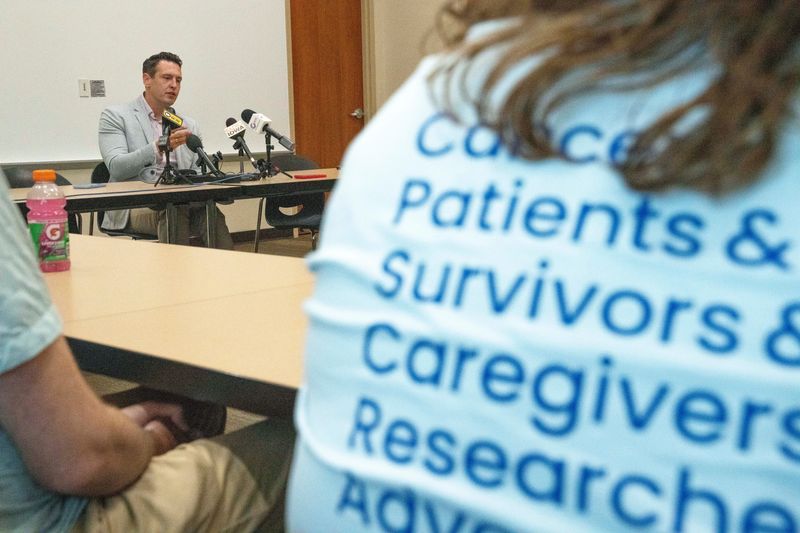
Democratic state Auditor Rob Sand met with the American Cancer Society Cancer Action Network July 28, and Republican candidate Zach Lahn joined the group Aug. 18 for discussions that were deeply personal and covered a wide range of policy issues facing the state’s next leader.

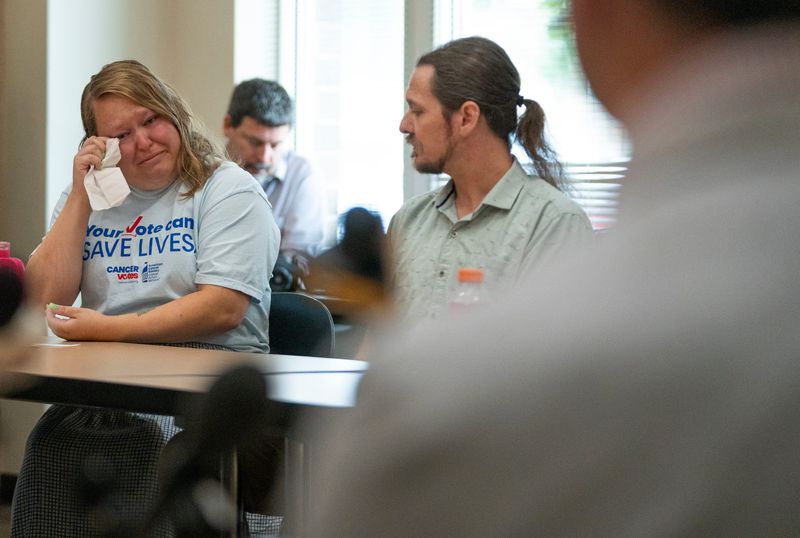
Sand and Lahn heard from Iowans who are currently battling cancer, Iowans who are caring for loved ones with cancer and Iowans who are working to raise funding for and support research into cancer.
And both candidates shared their own emotional stories of loved ones affected by the disease.
Lahn called it “a crisis of our generation,” and said it’s one of the major reasons he decided to run for office.
Sand said it’s “a personal issue to me,” and said most Iowans have their own connections to cancer that make it personal to them.
Here’s a look at six issues raised by cancer advocates and how the candidates responded.
Will you protect access to Medicaid and Medicaid expansion in Iowa?
Both candidates told the group they would commit to protecting access to Medicaid and to supporting Iowa’s expanded Medicaid program.
Sand called the effort “a no-brainer.” He also called for the reversal of Iowa’s privatized Medicaid program, although he said the state should maintain a managed care program.
“To me, when people have access to care, everyone does better,” he said.
He knocked Lahn, who worked for the conservative group Americans for Prosperity in Montana advocating against expanding Medicaid there in 2014.
Lahn acknowledged his previous political work, but he said he, too, is committed to maintaining Iowa’s expanded Medicaid program.
He said he believes able-bodied Iowans should “be out in the community doing things,” but he said there’s a safety net for those who are unable to do so.
Will you protect access to the HPV vaccine in Iowa?
Both candidates said they believe the HPV vaccine is an important tool in combatting Iowa’s cancer crisis.
The Centers for Disease Control and Prevention says the vaccine can prevent more than 90% of cancers linked with the human papillomavirus, or HPV.
But it has come under scrutiny, along with other vaccines, amid a rising “medical freedom” push in many Republican-led states.
Iowa’s Republican Gov. Kim Reynolds signed a law that took effect in July barring minors from receiving the vaccine without parental consent.
Lahn, who has said he would “absolutely” consider banning mRNA vaccines and has promised to pull COVID vaccinations from the market, said he doesn’t take issue with the HPV vaccine.
“I think it’s between you and your doctor, also between a parent and their doctor for their children,” Lahn said. “So my goal is to have safe, effective and tested products available to people that would like to use them and that need access to them.”
Sand said he also supports access to the HPV vaccine.
“There is nothing that you can look at that says, ‘This is always going to work 100% of the time and never has any negative impact,’” he said. “Nothing. But we know at the end of the day that this is a lifesaver when you look at it on net — that it protects people’s lives. It prevents cancer.”
Do you support increasing the tax on cigarettes by $1.50 per pack?
The American Cancer Society was among a coalition of public health groups proposing a $1.50 per pack increase on Iowa’s tobacco tax during the 2026 legislative session.
Reynolds pitched a 65-cent increase in Iowa’s cigarette tax, which would have taken the state from a tax of $1.36 to $2.01 per pack.
But neither proposal gained traction.
Instead, Reynolds signed a new law creating a 5-cent tax on vapes and alternative nicotine products and funneling the first $3 million raised from the tax annually toward pediatric cancer research at the University of Iowa.
Asked whether he would support the $1.50-a-pack increase, Lahn cautioned against it. However, he acknowledged the need to incorporate some taxation into a “holistic” strategy to combat smoking.
He said he understands the potential benefit of increasing the tax, but he said those with addictions aren’t likely to be persuaded to stop buying cigarettes because they have to pay more.
“I would not support it if there was not a commensurate increase in the ability for us to help people get off of the product in the first place,” Lahn said. “Because otherwise, what we’re doing there is essentially a poverty tax, and you’ll hurt the people that are actually in the most need in our society.”
Sand said he generally supports raising the tax but said he would need to negotiate with the Republican-led Legislature on the specifics.
“I say to everybody everywhere I go, you’re never going to get 100% of what you want from me,” Sand said. “You have a specific number. I can’t tell you that your specific number is my specific number.”
He said there is some bipartisan interest in the Legislature to set Iowa’s tobacco tax at a level that’s more aligned with nearby states.
“I think if we raised it by 65 or 55 cents, we would be still around the same area as our neighbors,” he said.
Will you continue Iowa’s commitment to fund pediatric cancer research programs?
Sand said he would work to expand existing levels of state funding that go toward pediatric cancer research.
He noted that Nebraska puts more than $20 million a year toward the effort.
“That should be table stakes to us as we look at what Nebraska did for their kids and for kids in general, of course, since cancer research doesn’t follow state boundaries,” he said.
Lahn said he “absolutely” would continue Iowa’s commitment to pediatric cancer research, but he said he would favor shifting existing commitments to free up “scarce resources.”
He said the state should play a role in directing funding away from university programs such as the humanities that he said don’t provide the same kind of social outcomes as cancer research.
“I think it’s allocating our resources better to the places that we need to focus to say that it’s not just adding more on top, but it’s also shifting the buckets that our money is going into right now,” he said.
Do you support removing cost-sharing for follow-up testing after breast cancer screenings?
The candidates were asked whether they would support alleviating some of the financial burden for follow-up imaging after initial breast cancer screenings.
Statistics show some people skip those following screenings after an abnormal mammogram because of cost, they said.
Sand said he supports removing the cost-share.
“Because we know that the earlier we treat cancers, the far less that it costs the entire healthcare system,” he said. “And so costs are staying low for everyone involved.”
Lahn said he is still learning about the intricacies of the health insurance system but is broadly supportive of the measure.
He suggested the state should help subsidize the cost of other screenings for high-risk populations.
Water quality and nitrates part of Iowa’s cancer crisis, candidates say
Both candidates also said Iowa’s water quality problems are negatively affecting its rates of cancer.
“I would just say that any discussion about cancer rates that doesn’t include water isn’t a genuine discussion,” Lahn said.
He said the problem is tied to agriculture, “but we just have to own it and solve it.”
“A lot of my campaign has been about talking to these groups in a very blunt way and saying … that we’ve passed the point of being able to not address this,” he said.
Lahn said he would work to reduce nitrate levels by funding Iowa’s Water and Land Legacy initiative, or IWILL, with a sales tax increase. He said that would help to implement greater use of things such as cover crops, saturated buffer strips and water monitoring.
Sand said Iowa’s pace in addressing water quality has not been fast enough.
“The people who say, ‘Oh, we’re getting better,’ are defending a snail’s pace,” he said.
He said the rise in nitrates in Iowa’s drinking water is a problem.
“Nitrates cause cancer,” he said. “We can have conversations about at what level they cause cancer, but we have nitrate levels in the state of Iowa that are higher than even the most lax standard, meaning no matter what, everyone can agree that the levels that we often see in Iowa are far too high.”
Sand has said he would invest in water quality monitors, implement transparent manure management plans, expand existing conservation programs through tax credits for farmers and increase wetlands.
(This story has been updated for a clarification.)
Brianne Pfannenstiel is the chief politics reporter for the Des Moines Register. She writes about campaigns, elections and the Iowa Caucuses. Reach her at bpfann@dmreg.com or 515-284-8244. Follow her on X at @brianneDMR.
This article originally appeared on Des Moines Register: Lahn, Sand talk cancer crisis with survivors. How their plans stack up
Reporting by Brianne Pfannenstiel, Des Moines Register / Des Moines Register
USA TODAY Network via Reuters Connect
By Brianne Pfannenstiel, Des Moines Register | USA TODAY Network