The Iowa City Council has approved its fiscal year 2027 budget, using a new local-option sales tax to reshape city finances and invest in affordable housing while slightly reducing police funding and introducing a pilot program.
The Iowa City Council approved the FY27 budget on April 21 in a 5-2 vote, with councilors Laura Bergus and Oliver Welein voting against. The fiscal year starts on July 1, and Iowa City’s $250 million budget is up nearly five percent from the FY26 budget of $238 million.

The budget reflects a transition year for Iowa City as federal pandemic aid ends and state-level property tax reforms limit local revenue growth, prompting new ways to generate funds.
“Growth has placed pressure on core (Iowa) City services and critical infrastructure,” City Manager Geoff Fruin said in the budget report. “Because the city relies heavily on property tax revenue, it is imperative for the city to focus on economic development and smart growth of the city’s tax base to support increased service demands and the higher costs of maintaining critical public infrastructure.”
New sales tax to offset property taxes as state rules tighten
Helping boost the budget is the addition of the 1 percent local-option sales tax (LOST), approved in 2025. The new tax will take effect on July 1.
LOST is expected to generate about $14 million annually, according to board documents, helping offset property taxes, the city’s largest source to fill the general fund. Fruin notes that ongoing state property-tax reform continues to limit local revenue growth, pushing Iowa City to rely on alternative funding like LOST.
Iowa’s residential rollback rate, the percentage of a home’s value subject to taxation, will drop from 47.43 to 44.53 percent, meaning taxes are applied to a smaller share of property value.
Iowa City’s property tax levy will drop for the first time in the past three fiscal years to $15.43 per $1,000 taxable valuation, a 20-cent decrease from FY26.
Iowa City police budget sees a slight dip
Despite the overall increase in the city’s budget, funding for the Iowa City Police Department (ICPD) will decrease by 0.25 percent to $18.6 million, down nearly $47,000 from the year prior.
ICPD funding comes from the city’s general fund, which totals about $75 million and also supports the fire department, parks and recreation and other operating costs.
The police department, home to 85 officers, is one of the biggest general fund expenditures, accounting for roughly one-quarter of general fund spending. Nearly 90 percent of spending goes toward personnel, such as salaries and benefits.
The ICPD will not face expansions or cuts, though roughly $300,000 in police vehicle needs were moved from the general fund to the capital projects fund.
Council split on police funding, approves new pilot program
Councilors Bergus and Welein said police funding was why they didn’t approve the budget. Bergus has voted against the budget for the past three years because of the increasing investment in policing, which she said is “not optimizing safety and care in our community.”
“I have tremendous respect for our police department, for all of the officers, for the city employees who serve the public every day and do the jobs that they are tasked with doing very, very well,” Bergus said during the April 21 council meeting. “And that being said, I maintain that we should not be increasing that investment.”
Bergus and Weilen proposed a Community Response Fund, originally called the Alternative Response Reserve Fund. The fund aims to diversify public response options and reduce police intervention in non-violent situations.
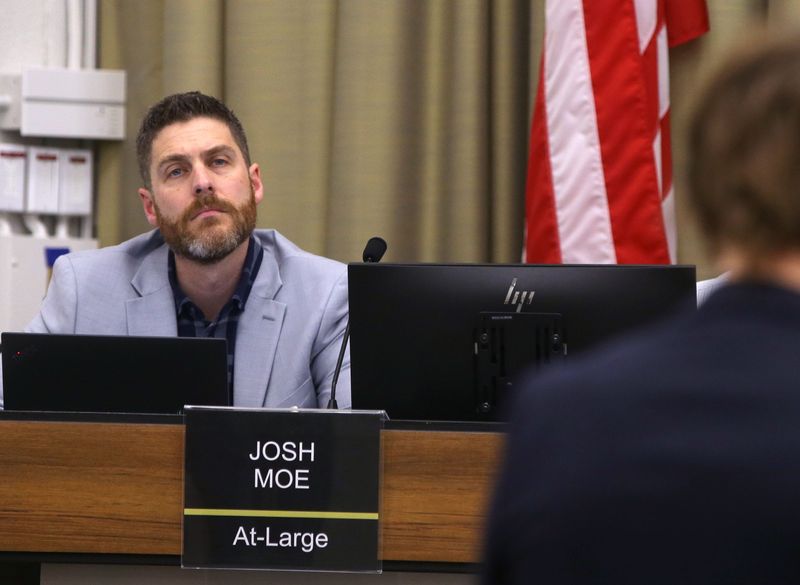
City council approved the Community Response Fund in a 6-1 vote, with councilor Josh Moe voting against. The $162,400 fund will create a pilot program by placing mobile crisis workers downtown.
“When it comes to diversifying public safety and trying to get the best outcomes for the community, creating the safest community we can, there’s some disagreement on strategy and how to get there,” Weilein said. “I believe in our ability to get to a point and hash out the intricacies of what the fund could do that we established. We haven’t been able to do that yet.”
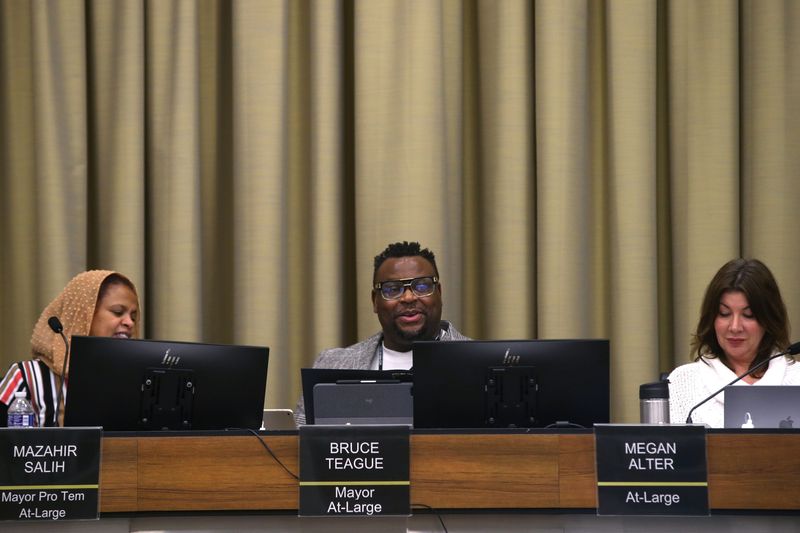
Councilor Mazhir Salih proposed a $500,000 reduction in the department’s spending, noting that the ICPD ended with a budget surplus, suggesting the funds could be used for other efforts, such as affordable housing.
The motion failed on a 4-3 vote, with Bergus, Salih, and Wellien voting in favor.
Iowa City to invest in affordable housing initiatives
The city plans to dedicate 25 percent of LOST revenue to affordable housing initiatives, such as providing housing support for those in need, and preserving the current housing stock.
The increase arrives when federal Emergency Housing Vouchers (HUD) created during the pandemic are set to expire by the end of 2026. The Iowa City Council recently approved policy changes to the Iowa City Housing Authority’s Housing Choice Voucher Program, allowing households currently receiving assistance to transition to long-term vouchers.
Fifteen percent of LOST revenue will be allocated to “community partnerships,” including intergovernmental, economic development, arts and culture, and local social service providers. The remaining 10 percent will be used to improve local infrastructure, including roads, sidewalks, trails, and parks.
Iowa City utility rates on the rise
While the property tax levy will decrease, water rates will increase by three percent for the second year in a row. Wastewater rates will increase by five percent.
For households that use 8000 cubic feet of water, the monthly increase is $1.16 and $1.94, respectively.
Jessica Rish is an entertainment, dining and education reporter for the Iowa City Press-Citizen. She can be reached at JRish@press-citizen.com or on X, formerly known as Twitter, at @rishjessica_
This article originally appeared on Iowa City Press-Citizen: Iowa City OKs $250M budget with lower taxes, public safety program pilot
Reporting by Jessica Rish, Iowa City Press-Citizen / Iowa City Press-Citizen
USA TODAY Network via Reuters Connect