I’m an Iowan about to graduate from medical school. Here’s why I won’t be staying for residency to serve my fellow Iowans.
I have lived in Iowa nearly my entire life. I attended public school here, taking ITBS tests in elementary school and meeting up with my friends at Sturgis Falls celebrations in the “Cedarloo” area. I felt lucky to have a great slate of state school options for my undergraduate education, choosing to attend the University of Iowa and wave to hospitalized kids from home games at Kinnick. I moved across the Iowa River a few years ago for medical school at the Carver College of Medicine, and am now applying for the next step of my medical education — residency — where I will be decidedly leaving the state.

Our governor, Kim Reynolds, has stated a priority of hers is keeping Iowa medical students at home in Iowa, with the Iowa Legislature even passing a bill this session increasing admission requirements to 80% from the already estimated 70%. But her and the Republican-controlled Legislature’s policies say otherwise, and many of my Iowan peers at Iowa’s only MD school are applying elsewhere for residency. This is not breaking news, either — according to statistics obtained by Republican state Rep. Ann Meyer, between 2020 to 2024, 81% of Iowa residents who graduated from the UI medical school left for residency, and in 2024, only 44% of University of Iowa Hospitals residents stayed in the state after completing the program.
A large block of my class is applying obstetrics and gynecology — a much-needed specialty in our state. Many rural hospitals have closed, forcing mothers to drive hours for regular prenatal care and eventual delivery. Iowa is the worst state in the country for OB/GYN specialists per capita and has become a maternal health care desert with over half of counties without a delivery unit. Furthermore, with one of the most restrictive abortion bans in the country, my peers are watching politics hurt the most vulnerable patients in their delivery rooms.
On my core rotation through the specialty (all medical students must rotate for six weeks during their second/third year), I observed a dilation and curettage, shorthand called a D&C — a medical term for a procedural abortion under 20 weeks. This patient had a rare clotting disorder, was bleeding to the point of passing out, and sought lifesaving care in our emergency department, which our physicians expertly provided. Iowa’s Legislature has tried to self-insert itself into medicine, infringing on our Hippocratic Oath by questioning if these physicians should legally be allowed to provide care to such patients who are miscarrying, have infection, or are otherwise at risk because of their pregnancy.
I am applying this fall to be a pediatrician who will fight to prioritize preventing disease. The fact that measles, a vaccine-preventable and potentially life-threatening infection, has hit Johnson County — right where I am learning how to be a doctor — is an irony not lost on me. Our governor, in the meantime, supports a federal Health and Human Services secretary who has publicly fired vaccine and pandemic experts at the national level. At the state level, encouraging vaccine exemptions has eroded our state’s herd immunity, the concept of protecting the most vulnerable to infectious disease by vaccinating the majority, to under the necessary 95%. This includes our youngest, who cannot receive the MMR vaccine.
Our government supports putting Iowan children at risk of subacute sclerosing panencephalitis, a rare but real complication of measles that has already claimed the lives of two Texan children this year. It hasn’t stopped with measles, as Iowa Republicans have also quietly removed HPV vaccine education requirements from curriculum and attempted to require parental consent to teens seeking the vaccine, risking incredibly preventable throat and genital cancers with the excuse of parental choice.
The barrage on vaccines has been relentless, including an attempt to blanket ban mRNA vaccines, of which the COVID-19 vaccine is prominent, for a political point. The inherent speed of development of mRNA vaccines is what has undoubtedly saved tens of thousands of American lives, and the opposition to this future of vaccines makes it clear that the focus is on national political party favor instead of protecting Iowans.
Speaking of national policy, the contentious decision to end Public Service Loan Forgiveness will only hurt rural communities in Iowa. The path to medical school and residency is an expensive one, even with in-state tuition, with licensing running near $800 per exam and in-state tuition nearly $40,000 per year alone. The president’s “One Big Beautiful Bill” is considering limits on federal student loans for “professional programs,” including medical school, to $150,000 to $200,000, will not cover a single medical education in the United States. Instead, prospective students, if not dissuaded financially, will be forced to take on private loans with higher interest rates. This serves only to further the doctor shortage in primary care services, which our rural state relies upon. If no one can afford to go into family medicine, internal medicine, pediatrics, or OB/GYN, they will choose a specialty that will keep them in urban areas and away from Iowa’s most underserved.
This does not even begin to address how these budget cuts affect patients directly, though the cuts to Medicaid and SNAP that will leave an estimated 86,000 Iowans, specifically children, without access to health care. But, according to Sen. Joni Ernst, we don’t need health care because we’re all going to die anyway, right?
Opening another medical school in Dubuque, more slots for Iowans at the University of Iowa, or more residency spots across the state, will not prevent brain drain and keep Iowan graduates in Iowa. Strengthening our health care system through legislation that supports, instead of tears down, both Iowan patients and physicians will. I walk into Stead Family Children’s Hospital every day with excitement to work with kind Iowan families and their children at a university that supports advancing both clinical research and high-level patient care. Iowans need us. But without the trust and support of our government, next year, I — and so many of my peers — will no longer claim residency in the state that we have called home for decades.
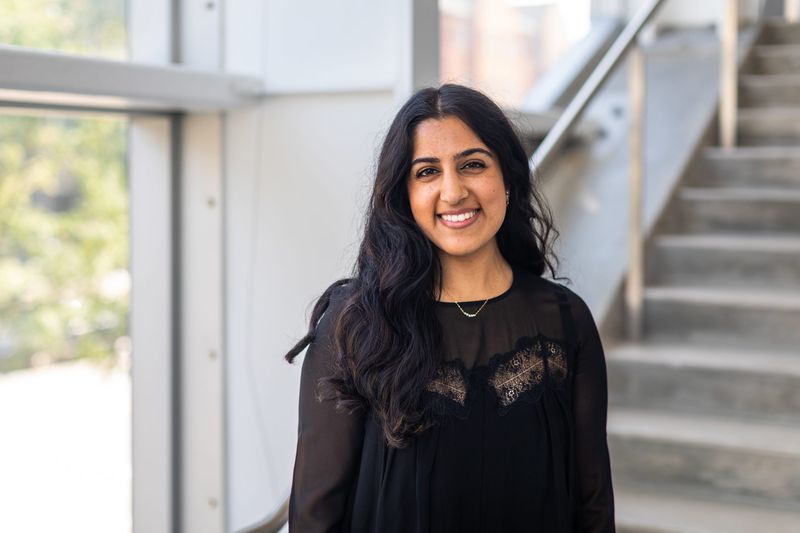
Aastha Chandra is a fourth-year medical student at the Carver College of Medicine and University of Iowa graduate. All opinions are her own. Contact: aastha-chandra@uiowa.edu.
This article originally appeared on Des Moines Register: I’m about to become a doctor. Here’s why I won’t be staying in Iowa. | Opinion
Reporting by Aastha Chandra / Des Moines Register
USA TODAY Network via Reuters Connect