Higher speed limits, steeper criminal penalties and restrictions on abortion medication are a few of the new Iowa laws taking effect July 1.
The Iowa Legislature passed 206 bills this year, and 200 of those became law — Gov. Kim Reynolds vetoed five bills. One measure, a proposed constitutional amendment, must win voter approval before it can be enacted.

That’s the largest number of bills approved since 2007 — the first year of Democrats controlling the Legislature and the governor’s office — when lawmakers passed 226 bills.
Most new laws in Iowa take effect July 1 — the beginning of the state’s fiscal year — unless otherwise specified.
Here are 10 new Iowa laws that begin July 1.
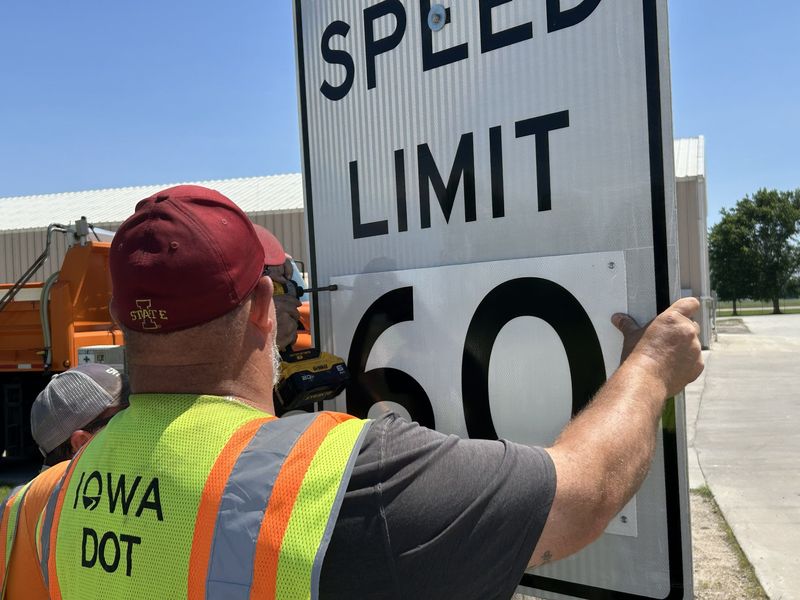
Iowa’s default speed limit is going up
The default speed limit on Iowa roads, including most two-lane highways and rural roads, is rising to 60 miles per hour under Senate File 378.
That’s an increase from the 55 mph speed limit, which originally went into place in the 1970s during the energy crisis.
Iowa’s interstate speed limit of 70 mph is not changing.
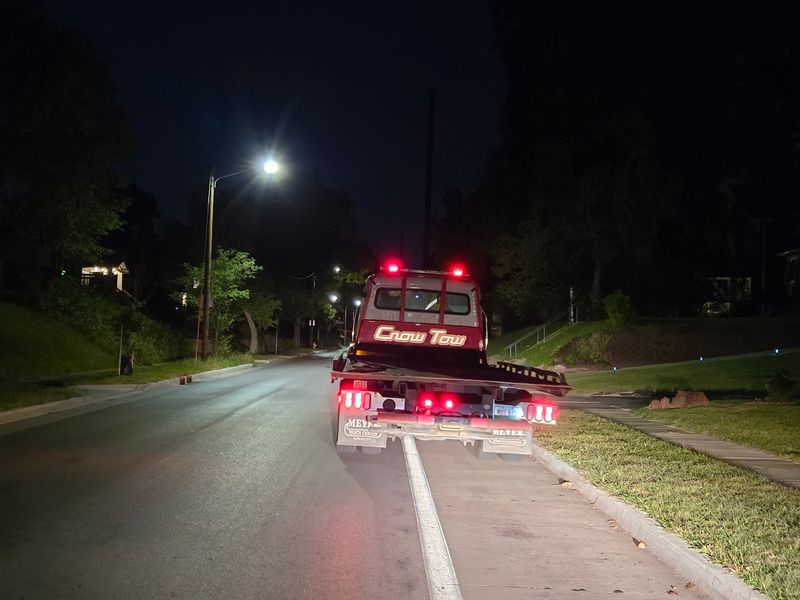
Iowans get new protections after their cars are towed
New consumer protections will benefit Iowans whose cars or other vehicles are towed.
House File 2617 says towing companies must allow vehicle owners to use credit cards and other forms of payment, not just cash, to secure the release of their vehicles.
Towers must also publicly post their impound and storage fees, provide written, itemized invoices and give owners a one-time opportunity to retrieve possessions from towed vehicles.
Governor’s emergency powers get new limits
Iowa governors may no longer order vaccinations or close churches during emergencies.
House File 2694 says governors cannot use a disaster emergency or public health emergency to require vaccinations or order churches or businesses to close, although the governor may recommend that businesses close.
The legislation stems from Republican concerns over Reynolds’ actions during the COVID-19 pandemic, which included temporarily closing churches to limit the virus’ spread.
Democrats have called the law a “power grab” by the Republican-led Legislature ahead of a toss-up governor’s race this year.
Police no longer need to complete bias training
Law enforcement in Iowa no longer need to undergo annual implicit bias prevention training — a requirement that has been in place since 2020.
House File 2711 repeals part of a law that legislators passed unanimously and Reynolds signed in 2020 following the murder of George Floyd — a Black man — by White police officers in Minneapolis.
It maintains the requirement that law enforcement undergo annual training on de-escalation techniques.
The law also eliminates affirmative action plans across Iowa’s state agencies as Republicans look to dismantle diversity, equity and inclusion efforts.
Iowans must see doctor in person to get abortion medication
Iowans seeking abortion medication must see a doctor in person to receive the drug.
The law requires doctors to examine the patient, including screening for abuse or coercion, before dispensing abortion medications such as mifepristone and misoprostol.
It is the latest change restricting abortion the Republican-controlled Legislature has passed in recent years.
The law attempts to crack down on what abortion opponents view as “dangerous” pills mailed to Iowans from groups and physicians in other states. However, health care providers and legal experts are skeptical it will prevent abortion pills from being sent into Iowa.
Medication abortions have increased in Iowa and nationally in the years since Roe v. Wade was overturned in 2022.
The U.S. Food and Drug Administration has approved the use of mifepristone, determining it is safe and effective if used as directed.
Decades of studies have shown that less than 1% of medication abortions result in serious complications, such as severe bleeding or infection.
Public employees must have immigration status checked
Iowa’s use of the federal E-Verify and SAVE systems to vet public employees is becoming permanent.
Senate File 2218 adds several immigration and employment eligibility verification measures to Iowa law in the wake of the immigration arrest of former Des Moines Public Schools Superintendent Ian Roberts last fall.
The law codifies an executive order Reynolds signed last fall requiring E-Verify, but it also expands the vetting process by adding private schools to the list of employers that must use E-Verify.
And it adds SAVE, or Systematic Verification for Alien Entitlements, to the programs that state and local governments must use to check new hires’ employment eligibility.
Providing a false Social Security number to employers when attempting to obtain a job will become a crime under Iowa’s fradulent practice law.
And the law creates a presumption that undocumented immigrants arrested for any crimes higher than a simple misdemeanor are not eligible for bail unless they can prove they are not a flight risk.
‘MAHA’ changes include over the counter ivermectin access
Pharmacists can begin selling ivermectin over the counter to Iowans who do not have prescriptions as part of Iowa’s “Make America Healthy Again” law.
It’s not clear how many pharmacists may choose to sell the drug, which is only approved to treat certain parasitic worms and can have serious side effects if not taken as directed.
The wide-ranging legislation also decreases screen time in schools and adds more physical activity. And it requires ongoing nutrition education for doctors and medical students.
The law requires Iowa to continuously seek a waiver from the federal government allowing the state to restrict which foods SNAP recipients can buy with their benefits, a measure intended to block the purchase of sugary items like pop and candy.
But a federal judge struck down Iowa’s waiver on June 22, saying the U.S. Department of Agriculture misapplied the law in granting the waiver.
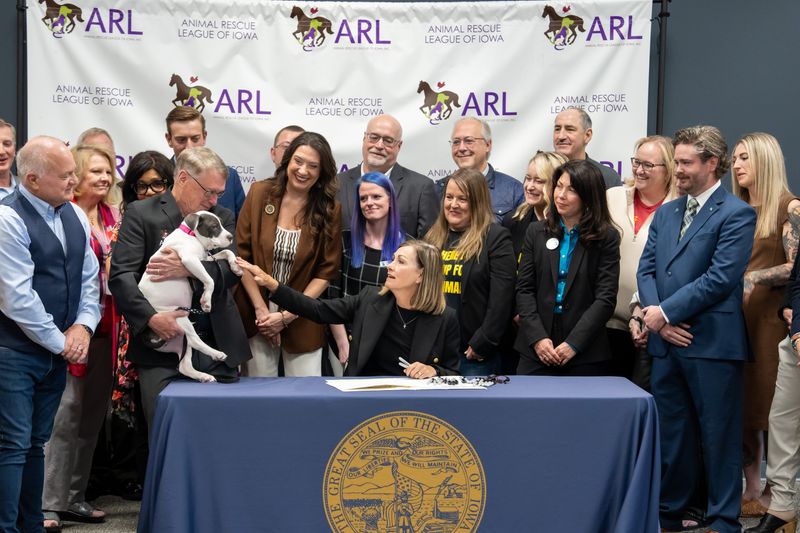
Animal torture will become a felony
Anyone who tortures a companion animal will face felony charges as Iowa boosts penalties for the crime.
House File 2348 makes it a class D felony, rather than an aggravated misdemeanor, for first offense animal torture. Iowa previously was the only state in the country that did not treat animal torture as a felony on a first offense.
The law enhances the penalties further for repeat offenders.
Iowans must verify their age to view pornographic material
Iowans must verify they are 18 years old or older before accessing websites with pornographic content.
Iowa’s law, House File 864, is modeled after a Texas age verification law that the U.S. Supreme Court upheld last year. It applies to websites or apps where at least one-third of their content is pornographic.
The law requires the websites to verify a user’s age using government-issued identification, financial documents or other documents that are “reliable proxies for age.” Age verification may also be performed by third parties or through any “commercially reasonable and reliable method.”
At least 25 other states have similar age verification laws on the books.
Iowans will see steeper sentences for repeat felonies
Criminal penalties are going up for people convicted of multiple felonies as part of Republicans’ “tough on crime” push.
Iowa’s “three strikes” law, House File 2542, requires a mandatory seven-year prison sentence for someone convicted of a third felony, with no eligibility for parole until they have served the seven years.
The law more than doubles the three-year minimum in Iowa’s previous habitual offender law.
The nonpartisan Legislative Services Agency anticipates the law will increase Iowa’s total prison population by 49% by fiscal year 2030, adding another 4,363 inmates.
The agency estimates the law could require Iowa to build new prisons over the next five to seven years, which could cost nearly $2 billion, in addition to more than $115 million in annual ongoing costs to run the new facilities.
Stephen Gruber-Miller is the Capitol bureau chief for the Des Moines Register. He can be reached by email at sgrubermil@registermedia.com, by phone at 515-284-8169 or on X at @sgrubermiller.
This article originally appeared on Des Moines Register: Speed limits, abortion pills among 10 big Iowa laws that begin July 1
Reporting by Stephen Gruber-Miller, Des Moines Register / Des Moines Register
USA TODAY Network via Reuters Connect

By Stephen Gruber-Miller, Des Moines Register | USA TODAY Network