State officials will have new tools to dissolve fake Iowa businesses next month, improving their ability to cut down on fraud.
As part of a bill unanimously passed by the House and Senate this spring and signed into law by Gov. Kim Reynolds on June 1, the Iowa secretary of state will be able to remove businesses from the state’s rolls if officials determine that someone used fake information to register them.

Currently, the secretary of state can’t dissolve businesses without a court order – a lengthy and expensive process that requires a lawsuit.
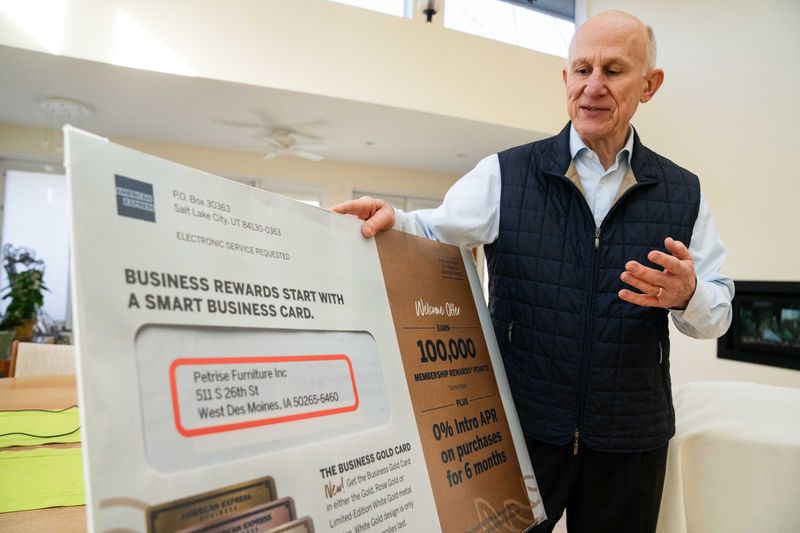
The Secretary of State’s Office pushed for the law change this year after receiving complaints from residents in Hickory Ridge Estates, a plush West Des Moines neighborhood where someone registered furniture companies at more than a dozen homes. The residents said they didn’t know who registered the businesses, which had Chinese names. They worried that someone was using the information to commit crimes.
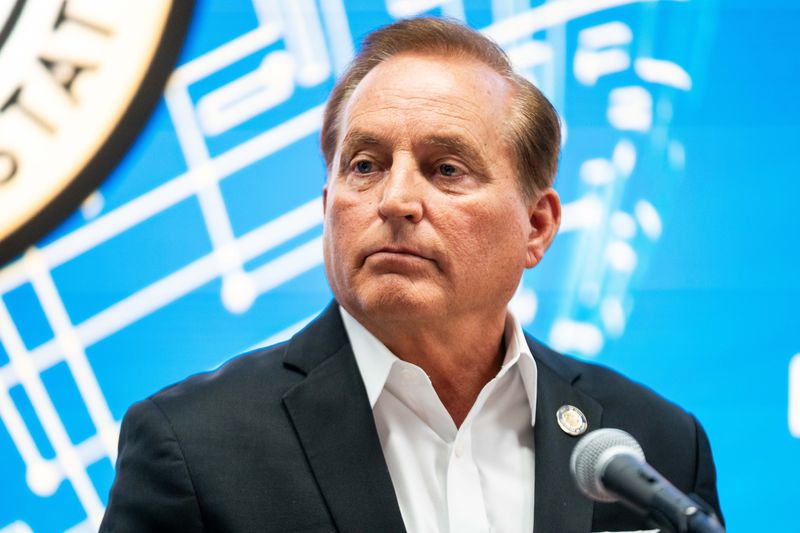
“Our main goal in putting this new legislation together was to start a conversation,” Secretary of State Paul Pate said in an interview with the Des Moines Register. “Fraud impacts a staggering amount of Iowa businesses. But we noticed that there wasn’t a specific state agency that was taking responsibility for awareness of this kind of fraud.”
John Duesing, a Hickory Ridge Estates resident whose address was used for one of the fake furniture companies, said he was impressed by the secretary of state’s advocacy for the bill this year.
When he started receiving mail addressed to the business two years ago, Duesing said a secretary of state official told him that the agency couldn’t do anything unless he filed a lawsuit.
“We really have an option now,” Duesing said.
Registering for a business in Iowa is easy, requires no verification
Like in most states, Iowa has generally taken a relaxed approach toward business registrations. Applicants can register businesses online in a matter of minutes without offering any proof of who they are after paying between $50 and $100, depending on the structure of the business.
Applicants do have to name a registered agent with an Iowa address who can receive legal filings on behalf of the business. They have to file paperwork every few years to keep the registration active. Legally, the secretary of state cannot reject a filing if the applicant pays the appropriate fee and fills out the required information.
The loose rules encourage business formation. In 2025, applicants registered about 38,000 businesses in Iowa. That’s more than five times the number of businesses that applicants registered in the state in 2008, when the Legislature changed laws to make filing easier.
In Hickory Ridge Estates, residents began investigating a string of fake businesses when they started receiving mail addressed to furniture companies, each with a Chinese name.
Through the secretary of state’s website, they learned that applicants registered 17 furniture companies at homes in the neighborhood between 3:02 a.m. and 6:04 a.m. one day. They learned that applicants registered another 16 companies at suspicious locations like a Walmart, a Petco and a Dollar Tree in the Des Moines metro during that same 3-hour block.
“Someone is sitting there with a plan,” Duesing told the Des Moines Register in February 2025. “A master plan.”
After Hickory Ridge Estates residents complained about the issue to West Des Moines police, Sgt. Dan Wade said investigators referred the case to the FBI. An FBI spokesperson declined to comment.
Experts said the fake businesses did not expose the neighbors to legal liability. More likely, they said, someone was using the addresses to register businesses in Iowa in order to defraud people who would think the furniture companies were legitimate.
Pate said his office has heard from other Iowans whose addresses were used for fake businesses. But he had not heard of another chain of filings like the one at Hickory Ridge Estates.
Members of his office found a website on which someone was advertising furniture. The site listed an Iowa address. He said he did not know how the person behind the business planned to make money off the fake listing.
“These bad actors are probably not in Iowa,” Pate said. “They might not even be in the United States. They are using Iowa’s reputation of being a wholesome, honest state as a front.”
Last summer, Duesing said, he found another fake business registered in his neighborhood. Someone using the name Roxanne Marquez Alfaro registered a business called Foundry Wares Inc. down the street from him on July 18. Alfaro — if she exists — does not own that particular home.
“Someone is continuing to use the same system, the same fraudulent system,” Duesing said.
United States remains a money laundering hub, experts say
The new law takes effect July 1 and will allow Iowans to file affidavits with the secretary of state, petitioning the office to remove their information from a business’ listing. The office will retain the information in case law enforcement investigators request it later.
The law will allow the secretary of state to send written questions to those businesses, asking for proof that the businesses are legitimate. If an applicant uses a resident’s address, that information will simply go to the property owner. The secretary of state can dissolve the business if the applicant does not respond to the questions within three weeks.
The secretary of state will be able to block applicants from filing paperwork online, requiring them to submit in person or through the mail. Pate said he does not yet know when his office will invoke that requirement. He expects to do so when his office receives credible information that someone is using a fake business for a crime.
Carl Dietz, director of business services at the Secretary of State’s Office, lobbied for the legislation, House File 2678. The House voted for the bill, 93-0. The Senate approved it, 46-0.
“Business fraud is constantly evolving,” said state Rep. Judd Lawler, R-Oxford, during an April 7 session. “This bill addresses a narrow but growing type of fraud in Iowa.”
Nationally, corporate transparency advocates say the simplicity of filing for a business, as well as the secrecy afforded applicants, allows criminals to commit fraud and launder money. Delaware is known for its relaxed registration laws, but many other states don’t verify who is filing for a business either.
As a result, the Tax Justice Network, a British advocacy organization, ranks the United States as the most complicit country in the world for financial secrecy.
Some high-profile criminals have laundered funds through fake U.S. businesses. Viktor Bout, a Russian arms dealer known as the “Merchant of Death,” disguised profits through a Delaware legal liability company. LAN, a Chilean airline company, used a Delaware company to pay bribes to Argentine labor leaders.
Gary Kalman, executive director of Transparency International, said criminals launder money in the United States because investments in the country don’t stand out as much here as they do in poorer parts of the world. Investments in U.S. assets like real estate are also likely to increase in value, and the country’s relatively fair legal standards affords money launderers an opportunity to defend themselves when accused of crimes here.
Responding to international complaints about the United States’ role in money laundering, Congress attempted to crack down through the Corporate Transparency Act.
The law requires owners of private companies to provide the U.S. Department of Treasury with their names, dates of birth, addresses and copies of their government IDs. The information is not subject to open records laws, and only some law enforcement and federal agencies can access the filings.
After President Donald Trump blocked the bill during his first term in December 2020, Congress voted to overcome his veto a month later. But the law was not scheduled to go into effect until 2025.
Last year, after Trump took office again, members of his administration announced they would only enforce the law on foreign companies. Because so many international businesses register subsidiaries in the United States, Kalman said the Trump administration was only enforcing the law on about 0.03% of all businesses operating in the country.
Kalman added that the next administration can enforce the law more strictly.
“There are rumblings and attacks on the (Corporate Transparency Act),” he said. “But we live to fight another day.”
Tyler Jett is an investigative reporter for the Des Moines Register. Reach him at tjett@registermedia.com, 515-284-8215, or on X at @LetsJett. He also accepts encrypted messages at tjett@proton.me.
This article originally appeared on Des Moines Register: To avoid fraud, Iowa can dissolve fake businesses under new law
Reporting by Tyler Jett, Des Moines Register / Des Moines Register
USA TODAY Network via Reuters Connect

By Tyler Jett, Des Moines Register | USA TODAY Network