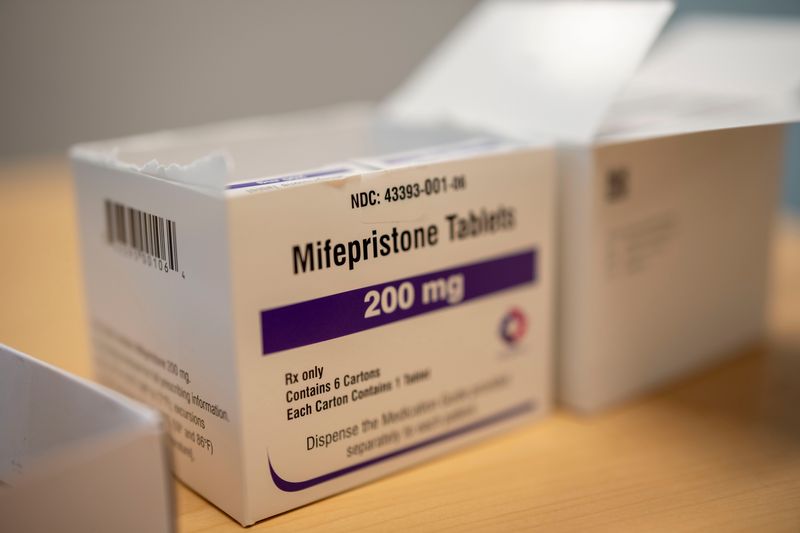
Starting July 1, Iowans seeking abortion-inducing pills will be legally required to receive them in person from a health care provider.
The new law, which Gov. Kim Reynolds signed May 19, is the most recent layer of abortion-related restrictions Iowa’s Republican-controlled Legislature instituted in the past decade.

The measure is an attempt to crack down on the surge of what abortion opponents view as “dangerous” pills mailed to Iowans from groups and physicians in other states. Medication abortions have skyrocketed in Iowa in recent years
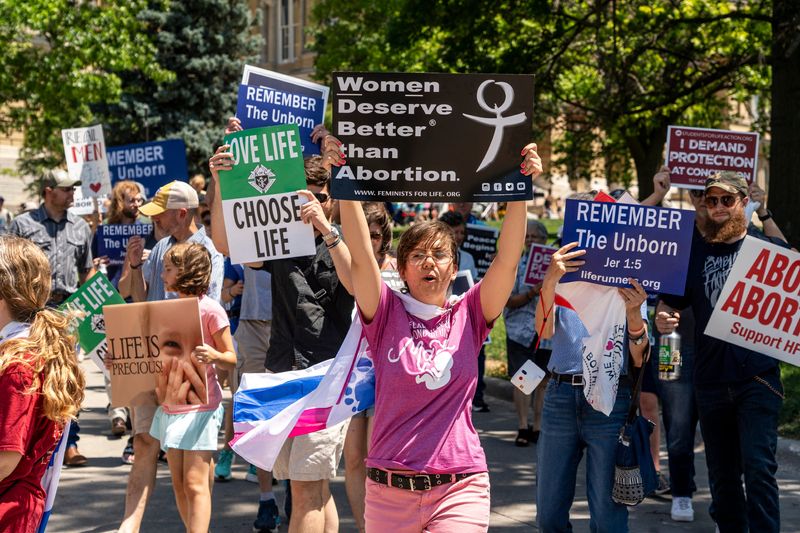
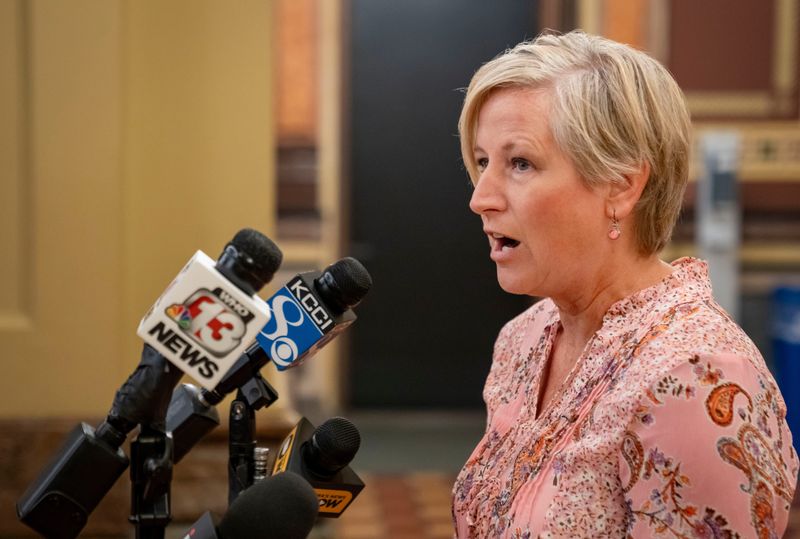
“We felt it was very important that we put some common-sense safeguards around these dangerous drugs,” Maggie DeWitte, executive director of the anti-abortion group Pulse Life Advocates, said.
But will the new law actually keep mail-order abortion pills out of Iowa?
Since the U.S. Supreme Court’s overturning of Roe v. Wade in 2022 and a series of Iowa laws banning most abortions, significantly more Iowans are turning to medication abortions over surgical abortions, mirroring a national trend.
While Republicans are confident the law will be effective, health care providers and legal experts are skeptical it will prevent abortion pills from being sent into Iowa, given the Food and Drug Administration’s approval of mail-order pills and other states’ shield laws protecting prescribers.
Instead, they argue the restrictions will create confusion around the pills’ legality.
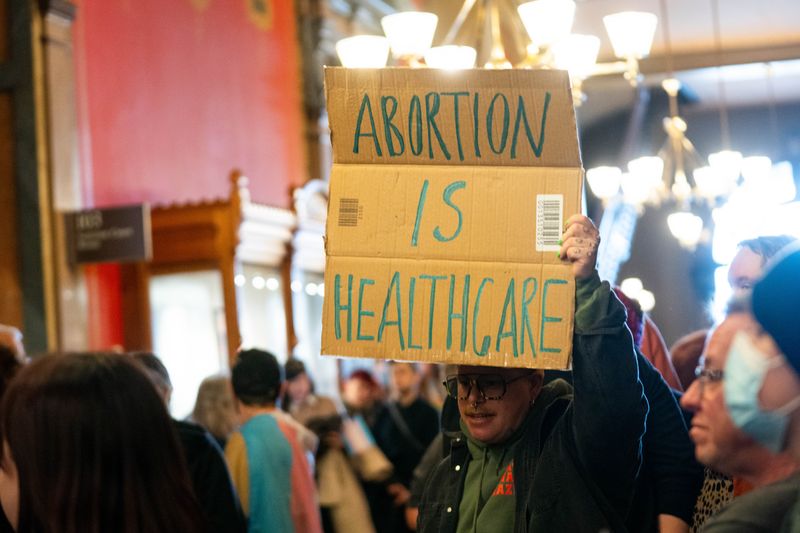
“I anticipate that it (the new law) will cause a lot of uncertainty and fear around seeking care out of state or seeking care through telemedicine abortion care, thereby again reducing access,” said Emily Boevers, an OBGYN from Waverly.
‘Harder for Iowans to get access to care’
Two decades ago, Iowa’s abortion restrictions were unrecognizable compared with today.
In 2008, the state became the first in the country to prescribe abortion pills remotely after Planned Parenthood of the Heartland developed a telemedicine system to reach Iowans in rural areas.
This system, consisting of video calls and a remotely controlled prescription drawer, led to a legal battle over whether dispensing abortion pills through telemedicine was constitutional. The issue went up to the Iowa Supreme Court, which upheld the system in a 2015 ruling.
In the years since, hospital closures and ever stricter abortion laws pushed more Iowans to seek out medication abortion, according to Boevers. Medication abortions account for roughly 80% of all abortions at Iowa’s Planned Parenthood clinics, according to Planned Parenthood North Central States.
But the advent of a 2024 law banning abortions once an embryo’s cardiac activity can be detected — typically around six weeks and often before the parent is aware of the pregnancy — effectively stopped healthcare providers in Iowa from providing abortion medication through telehealth for fear of running afoul of the law, Boevers said.
Instead, most Iowans are now prescribed abortion pills from other states where less restrictive abortion laws still exist, she said.
“They (Iowa clinics) don’t have the infrastructure set up to be certain that they’re complying with the legal requirements and the consenting requirements and the mandated counseling that the (2024 Iowa) law already demands,” Boevers said. “Your run-of-the-mill OBGYN specialist clinics around the state are not providing abortion care.”
That’s what happened with Planned Parenthood’s Iowa clinics, which stopped prescribing abortion pills over telehealth to abide by the 2024 abortion law’s ultrasound mandates for detecting cardiac activity, Planned Parenthood North Central States President Ruth Richardson said.
But Richardson doubts Iowa’s newest abortion law will do much to further limit virtual medication abortion prescriptions, particularly those from out of state, and instead will solidify existing in-state restrictions.
“It’s not changing the landscape, it’s just doubling down on a landscape that has made things harder for Iowans to get access to care,” Richardson said.
Law will protect women, anti-abortion advocates say
Since the FDA greenlit abortion medication prescriptions through telehealth during the onset of the COVID-19 pandemic in 2020, the drug’s use across the country has climbed.
Medication abortions comprised 63% of all abortions nationally in 2023, up from 53% in 2020, according to the Guttmacher Institute, a nonprofit that supports abortion rights.
In response to the surge, anti-abortion advocates in Iowa and elsewhere, have pushed the FDA to reinstate restrictions on mifepristone, a medication used within the first 10 weeks of conception that blocks the hormone progesterone needed for a pregnancy to continue.
Iowa’s new law requires in-person visits for both mifepristone and misoprostol, a pill typically taken following mifepristone, which causes the uterus to contract and expel a pregnancy. The FDA has determined the method safe and effective.
Iowa anti-abortion groups made restricting access to mail-order abortion pills, arguing it harmed women, a priority this year. They cited a recently published study from the right-leaning think tank, the Ethics and Public Policy Center, stating 1 in 10 women experience adverse effects after taking abortion pills.
The study has not been peer-reviewed or published in a medical journal, and reproductive rights advocates have argued it’s not supported by science.
The new law will require doctors to screen patients for signs of abuse and coercion before dispensing abortion pills, DeWitte of Pulse Life Advocates said. It also will require health care providers to inform patients that women using abortion-inducing drugs have “suffered trauma from seeing the remains of the unborn child in the process of a chemical abortion.”
“It’s (abortion) not something that should be taken lightly, and it certainly shouldn’t be taken without oversight of a physician,” DeWitte said. “We want Iowa women to be safe, and this restores some of those safety protocols that should have been in place all along.”
DeWitte and other anti-abortion advocates view the law as a step towards banning access to abortion pills.
“We feel this drug is dangerous; women should not be ingesting it. And so we would be in support of completely taking it off the market,” DeWitte said. “But until we can get to that point, we certainly want women to be safe.”
Federal law and state protections hinder law’s effectiveness
Iowa’s new law comes against a backdrop of a complicated and closely watched legal battle over mifepristone restrictions playing out at the national level, the outcome of which will dictate the measure’s effectiveness.
Louisiana sued the FDA for allowing mifepristone to be sent to patients through the mail, arguing it undermined the state’s ban on abortion at all stages of pregnancy.
The U.S. Supreme Court has temporarily upheld the mailing of the medication until it makes a ruling in the case.
Twenty-eight states limit access to medication abortion, with 17 states, including Iowa, requiring an in-person visit to obtain access to the pills, according to the Guttmacher Institute.
Iowa’s law allows an “interested party” to bring a civil action against providers in other states who violate the bill’s dispensing requirements. That can include the biological father of the fetus that was attempted to be aborted, or the grandparent, parent, sibling, child or legal guardian of the person who went through a medical abortion.
University of Iowa law professor Jill Wieber Lens says while the Louisiana case remains in limbo, Iowa’s law cannot effectively bar physicians in other states from sending abortion medication to Iowa women, especially if they practice in states with shield laws protecting health care providers.
“I don’t think Iowa’s new law is really going to deter New York doctors or California doctors as much as probably the Iowa Legislature would like this law to,” Lens said.
Richardson contends the real purpose of Iowa’s new law is to discourage women from seeking medication abortions.
“This new law, it creates just more confusion for patients as well in terms of understanding what their options are as it relates to new medication abortion,” Richardson said.
Reproductive health groups to still provide abortion support
After Iowa’s new restrictions on medication abortion are implemented, Richardson said Planned Parenthood will continue to dispense pills and assist Iowans seeking help from providers in other states.
The group’s clinics in Des Moines and Iowa City, along with the Emma Goldman Clinic in Iowa City, are among the only places left in the state where abortion pills are dispensed, Richardson said.
In 2025, the organization closed its clinics in Cedar Rapids, Ames, Sioux City and Urbandale.
Planned Parenthood also directs Iowa patients to providers in other states through a network of groups, including AbortionFinder, where Iowans can receive a prescription online from sources vetted by the organization.
“Right now, for our patients, there’s a lot of education that needs to happen, because the landscape is so different from state to state,” Richardson said.
“We are going to continue to do that work to ensure that patients are able to get care in Iowa or to be able to get care in another state.”
Rapid Response Politics Reporter Maya Marchel Hoff can be reached at mmarchelHoff@usatodayco.com. You can find her on X (formerly Twitter) at @mmarchelhoff.
This article originally appeared on Des Moines Register: New Iowa law likely won’t stop mail order abortion pills, critics say
Reporting by Maya Marchel Hoff, Des Moines Register / Des Moines Register
USA TODAY Network via Reuters Connect
By Maya Marchel Hoff, Des Moines Register | USA TODAY Network