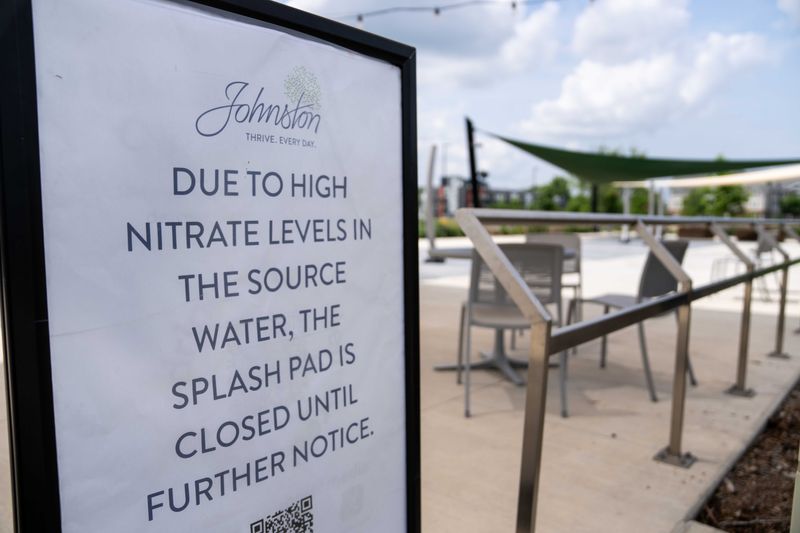
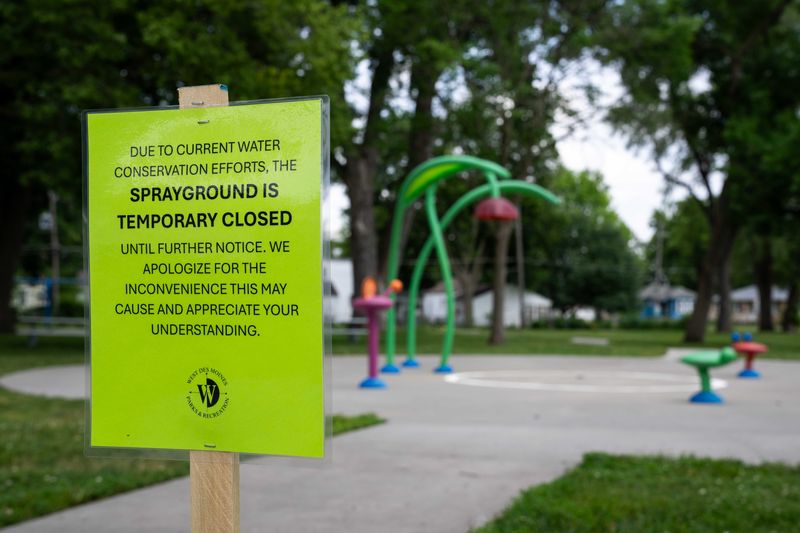
Central Iowa Water Works is allowing its member cities and utilities to reopen public splash pads and spray grounds as temperatures reach dangerously high levels in the Des Moines metro area and across the state this weekend.
In addition, one of those member cities, Grimes, said Friday, June 20, it will not enforce a lawn watering ban because its water is not affected by the high nitrate levels plaguing other utilities in the network.

The city of Des Moines said its spraygrounds are reopening with reduced hours of noon to 6 p.m. daily, and that splash pools will reopen with full, regular hours, although the Ashfield Park Wading Pool will remain closed until further notice. Effective Friday, full price admission to city pools and aquatic centers — temporarily reduced because of the sprayground shutdown — resumed, it said.
The news came as the regional water authority on Wednesday began providing what it said will be daily updates about nitrate levels that have prompted it to ban lawn watering in its 600,000-resident service area. The ban is intended to reduce demand on utilities’ nitrate removal systems and ensure an adequate water supply for more crucial uses.
CIWW said in its in inaugural daily report that nitrate levels in the area’s source water were slowly trending lower: The Raccoon River was at 13.82 milligrams per liter and the Des Moines River, 14.89, down from levels last week above 20 — double the federal government’s allowable total.
The water produced by the Fleur Drive plant of CIWW’s largest member utility, Des Moines Water Works, contained 8.05 milligrams per liter of nitrate, the report said.
On Friday, it reported the Raccoon River’s level had increased to 15.37 and the Des Moines River’s had dropped to 14.1, with water from the Fleur plant at 8.11. It added that Des Moines Water Works’ McMullen treatment plant near the Dale Maffitt Reservoir just south of West Des Moines was producing water with a nitrate level of 7.93 milligrams per liter.
The updates will appear on the CIWW Facebook page.
“While nitrate concentrations are high enough to continue the lawn watering ban to ensure all drinking water standards can be met, splash pads and spray grounds will reopen because they only use a combined 1 million gallons of water a day in the water system,” the regional authority said in a news release.
The agency said consumption for lawn watering can range from 20 million to 40 million gallons daily — or one third of the treatment system’s capacity — depending on the heat.
But Grimes, in its own news release, said it won’t enforce the ban because it has a different water source.
“The City of Grimes is a member of the CIWW and has supported the lawn watering ban,” it said. “However, our water comes from local wells and is not connected to date to the regional system. The City of Grimes does not have a nitrate problem, or supply problem, and we will not be enforcing the lawn watering ban.”
The National Weather Service has issued an extreme heat watch for most of Iowa through Sunday, warning of heat index values expected to reach 106 degrees on Saturday. The alert covers almost all of Iowa, including Des Moines, Iowa City, Ames Davenport and Waterloo, and will remain in place from Saturday afternoon until Sunday evening.
No end to watering ban yet forecast
CIWW warned Des Moines metro residents in a Tuesday, update that they should prepare to conserve water for “weeks not days” as nitrate levels spiked in the Raccoon and Des Moines rivers amid spring rains, challenging the utilities’ capacity to remove the pollutants and still meet increasing demand.
Since the first-ever ban began June 12, demand has fallen about 30%, officials have said.
Water with nitrate levels over the 10 milligram-per-liter federal standard is unsafe for pregnant women and infants 6 months and younger to consume, and also have been linked to cancer.
While nitrates wash into waterways from urban lawns, golf courses and wastewater treatment facilities, fertilizers applied to Iowa’s 23 million acres of corn and soybeans are the primary source of nutrient pollution. Nitrogen as well as phosphorus, another nutrient, are critical to growing crops, but they become pollutants when they enter Iowa’s waterways.
Heavy spring rains pick up nitrates from manure and other fertilizers and carry them through drainage tiles beneath fields to Iowa’s rivers, streams and lakes. Surface runoff during storms also carry nutrients into Iowa waterways.
State and local governments are sharing costs with Iowa farmers to add more upstream conservation practices like cover crops that hold nitrogen and phosphorus in place as well as edge-of-field mitigation measures like bioreactors and saturated buffers, which help clean water before it enters waterways.
As the leading U.S. producer of corn, pigs and eggs and second-largest soybean grower, Iowa has struggled to adopt conservation practices fast enough to significantly reduce nutrient losses.
Additional treatment and storage will come online over the next seven years, CIWW officials say, increasing by 25% its ability to treat nitrates and other contaminants. It plans to tap low-interest loans to pay the $344 million costs and spread the expense over two to three decades to help buffer consumer costs.
This story has been updated to add a video and gallery.
Donnelle Eller covers agriculture, the environment and energy for the Register. Reach her at deller@registermedia.com.
This article originally appeared on Des Moines Register: Central Iowa Water Works calls for reopening spraygrounds, but lawn watering ban remains
Reporting by Donnelle Eller and Nick El Hajj, Des Moines Register / Des Moines Register
USA TODAY Network via Reuters Connect