SOUTH BEND — Without a healthy tree cover in an urban environment, concrete, asphalt and other man-made structures act as “heat batteries,” which means they take a long time to cool down.
But trees literally help cool urban environments through added shade and through their natural photosynthesis process, according to Barbara Dale, project manager with the South Bend Department of Community Investment’s Sustainability Office.

Dale and Indiana University McKinney Climate Fellows climate fellow Diana Zebroski presented the Half Moon Tree Nursery and the South Bend Urban Tree Canopy Initiative during a community open house Monday, June 29.
“Currently, our city is at about 20- or 22% [tree canopy] and the recommendation for cities in the Midwest is 40%,” Dale said. “So, we have a goal to get to 40% urban tree canopy by 2050, and that will require planting about 100,000 trees, which is about a tree for every person in the city of South Bend.”
Due to large industrial development, disinvestment and a bad reputation, trees are lacking in many neighborhoods across the city, particularly the west and south sides of South Bend.
Dale explained that trees can be messy, damaging to property and costly to maintain, which has led them to have a bad reputation. But she also said they have a lot of benefits, such as mental health benefits, increased property value, biodiversity, improved air quality and cooling the Urban Heat Island Effect.
But South Bend has a goal and in order to plant 100,000 trees, it needs trees.
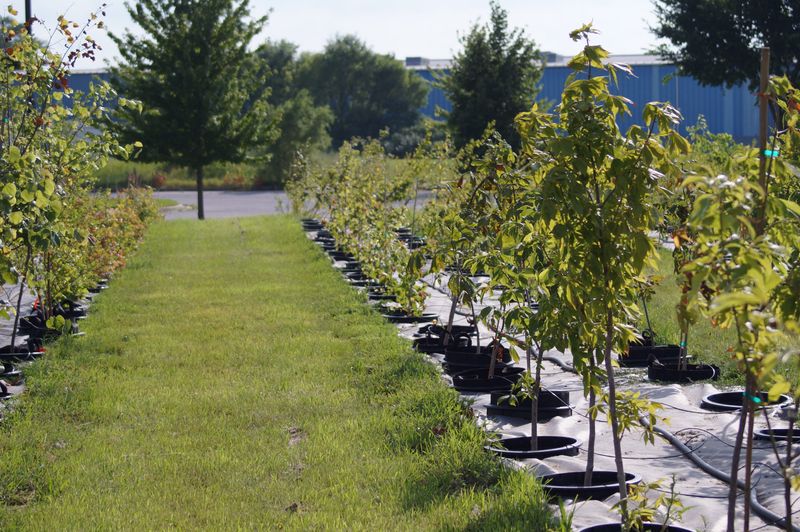
The Half Moon Tree Nursery has been in progress for two years of a five-year grant from the U.S. Department of Agriculture’s Urban Community Forestry grant program, which has allotted $1.87 million toward the project.
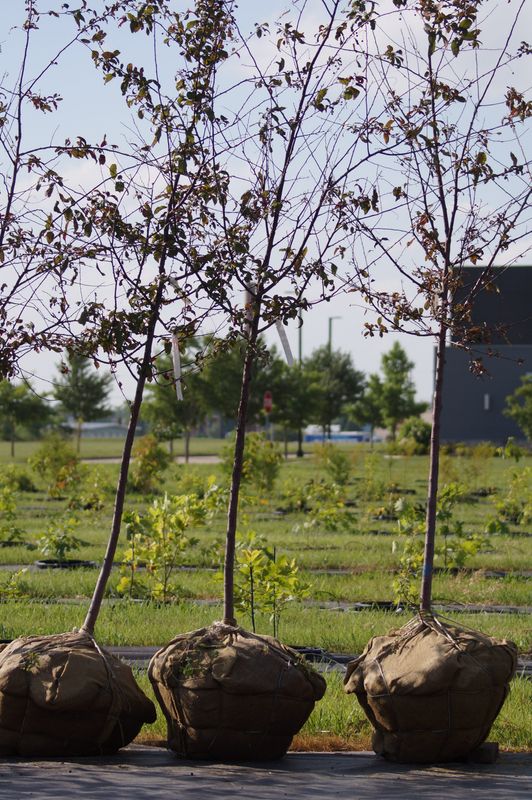
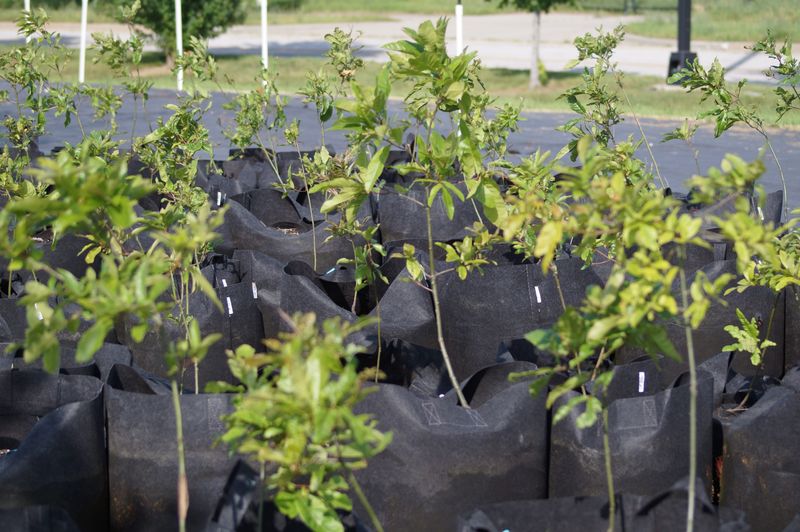
The half-moon shaped piece of land at Ignition Park is an old Studebaker brownfield, so it comes with a few regulations, but it has the capacity to grow up to 3,000 trees at a time. These trees, once they reach maturity, will be used for streetscapes, parks, recreation and across neighborhoods.
South Bend is hosting Zebroski as part of the Indiana University Environmental Resilience Institute’s Urban Green Infrastructure (UGI) Cohort.
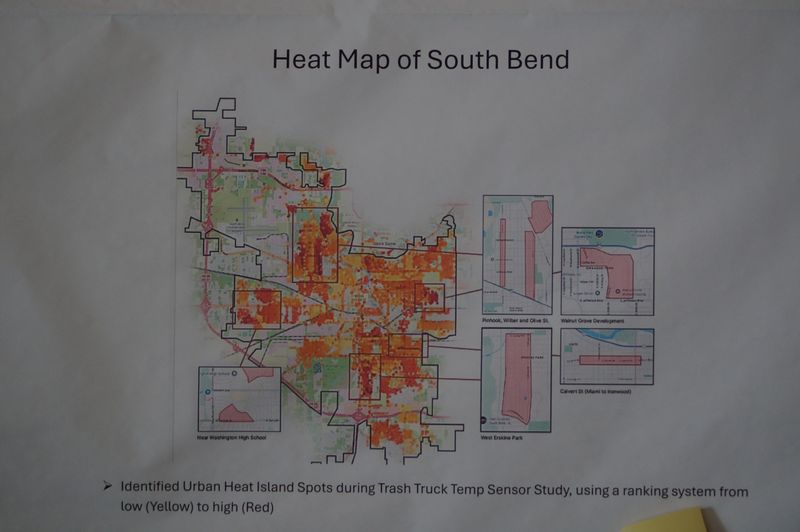
Her work takes a data-driven approach by creating priority planting maps using environmental data and heat data, which was acquired through a South Bend and University of Notre Dame partnership that attached heat capturing sensors to South Bend trash trucks.
“There’s so much to this analysis and there are so many different variables, so we took soil into consideration, the erodibility and infiltration, the flood plains, slope and again, sociodemographic variables, total population, median household income, race,” Zebroski said. “I mean, you name it: All of this is part of the maps.”
Part of her fellowship is to seek public input on the priority planting maps. She will further engage with the community by participating in planting 100 trees in 100 carefully selected locations.
Through a new Neighborhood Tree Ambassadors program, funded by the Environmental Resilience Institute, the city is seeking five tree ambassadors who will get paid a $300 stipend for roughly 15 hours of work. These ambassadors will survey their neighbors and in the fall, they will host a neighborhood-based tree giveaway event.
Apply to be a Neighborhood Tree Ambassador online at together.southbendin.gov/trees.
Email Tribune staff writer Juliane Balog at jbalog@usatodayco.com.
This article originally appeared on South Bend Tribune: South Bend tree cover goals hit next phase with Half Moon Tree Nursery
Reporting by Juliane Balog , South Bend Tribune / South Bend Tribune
USA TODAY Network via Reuters Connect
By Juliane Balog , South Bend Tribune | USA TODAY Network