There are no easy answers about the pressure put on Midwest farmers by shortages stemming from the war in Iran, even when a clear pattern seems to have emerged.

The conflict has seen closure of the Strait of Hormuz, a waterway for one-fifth of the world’s oil and natural gas. All the shipping disruption has increased the price of fuel, vital to the production of fertilizer, and has limited the export of nitrogen-based fertilizers manufactured in the Persian Gulf.
Ultimately, experts say, it could disrupt the supply chain for months to come and further drive up grocery prices. The World Bank has even warned that the conflict could threaten food security worldwide.
In the Midwest, many farmers count themselves relatively lucky.
Dr. Joana Colussi, research assistant professor in Purdue University’s Department of Agricultural Economics, points to a late March survey of nearly 1,000 corn growers conducted by the National Corn Growers Association. Eighty percent — eight of 10 — said their 2026 corn acreage plans have not been impacted by the Middle East conflict.
In other words, most corn growers, who are concentrated in the Midwest, pre-booked their fertilizer before price spikes that have reached as high as 45%.
“The (Iran) conflict started in late February,” Colussi said. “Until this time, at least in the Midwest, corn and soybean producers, around 80% had already bought the fertilizers for this crop season.”
It was a point Colussi pounded home in a recent paper published by Purdue’s Center for Commercial Agriculture. In the Midwest, she and colleague Michael Langemeier wrote, “much of the fertilizer for the 2026 crop had already been purchased and/or applied last fall, before the conflict began.”
In April, an American Farm Bureau Federation Fertilizer Availability Survey of more than 5,700 farmers and ranchers across the country plainly stated that, “rising input costs tied to the conflict in the Middle East are adding strain to an already challenging farm economy.”
But the survey also found pronounced variance in fertilizer pre-booking rates by region. Fully 67% of Midwestern commodity farmers typically relying on soybean and corn — the nation’s two largest crops — reported having made fertilizer purchases ahead of the planting season that is now at its peak.
It’s a number more than twice as high as any other region.
“Given these crop rotations, pre-booking is more common in the Midwest, where fertilizer needs are typically larger and purchasing decisions are often made well ahead of planting,” the American Farm Bureau Federation stated. “As a result, a larger share of Midwestern farmers reported being able to secure the inputs they need before recent price increases.”
Looking ahead to this fall
None of this means the Midwestern farm economy is barreling onward and upward, impervious to the effects of the Iranian conflict.
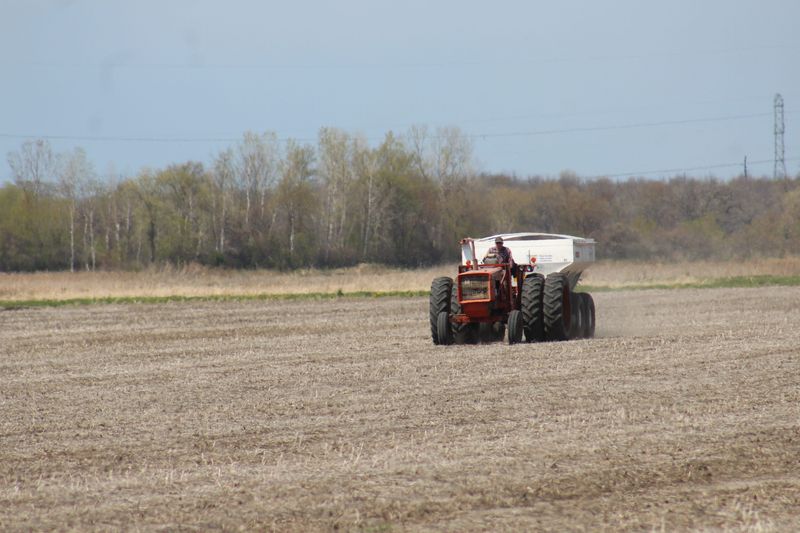
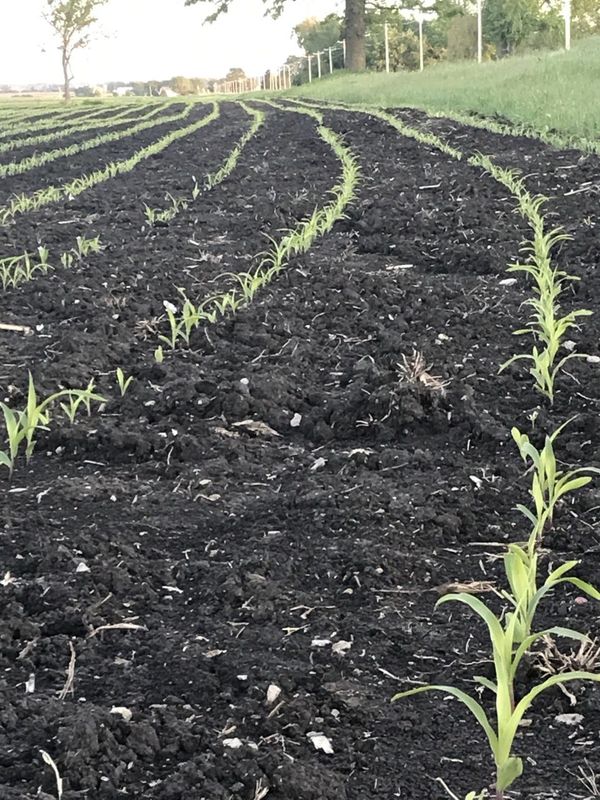
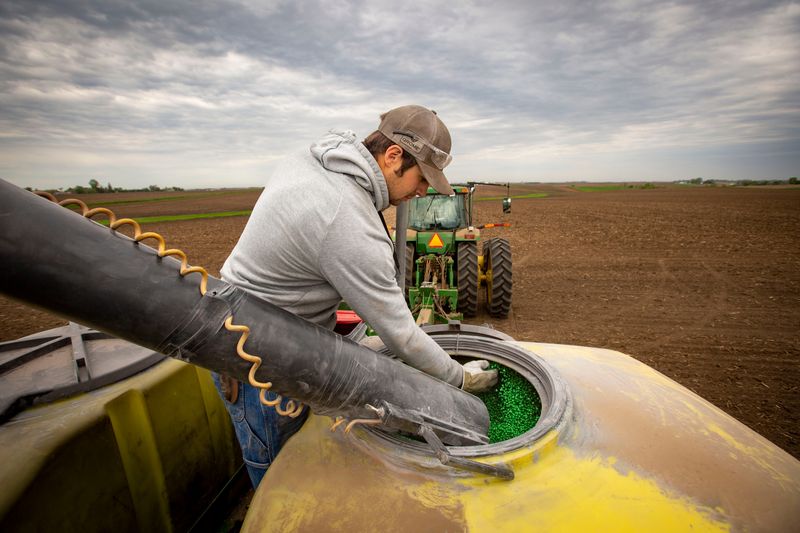
Timing is everything in agriculture. The conflict in Iran broke out when farmers were on the precipice of their spring plant of corn and soybeans, typically used for livestock feed, food and biofuels. Fertilizers are applied just before or at planting time.
Most Midwestern farmers may have pre-purchased their fertilizers for this crop season — but farmers must plant with one eye fixed firmly on the future, said Brady Holst, vice chairman of the Illinois Soybean Association.
“Around 20% (of Midwest farmers) that put nitrogen (fertilizer) on (their farmland) in the spring or in (planting) season would be hit hard by higher prices because they are buying now or in the next month or two,” said Holst, who farms soybeans, corn and wheat on 3,600 acres in West Central Illinois.
“It has all farmers worried because usually they will buy fertilizer for this coming fall ahead of time. And fertilizer prices move slowly around the world, so it takes a long time for fertilizer prices to move down. So even if the (Iranian) conflict ended today, the price for fall fertilizer would still be elevated.”
Veronica Nigh, senior economist at The Fertilizer Institute, points out that the United States produces about 60% of its own total needs for the phosphate fertilizer used extensively in corn and soybean production.
The U.S. still imports a significant portion from Saudi Arabia, Nigh said during an April 23 seminar of the International Food Policy Research Institute and the Agricultural Market Information System.
“We have significant exposure from the Middle East,” she said. “From a timing perspective, however, those phosphate imports tend to come in earlier in the year, so much of that product was already in place prior to the Strait (of Hormuz) closure.”
But Nigh said one of the Fertilizer Institute’s members had reminded her that, “we’re an industry that builds product for four months and then applies it for two.”
“So we’re now certainly getting into the time of the year where we’re looking and thinking and worrying about building those supplies for the fall application,” she said.
‘The whole world revolves around diesel fuel’
Dairy farmer Jim Good, farm manager of Michigan State University’s Dairy Cattle Teaching & Research Center, pointed to a surge in diesel prices that, Good says, is putting the hurt on him.
Everything burns diesel fuel on a dairy farm — everything from tractors to semi-trucks, Good said.
“Everything is freighted in and freighted out (by semi trucks) on the dairy farm,” he said. “We’ve got feed coming in. We’ve got milk going out. The whole world revolves around diesel fuel, so when it goes from $3 a gallon to $6 a gallon, it gets to be pretty pricey.
“Some of our products — if you’re not raising your own grain products, those all have to be trucked in. We don’t have processing on site, so we’ve got to haul that milk out.”
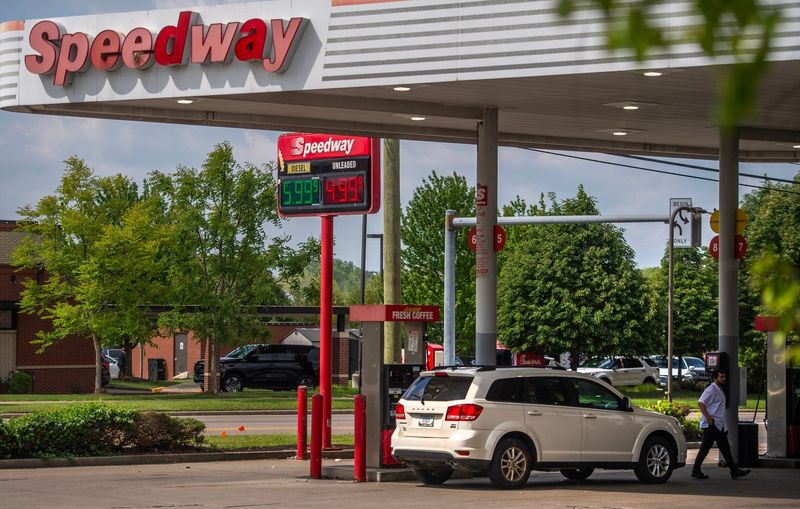
The Iran war’s disruption of global energy production has led to steeper petrol, diesel and jet fuel prices. Diesel is now at an average of more than $5.70 a gallon in Michigan and Indiana as of May 1, AAA says.
During an April 13 recent visit to MSU’s Dairy Cattle Teaching and Research Center, U.S. Agriculture Secretary Brooke Rollins brought some help for Michigan’s specialty crop sectors — an increase from $165 million to $275 million in Specialty Crop grants.
Taking the long view
The Illinois Soybean Association’s Holst finds hope in a push within Congress to let gas stations sell E-15 — gasoline blended with 15% ethanol — nationwide and year-round to ease fuel costs without forcing stations to overhaul their equipment.
The Environmental Protection Agency has issued temporary emergency fuel waivers to allow nationwide sales of E-15 in past years, but Holst said he and other farmers want it to be permanent.
“They were worried about that becoming a smog problem, but there’s been lots of queries and studies with more modern vehicles and how the gasoline system is now,” he said. “There’s not really a concern for that, so it’s just kind of the slow grinding cogs of the government. Technology’s advanced a lot faster than we can advance the legislation that’s out there.”
If fertilizer prices don’t come down for farmers by the middle of summer or this fall, Holst said, there will be noticeable “acreage shifts” — a move away from planting corn to planting soybeans, which require less nitrogen fertilizer, meaning lower production costs.
That would be felt in Illinois, the nation’s largest soybean producing state and second-largest corn producing state.
In a recent survey of 4,000 farmers across 26 states, Chicago-based Farmer’s Keeper LLC found considerable sentiment for such a shift.
“Since March 1, 21% of farmers said they plan to decrease their corn acres,” Farmer’s Keeper CEO Nick Tsiolis said in a recent episode of Ag Marketing IQ in Depth.
The Farmer’s Keeper survey tracks with findings from a recent Farm Futures Q1 survey, which showed 43% of farmers planning to grow less corn. But it also clashes with a March 31 USDA Prospective Plantings report that predicted only a 3.4% decrease from last year’s corn plantings.
Tsiolis told Ag Marketing IQ in Depth that farmers must make future cropping decisions with great care.
“Soybeans could fall out of bed really quickly if oil prices drop and diesel costs come down,” he said.
“Farming is a long-term game,” Tsiolis said. “Profitability comes from balancing agronomic and budgeting decisions, not making drastic swings year to year.”
Looking ahead, Purdue’s Colussi and Langemeier say the U.S. and Brazil — the world’s largest soybean producer and exporter — must better protect themselves in the future from “external shocks” like the conflict in Iran. They called on the two nations to more aggressively expand their fertilizer production.
“This is a long-term challenge, but it is becoming increasingly necessary for both countries to remain competitive in the global grain market,” they wrote. “Greater supply security would reduce vulnerability to geopolitical disruptions and provide more stability in input costs for producers.”
This article originally appeared on Evansville Courier & Press: How will the war with Iran impact Midwest farming?
Reporting by Thomas B. Langhorne, Evansville Courier & Press / Evansville Courier & Press
USA TODAY Network via Reuters Connect