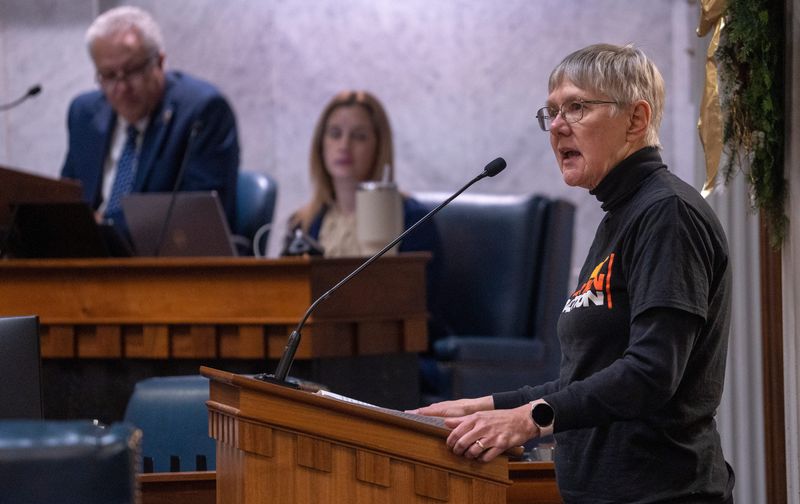
As an issue moves through the policy-making process, citizens often have the opportunity to directly tell their lawmakers what they think.
Public comment or testimony is the opportunity for the public to speak about a bill, ordinance or issue in front of their elected leaders.

Local governments and school boards often allow public comment on both agenda items and anything on attendees’ minds. If you want to speak to lawmakers at the Statehouse, your comments typically must relate to a specific bill and can only be heard at committee hearings at the Statehouse.
Here are some tips on how to make the most of your public comment opportunity:
What are the keys to making public comments at meetings?
Several organizations and experts give this advice on making an effective public comment:
“A well-reasoned argument, civilly presented, is going to be more effective in most cases than an illogical shouting match,” local government expert Mark Levin said. “Be calm and carry on.”
How do I find factual information?
Local leaders told IndyStar that they can tell if a person has spent time educating themselves on an issue, and it can help their case if they have.
“If they seem to have their facts squared up, then, yes, I will give them maybe some heavier weight,” West Lafayette Councilor Kathy Parker said.
The Indiana General Assembly website includes a wealth of information on proposed legislation. People can find the bill language, a fiscal analysis and all actions on the bill. The website also includes recordings of session business, including debate, public testimony and votes.
Local governments post a varying amount of information on their websites. They are required to post agendas ahead of council meetings and keep minutes of what they worked on. Those documents can often be found online or requested.
All local government meetings must be livestreamed, so people can also watch previous meetings to hear past testimony and debate.
Other ways to let elected officials know your views
Matt Greller, leader of Accelerate Indiana Municipalities, recommends that people request meetings with leaders before a public meeting, which he says are almost always granted. That way, he said, leaders and constituents can have a more nuanced conversation in which concerns can be talked about and misinformation corrected.
“If you’re upset about a project, schedule a time with the mayor, the council member, the clerk treasurer before the public meeting, and just ask for a one-on-one time,” he said. “It just makes it such a more constructive public meeting, public engagement process when that happens.”
Council members and legislators also post their contact information on their respective government websites for resident feedback. Like in-person comments, it’s unclear how effective this avenue is in policymaking, but elected officials sometimes cite the number of people who have reached out to them to back their decisions.
Is social media a good option for reaching elected leaders?
Leaders and experts told IndyStar they value in-person conversations more than social media posts and comment sections.
“If I see a lot of untrue comments, then I don’t give it much weight,” Indianapolis Councilor Michael-Paul Hart said. “I don’t give much weight to social media, either.”
The USA TODAY Network – Indiana’s coverage of First Amendment issues is funded through a collaboration between the Freedom Forum and Journalism Funding Partners.
Have a story to tell? Reach Cate Charron by email at ccharron@indystar.com, on X at @CateCharron or Signal at @cate.charron.28.
This article originally appeared on Indianapolis Star: How to tell elected leaders what you think about hot-button issues
Reporting by Cate Charron, Indianapolis Star / Indianapolis Star
USA TODAY Network via Reuters Connect