BLOOMINGTON − WonderLab employees and visitors are mourning the death of one of the science museum’s most beloved creatures.

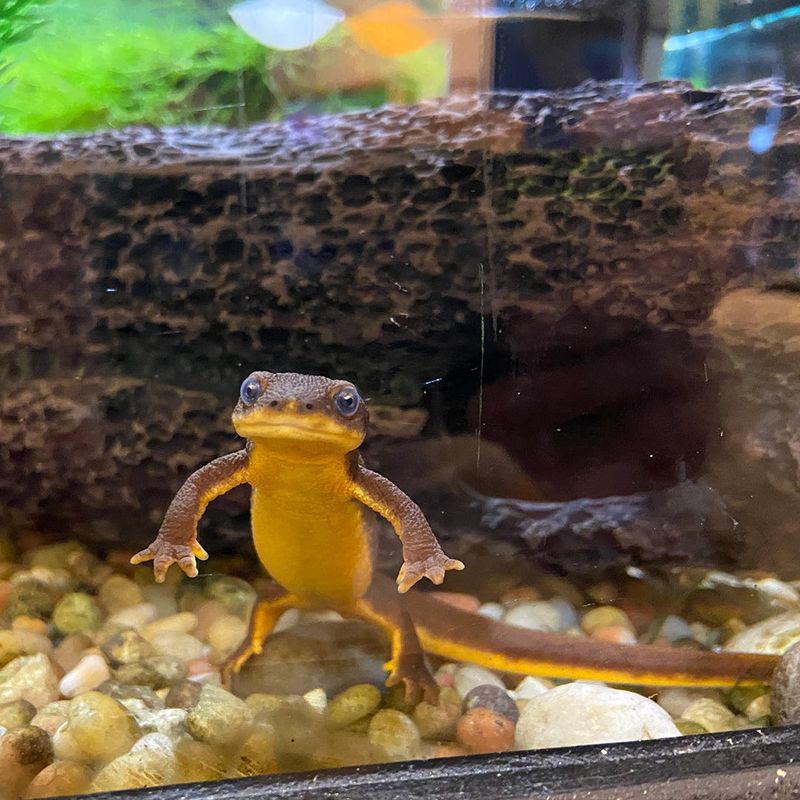
Cleese, perhaps the longest-living captive rough-skinned newt ever, was at least 23 when she died Dec. 2.
“It is with a heavy heart that we share that Cleese has let us,” the museum announced in a Dec. 4 Facebook post.
The scaly newt spent its life known as a male, but a necropsy revealed the salamander was actually a she.
Cleese had a life as a research-project newt before being donated to WonderLab 23 years ago, so her exact age is unknown. The health, science and technology museum’s oldest alive resident lived in a 360-degree glass tank.
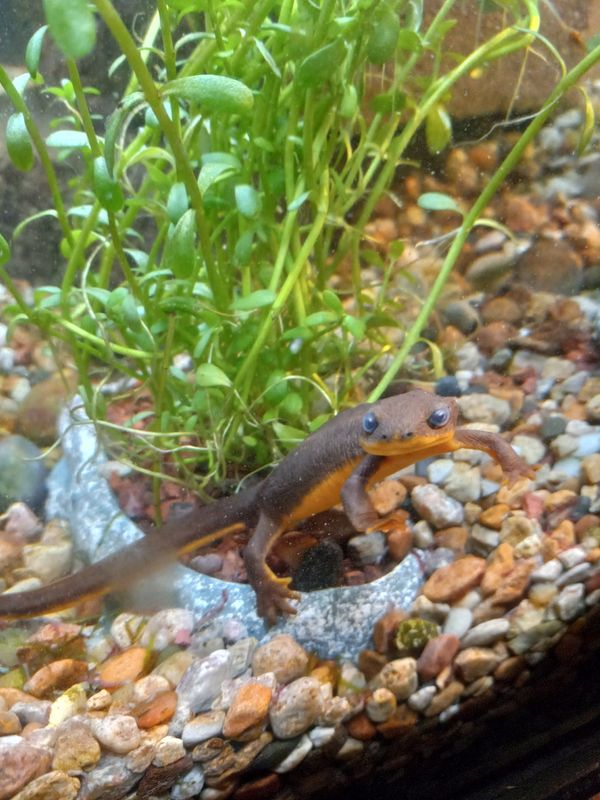
Children and adults, more than a million over the years, had an opportunity to visually step inside Cleese’s water world. He liked eating snails and mealworms.
“We all did so love Cleese,” said WonderLab marketing director Aleisha Kropf, who got to know the newt in her previous role working with the museum’s animal displays. “Lots of creatures have come and gone but she had the longest lifespan.”
A tank by the windows
“Cleese seemed to love watching the sunrise through our eastern windows and brought a calm, Zen presence to everyone who worked with him,” his Facebook death notice said.
“He is the only animal ambassador to have worked with every animal exhibit manager in WonderLab’s history − a quiet constant, a colleague, and a beloved member of our team.”
The scientific name for the rough-skinned newt is taricha granulosa. They are also called the Oregon newt and Pacific Coast newt. The stocky, round-snout salamanders emit through their skin a neurotoxin called tetrodotoxin when threatened.
“We did take precautions,” Kropf said. “Cleese was not one of our handleable exhibits.”
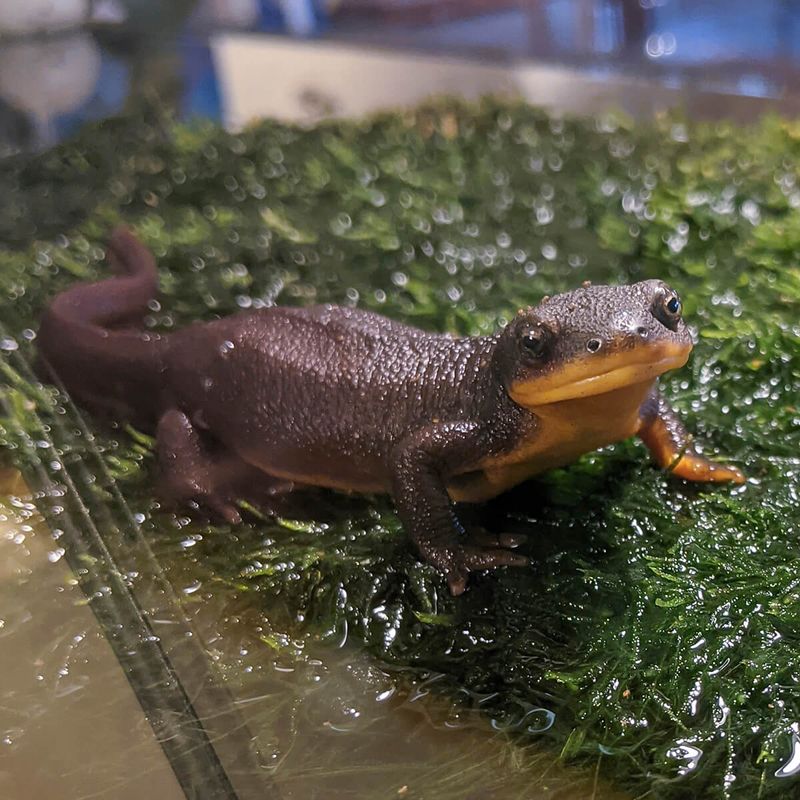
Assistant animal exhibits manager David Frew said that in his later years, Cleese enjoyed climbing up on his mossy rock and lying there, watching and entertaining curious children peering through the glass.
“He was a joy to watch,” Frew said. “The kids couldn’t believe he was older than 20.”
More than a million visitors passed through WonderLab during her time there Kropf said, calling the new “popular with museum patrons.”
Her tank near the second-floor windows has been removed, Frew said. There are no immediate plans to replace him with another newt.
Cleese had a prior life in research
Before WonderLab, the newt lived in an IU research lab, part of experiments around what’s called the Red Queen hypothesis. First proposed in 1973, the hypothesis is based on the notion that species are always adapting to changes involving other species they encounter.
Cleese was not a large amphibian. Rough-skinned newts measure between 11 to 18 centimeters from snout to end of tail. They are brownish or olive green on the dorsal side and shades of orange to yellow on the underside Their eyes have yellow irises and orangish lower eyelids.
Cleese was a Hoosier, a “local, wild-caught newt,” Kropf said, captured by evolutionary biologist Edmund “Butch” Brodie as a research subject. The focus was how the amphibian’s toxin release helps protect the species and how this ability evolved.
Brodie, now at the University of Virginia, was friends with Karen Jepson-Innes, a WonderLab founder and former executive director.
“Butch was very interested in animals with diets that enable them to create toxins in their bodies,” Kropf said. “In the early days, Butch set the museum up with an aquarium of poison dart frogs. Later, he made another donation − Cleese, as well as some garter snakes.”
Garter snakes are the rough-skinned newt’s main predator, and some have evolved so that they can eat newts without being affected by the toxins in their bodies.
“He thought a snake and newt exhibit would be a fun and interesting way to share evolutionary biology information with WonderLab visitors,” Kropf said. “So, newts and garter snakes were brought to the museum in 2002.”
The garter snakes survived less than a year. Cleese, however, lived on.
She arrived at WonderLab nameless and the staff back then decided to call the newt Cleese after actor John Cleese and a scene from “Monty Python and the Holy Grail.” In the segment, a man claims a witch turned him into, yes, a newt.
Contact H-T reporter Laura Lane at llane@heraldt.com or 812-318-5967.
This article originally appeared on The Herald-Times: Cleese the newt, longtime WonderLab attraction, has died
Reporting by Laura Lane, The Herald-Times / The Herald-Times
USA TODAY Network via Reuters Connect