LAFAYETTE ― On the surface, Alyssa Mitchem looked like a normal high school athlete.
She played soccer in the fall and ran track in the spring at Bellmont High School, located in Decatur, Indiana, just outside Fort Wayne.

Internally, though, she found herself in a constant state of agony.
“I ended up quitting playing because my mental health was so poor,” said Mitchem, who is now the director of the IU School of Social Work MSW Program. “I developed an eating disorder, and (soccer) became something that I hated and wasn’t fun anymore.”
Mitchem has turned he struggles into her passion. She now helps high school athletes through BOOST (Building Outreach and Opportunities in Sports Teams), a pilot program developed and being implemented within the Tippecanoe School Corporation.
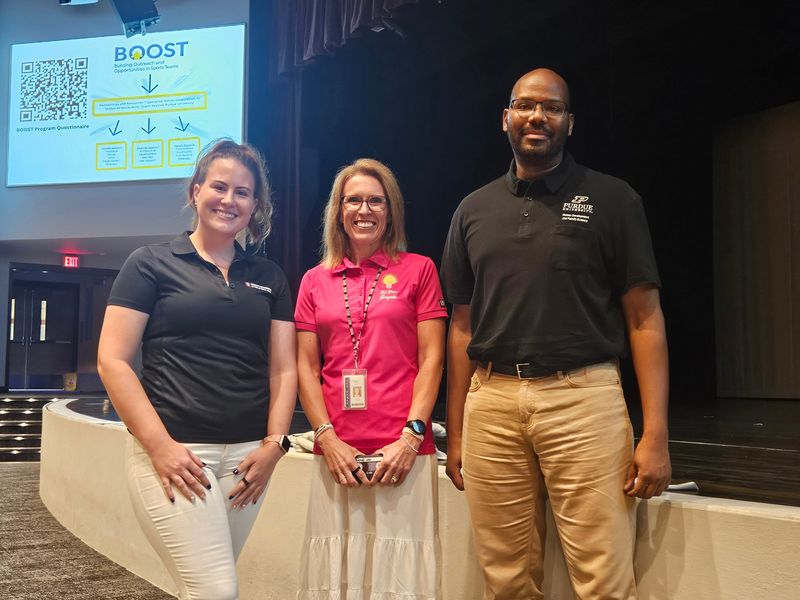
In her role, Mitchem is teaming with Purdue Department of Human Development and Family Science assistant professor Dr. Paul Robbins and Megan Ulrich, the TSC mental health liaison who also coaches cross country at McCutcheon.
Mitchem, Robbins and Ulrich are combining to identify mental or physical health symptoms of high school athletes and coaches at McCutcheon and Harrison.
Ulrich was a swimmer at Purdue and is hoping to take what Robbins and Mitchem explained as “a holistic approach” to address the needs of those competing in high school athletics. The Centers for Disease Control and Prevention estimates 40% of students had persistent feelings of sadness and helplessness.
“We’re seeing an increase in athlete’s need of services,” Ulrich said. “Kids in general have a lot of mental health needs, and a lot of kids participate in athletics. This is an area we can focus and address those needs. But with athletics, you have that increased pressure to perform, and coaches are safe people that athletes can let know they’re struggling. So, we are equipping coaches with tools and strategies to address those issues.”
Sports lends itself to community outreach
Robbins explained how the community of athletics can be a natural social avenue that helps identify problems a student might be facing that wouldn’t likely be shown in another social setting.
“It’s important to use sports as a place to build support structures since so many are there,” Robbins said. “Part of that will mean listening to the unique barriers athletes face. There are unique barriers. Some have to do with the pressures of the anxiety of not performing the way they need do. Some of it is pressure from their teachers, their peers and the broader community. Figuring out how to deal with these unique pressures is important for their mental health in general.”
Mitchem pointed out that a portion of athletes also face the pressures of employment and finding part time jobs to help support their families.
“We see so much anxiety, depression and just keep up with work in our students, and even more so in our student-athletes,” Mitchem said. “Sports is an outlet for most of them, but sometimes, it turns into more anxiety. We’ve seen a major need for this for both Megan and I since we’ve been coaching sports for many years. We are creating a more structured approach and utilizing our resources more.”
Getting approval from TSC
Mitchem remembered the first time she presented her program to TSC school board members, unsure whether resources would be devoted specifically for student-athletes.
“But then they were on board in almost a minute,” Mitchem said.
McCutcheon athletic director Ryan Walden recalled the presentation.
“I said ‘yes’ in 30 seconds,” Walden said. “We recognize that mental health is just as critical as physical health. Megan, Alyssa and our partners at Ball State, Purdue and IU are providing our department with the opportunity to ensure that our athletes feel supported, heard and empowered. We are committed to the well-being of our student athletes. That is our purpose and why the TSC is recognized throughout the state as a community first corporation.”
Mitchem explained how the field of sports social work differs from the work done to check the wellness of families.
“Sports social work is looking at the holistic athlete and not just saying how they can be the best athlete,” Mitchem said. “How can we support them as a human?”
Who is benefitting from BOOST
BOOST aims to identify the various needs for athletes that vary from gaining proper nutrition at school to stress triggers in the school or home setting. The program can also identify how athletes react during an injury, through rehab, post-injury anxiety and helping cope through emotional stress.
The program is being used at Harrison and McCutcheon, but could soon be available to more Lafayette and West Lafayette schools.
Ulrich pointed out that assistance will be made available for coaches as well.
“My feeling is that adults set the tone for the kids,” Ulrich said. “We have to make sure that we are okay, and there’s a lot of pressure for adults as well. There’s a big piece to this, and that is coach wellness. Making sure that the coaches feel supported and that they have the information they need to feel confident moving forward if they know the warning signs. If they know what to watch for, they’ll be more confident in moving forward and supporting an athlete.”
Ultimately, Robbins wants to see more students maximize their experience as athletes knowing there are resources to help them endure through daily challenges.
“We are trying to use sports to set people up for a better life after sports,” Robbins said. “It’s thinking about where they’re going to go, what they’re going to do and how we can help them get there, but using sports and the teams to help them accomplish that goal.”
Ethan Hanson is the sports reporter for the Journal & Courier in Lafayette. He can be reached at ehanson@jconline.com, on Twitter at EthanAHanson and Instagram at ethan_a_hanson.
This article originally appeared on Lafayette Journal & Courier: ‘How do we support them as humans?’ BOOST focuses on mental health of high school athletes
Reporting by Ethan Hanson, Lafayette Journal & Courier / Lafayette Journal & Courier
USA TODAY Network via Reuters Connect