Indiana is poised to have a “very cold and snowy” winter this year, according to the Farmer’s Almanac. The Midwest and Ohio Valley, it writes, are set up for a “classic winter wonderland” of snow.
Or not.

Large swaths of the Hoosier State are expected to have a warmer, drier winter, depending on where you live, according to a long-range forecast by the Old Farmer’s Almanac.
But seasonal winter temperatures for Indiana could swing in either direction.
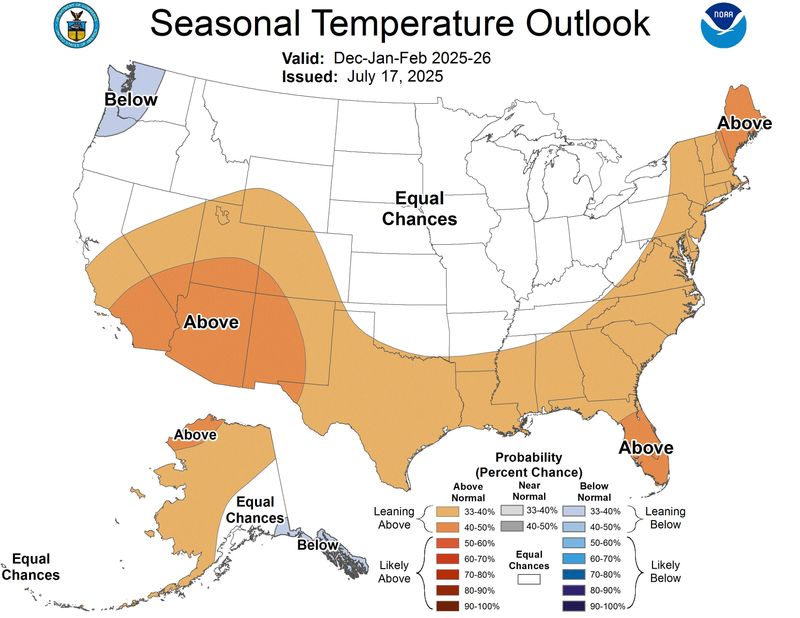
The National Weather Service’s Climate Prediction Center anticipates “equal chances” of temperatures falling below or above normal from December through February across most of the country. NWS also favors a brief period of La Niña conditions in the fall and early winter, which usually spells cooler temperatures over the northern United States.
So where does that leave Indiana?
Fall doesn’t officially start until Sept. 22. Predicting the Midwest’s winter weather with accuracy three months out seems little more than a coin-flip. Here though is what December, January and February could spell for Hoosiers, according to each almanac and prediction models from NWS.
Old Farmer’s Almanac: top half of Indiana to get ‘above normal’ winter temperatures
The Old Farmer’s Almanac, not to be confused with the Farmer’s Almanac, is predicting warmer winter temperatures for its Lower Lakes region, whose cities include Milwaukee, Chicago, Detroit, Cleveland and Indianapolis.
“Winter will be warmer than normal, with the coldest periods in mid-to-late December, early and late January, and early February,” writes the Almanac, adding the snowiest periods will hit mid-to-late November, much of December, early and late January, early February, and early to mid-March.
A chance of heavy snow during those four months? In northern Indiana? You don’t say…
South of Indianapolis, the Old Farmer’s Almanac predicts winter will be colder than usual for portions of southern Indiana stretching down into Louisville.
The snowiest periods, the Almanac writes, will be in late December, early January, and early and late February. They predict Indiana’s precipitation will be lower than normal.
Farmer’s Almanac: Winter 2025-26 forecast
The Farmer’s Almanac’s winter forecast calls for a season of “dramatic swings and widespread wintry weather.”
The coldest temperatures, they write, will extend from the northern Plains to New England, with an especially cold winter in Idaho and Washington. The Midwest, Great Lakes, and Ohio Valley, they write, will have a “classic winter wonderland” this year.
What, then, does a “classic”— or at least average — winter look like in Indiana?
What’s the average winter temperature like in Indianapolis, Indiana?
Last year, the average high temperatures during winter in Indianapolis from December 2024, January through February 2025 were 43, 32 and 40, respectively, according to weather data provided by NWS.
Indy’s average low temperatures December through February last year clocked in at 29, 15, and 24.
Historically, Indy’s snowiest months are in January.
Is Indiana going to have a snowy winter?
From 1991 to 2020, the average snowfall for Indianapolis in December, January and February is 6.4″, 8.8″ and 6″ of snow, respectively. Some years, of course, are snowier than others.
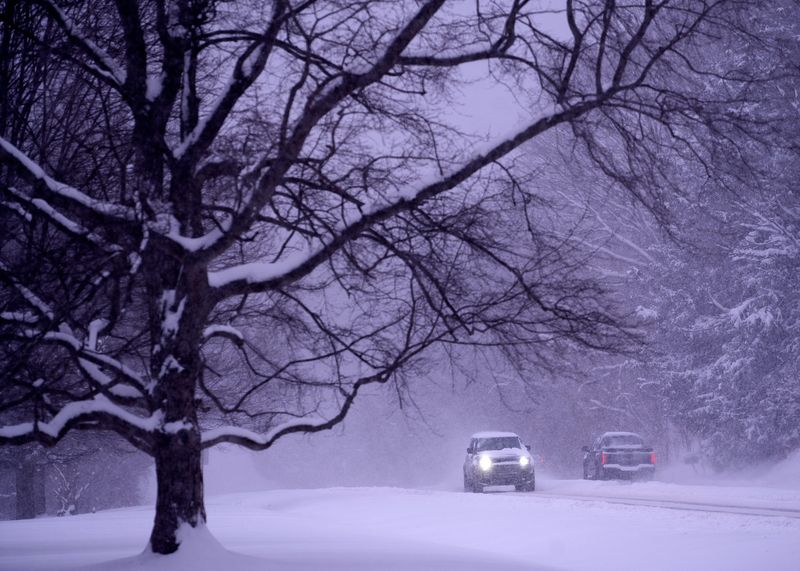
On Jan. 5, a snowstorm moving across the Midwest buried some Indiana cities in nearly 12″ of heavy snow. It’s too early to tell if such an event will repeat in January 2026. The latest forecast models from NWS show the Hoosier State could veer colder or warmer this winter.
What NOAA’s Climate Prediction Center says about winter 2025-26
A seasonal temperature outlook map issued Aug. 21 by the National Oceanic and Atmospheric Administration shows Indiana and its neighboring states are leaning toward “equal chances” for above and below normal temperatures.
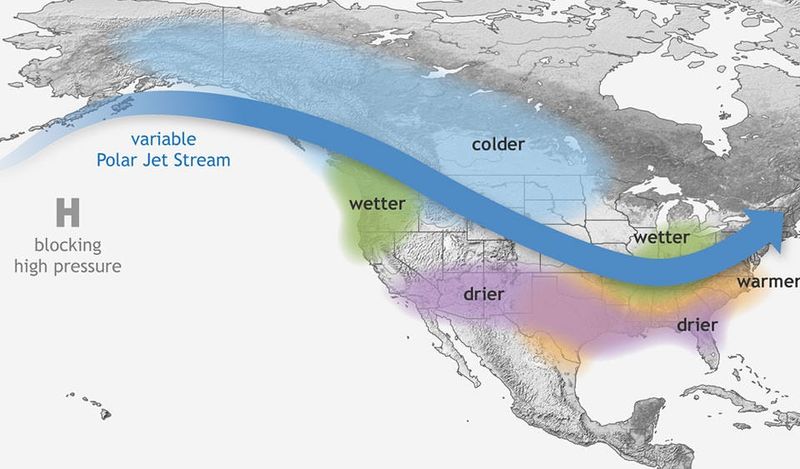
Federal forecasters predict a “brief period of weak La Niña conditions” is expected in the late fall and early winter, which could bring cooler and wetter temperatures to Indiana.
La Niña could impact this winter weather in 2025-26
“Chances for the development of La Niña increase as we approach the upcoming winter,” Johnna Infanti, a seasonal forecaster with NOAA’s Climate Prediction Center told USA TODAY in an August email.
According to Infanti, some typical impacts of a La Niña winter can include cooler temperatures over the northern United States, and diminished storm track activity over the southern tier of the United States leading to milder-than-normal temperatures and below normal precipitation.
“However, predictions of this event are still uncertain, and indications point to a short lived, weak event. Weak and short lived events tend to have less reliable impacts than strong, long lived events,” Infanti said.
What about precipitation in the Midwest this winter?
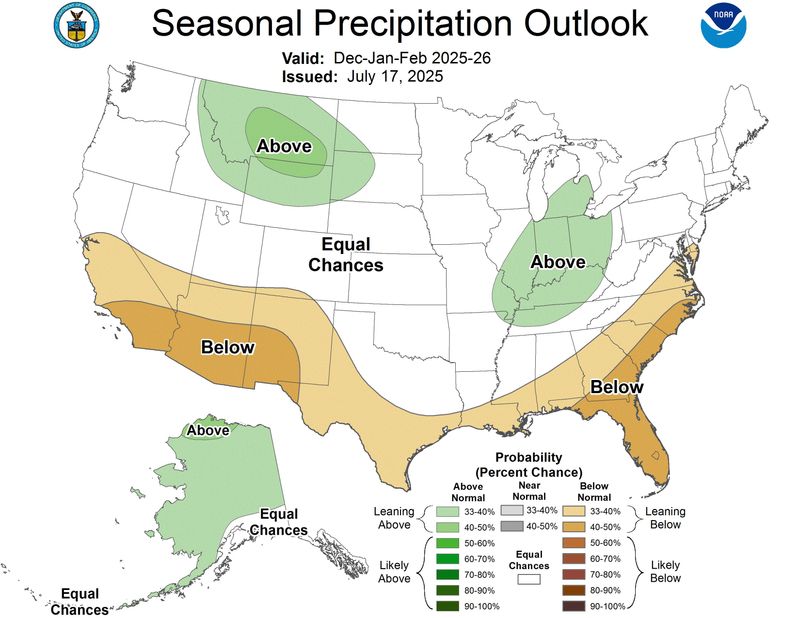
Federal meteorologists point to a potentially wetter winter this year for Indiana.
The latest seasonal precipitation outlook predicts the Hoosier State might see above average precipitation (33-40% probability) from December through February, according to NOAA.
How accurate are the Farmer’s Almanac and Old Farmer’s Almanac?
Despite assertions the almanacs are 80-85% accurate, studies have shown their long-range predictions are sometimes little better than a guess. One study cited by Popular Mechanics reported the Farmer’s Almanac was right about 52% of the time.
John Tufts covers trending news for IndyStar and Midwest Connect. Send him a news tip at JTufts@Gannett.com. Find him on BlueSky at JohnWritesStuff.
This article originally appeared on Indianapolis Star: How bad will winter in Indiana be this year? What three forecast models predict
Reporting by John Tufts, Indianapolis Star / Indianapolis Star
USA TODAY Network via Reuters Connect