The Colts are slated to make their first pick in this year’s NFL Draft in the second round – a selection that could fit any number of glaring voids on a roster that signed up depth piece after depth piece in free agency but no clear-cut starters.
General manager Chris Ballard will be forced to weigh heavily just which position is most deserving of the potential Day 1 starter that a second-round pick can provide.

It’s a spot in the draft where Indianapolis has excelled during Ballard’s tenure, landing impact players on both sides of the ball like Shaq Leonard, Braden Smith, Michael Pittman Jr., Jonathan Taylor and Alec Pierce. But one could argue Indianapolis’ biggest need is at edge rusher – a position that has been a near-annual concern throughout Ballard’s tenure that even high draft picks haven’t solved.
So, where should the Colts turn once their eight-minute slot on the clock comes on Friday? Here’s a dive into the four most sensible position options – edge rusher, linebacker, wide receiver and defensive back – looking at who Indianapolis could end up taking and why (and why not) target that position in the second round.
Should the Colts draft an edge rusher in the second round?
Edge rush options: Once you get past the top-5 near-consensus likely first-round selections in Arvell Reese, David Bailey, Rueben Bain Jr., Keldric Faulk and Akheem Mesidor, so much of what may be available at edge rusher for the Colts come pick No. 47 will depend on the selections ahead of them. In a draft class with a dozen or more first or second round talents on the edge is there a run the Colts could choose to react to, or do other deep positions like receiver and the secondary grab other teams’ focus?
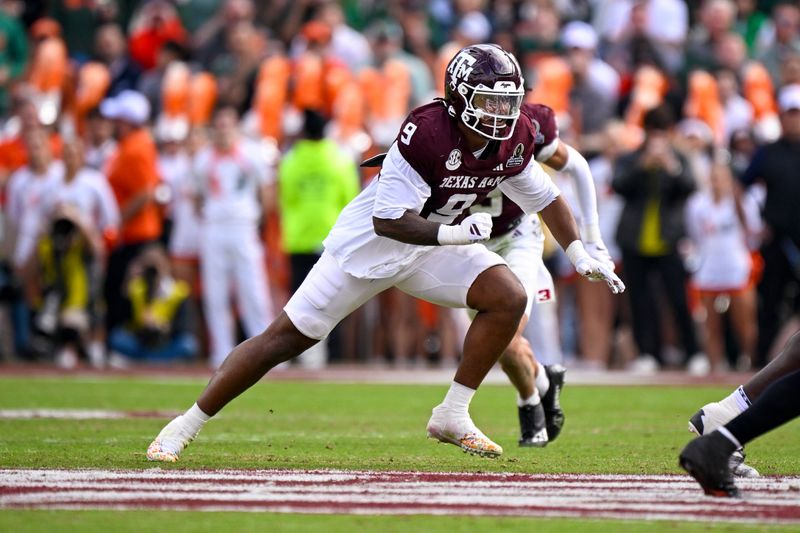
Four players headline the next tier of edge rushers: TJ Parker, a 2.5-year starter at Clemson and former All-American; UCF’s Malachi Lawrence, an older prospect who has a balanced skillset; Texas A&M’s Cashius Howell, a unanimous All-American and SEC Defensive Player of the Year whose athleticism and burst jumps off the page; and Missouri’s Zion Young, a physically-gifted prospect who racked up tackles for a loss and pressures in the SEC, and blossomed as a run defender last fall.
More likely to be around for the Colts’ pick are Oklahoma’s R Mason Thomas, an explosive pass rusher who comes to the NFL with speed, power and twitchiness, but an undersized body at 6-2 and 241 pounds; Illinois’ Gabe Jacas, a four-year starter who racked up 11 sacks a year ago and profiles as a violent pass rusher with a great motor but whose quickness and run game instincts leave something to be desired; Penn State’s Dani Dennis Sutton, who brings physicality but lacks explosiveness and profiles more as a high floor/low ceiling prospect; Auburn’s Keyron Crawford, whose explosiveness shone even when attention was directed toward Faulk on the other side but whose production in a lone starter season was lacking; and Michigan’s Derrick Moore, a rotational player in college on a deep roster who led the Big Ten in pressure percentage and is well-rounded if a bit inconsistent.
Why Colts should draft an edge rusher at No. 47: Dane Brugler’s seven-round mock draft for The Athletic had Moore finally being taken off the board at 70, and from there, only four more edge rushers were taken by pick No. 125. In a deep class, the cliff is likely to come before the Colts make their second pick in the third-round.
If any of Parker, Lawrence, Howell or Young fall to pick No. 47 – or even close – the Colts should leap at the opportunity. Ballard’s rough track record drafting high-impact edge rushers shouldn’t make you shy away from taking a glaring need. Howell’s tape is intoxicating, but at the moment, he’s unlikely to be an every-down guy, perhaps making one of the other three better fits.
Why Colts shouldn’t draft an edge rusher at No. 47: The biggest caution here is what you’d be giving up at linebacker, because after Sonny Styles as a no-brainer top-10 pick, the Nos. 2-5 linebackers could be very much in play in the early to middle second round. That position boasts a bit of a higher ceiling and a quicker fall-off in top prospects, with only five seemingly in play for Indianapolis.
Shying away could make sense, too, if teams higher up in the second round make a run on edge rushers, and at No. 47, selecting one of the lesser names feels too rich for a team that could see starting caliber players in positions of need of better value still on the board.
Should the Colts draft a linebacker in the second round?
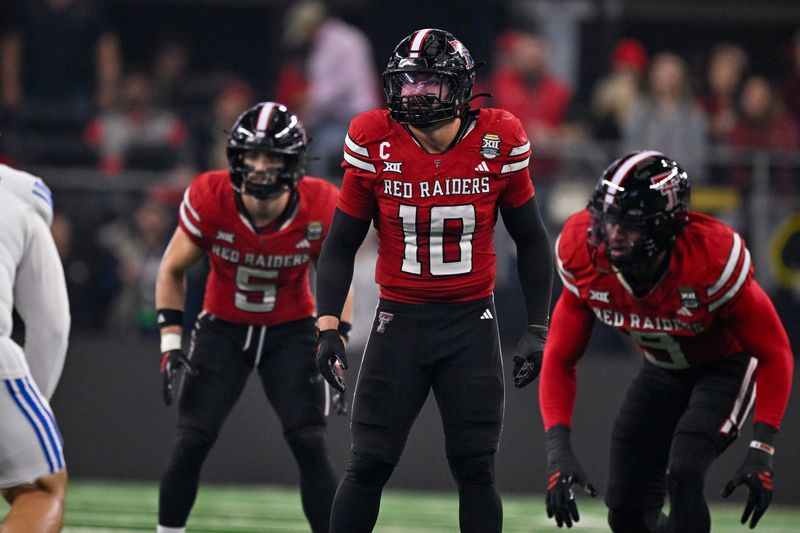
Linebacker options: The Colts have frequently been linked with Texas Tech’s Jacob Rodriguez, Cincinnati’s Jake Golday and Texas’ Anthony Hill Jr. and that’s where the strength of this class, along with Georgia’s CJ Allen, lies.
Rodriguez is a quarterback turned linebacker whose field vision and knowledge of the offensive game pays dividends in the way in which he can attack at his current position. Rodriguez landed the Lombardi Award (nation’s top player), Bronko Nagurski and Chuck Bednarik Awards (defensive player of the year honors) and the Dick Butkus Award (most outstanding linebacker) for his prowess as a ballhawk who logged six sacks, 10 forced fumbles, four fumble recoveries, five interceptions and 10 passes defended over his final two years in college.
Golday shines in the way he operates in space and his sideline-to-sideline speed who could make an impact as a rookie. His speed in blitz situations is stellar, as are his pass coverage skills, and even if he’s an all-around unrefined prospect, he has the tools of someone who’s likely to make an impact at the next level.
Hill enters the NFL as the most prototypical talent of the three, a former five-star prospect who started as a freshman and whose skills span the run game, pass coverage and blitzing, although his anticipation and some of his techniques need refining.
Allen started as freshman for Kirby Smart and became an All-American by his junior year as an instinctive player who projects as a starter.
A bit further down the draft board sits Missouri’s Josiah Trotter, who has lived up to his pedigree as the son of legendary Eagles linebacker Jeremiah Trotter. He excels physically on blocks and is instinctive, though his average speed has held his prospects back.
Why the Colts should draft a linebacker at No. 47: The Colts’ pressing need at edge rusher lies in that position’s ability to truly change a game and only having one starting-caliber player there (and a young project at that). But lacking even a single deserving starting linebacker on their roster at the moment is perhaps just as glaring. ESPN’s Mel Kiper mocked Allen and Rodriguez being off the board before the Colts were on the clock and he had them taking Hill. In Brugler’s, Rodriguez was off the board before Indianapolis took Golday.
If the Colts truly love one of these five, it’s going to be hard to pass on whoever is still on the board, knowing none of them may still be there by No. 78. Similar to the edge rushing position, this class takes a notable step down midway through the third round, with Brugler only mocking one linebacker to be taken between pick Nos. 78 and 121.
Why the Colts shouldn’t draft a linebacker at No. 47: If one or two of the aforementioned linebackers are already off the board by the Colts’ second-round pick, they shouldn’t force taking one unless it’s a player they’re high on. Given this franchise’s numerous needs, there’s no need to get hyper-focused on a specific position at a certain pick if the draft doesn’t roll the right way. And if there’s a run on linebackers, an edge rusher they love could fall back enough to be taken.
Should the Colts draft a wide receiver in the second round?
Wide receiver options: In a deep receiver class that could see six or more taken in the first round, that same depth extends to the second and third rounds. Outside Pierce and slot receiver Josh Downs, who enters the final year of his current contract in 2026, the Colts have only one other starting caliber receiver on the roster in Nick Westbrook-Ikhine. The Colts need another big-bodied possession receiver.
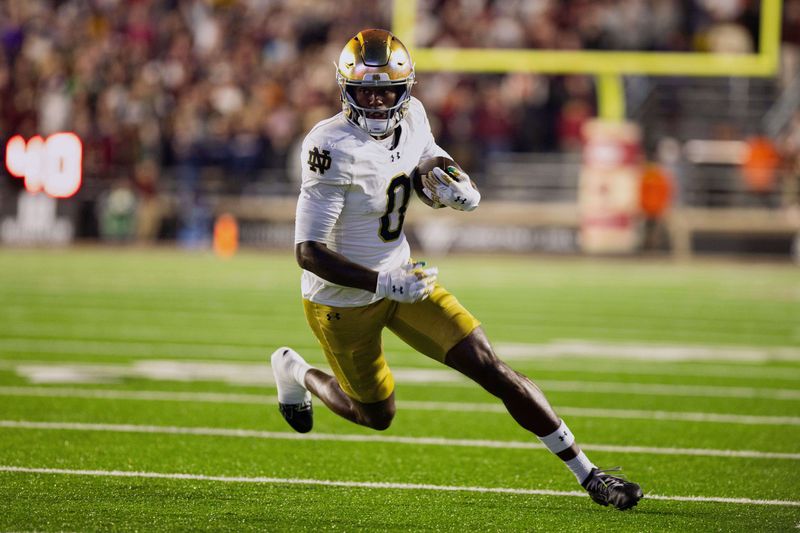
The board is ripe with those options in that second round window, ranging from Louisville’s Chris Bell to Notre Dame’s Malachi Fields, Alabama’s Germie Bernard, Ole Miss’s De’Zhaun Stribling, IU’s Elijah Sarratt, Georgia State’s Ted Hurst, Tennessee’s Chris Brazzell II and North Dakota State’s Bryce Lance.
Why the Colts should draft a wide receiver at No. 47: Indianapolis’ need at wideout doesn’t reach the level of linebacker or edge rusher but there’s always a scenario where those positions get cleared out in the 30s and early 40s, leaving no value at No. 47. At that point, the Colts could either look to trade back and recoup draft capital or take the best receiver on the board.
The Colts offense with Daniel Jones under center was at its best when you couldn’t predict who might have a breakout game. Having five legitimate playmakers makes it tough for a defense to cover every threat, so adding another prospect to that mix is an important potential find.
Why the Colts shouldn’t draft a wide receiver at No. 47: This is simple; if a starting-caliber edge rusher or linebacker is around when the Colts are on the clock, receiver can wait until rounds three or four.
Should the Colts draft a defensive back in the second round?
Defensive back options: There’s likely to be somewhere around a half-dozen cornerbacks or safeties taken in Friday’s second round but the Colts have a specific need at these positions.
The Colts are bracing for a trade of longtime starting slot corner Kenny Moore II, leaving a major void in the middle of the field. The widespread assumption is that standout corner and 2025 third-round pick Justin Walley, who seemed primed for a starting cornerback role last summer before tearing his ACL in training camp, will be tapped for that spot.
But what if that’s not a lock?
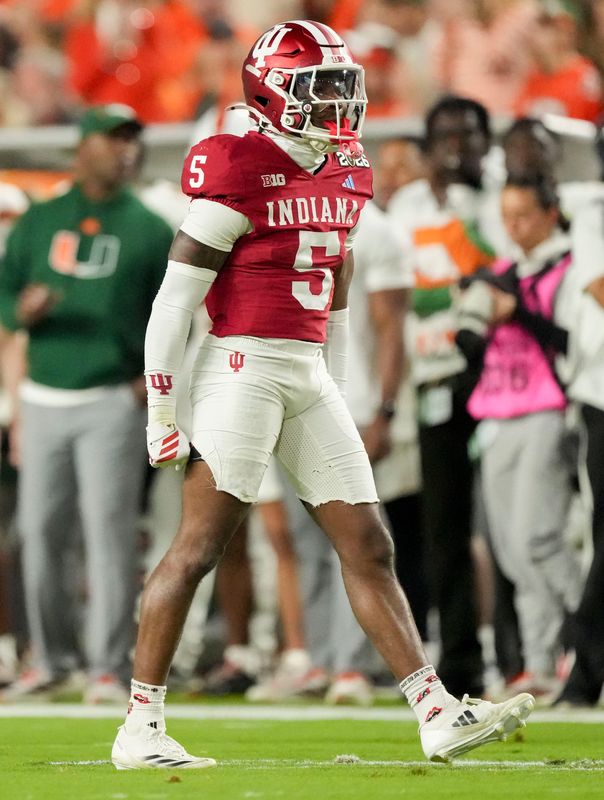
IU’s D’Angelo Ponds certainly doesn’t think so. Last week at the Colts’ local pro day, the ex-IU star stated bluntly that he is “the best DB in the draft.” What he lacks in size, Ponds makes up for in his speed, instincts and playmaking that had him thriving in Bloomington despite his short stature.
The Colts, too, need to crown their new starting strong safety this offseason following the free agency departure of multi-year starter Nick Cross. Taking one at No. 47 may be too rich but South Carolina’s Jalon Kilgore athleticism and size at 6-1, 210 pounds makes for a high-risk, high-reward pick, should the Colts feel as they need to shift their focus to another position of need.
Why the Colts should draft a defensive back at No. 47: Similar to receiver, you don’t make this move unless the prized linebackers and edge rushers are no longer on the board and you can’t find a suitable trade partner to drop down and recoup some draft capital. But I think you only make this move if you truly believe that Ponds has become undervalued because of his size and that he can find an immediate impact role in your defense.
Why the Colts shouldn’t draft a defensive back at No. 47: Given the Colts’ depth across their secondary – even if Moore eventually finds a new home – there’s just not a way to reason that a new high-level rookie corner or safety is more valuable to this team’s success than at the first or second level.
Joel A. Erickson and Nathan Brown cover the Colts all season. Get more coverage on IndyStarTV and with the Colts Insider newsletter.
This article originally appeared on Indianapolis Star: Colts have options with 2nd round pick in NFL Draft. Here’s where they could go
Reporting by Nathan Brown, Indianapolis Star / Indianapolis Star
USA TODAY Network via Reuters Connect