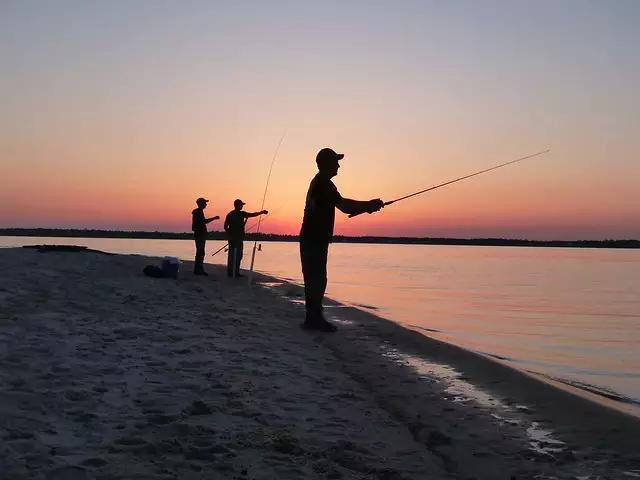
What began as a concern about a specific instance of nighttime shark fishing on Marco Island has now evolved into a proposal that would restrict all beach fishing during overnight hours. That shift — from a narrow issue to a broad prohibition — deserves closer scrutiny.
At stake is more than a single activity. Florida voters enshrined the right to fish in the state Constitution with 67% approval, recognizing it as a longstanding and valued tradition. While that right is not absolute, any local restriction should be carefully tailored, supported by clear evidence, and consistent with state law.

The central justification for expanded restrictions has been the protection of sea turtles during nesting season. Protecting wildlife is an important and widely shared goal. However, policy decisions of this scope should be grounded in demonstrable evidence. To date, there has been no publicly presented scientific evidence showing that beach fishing has a measurable negative impact on turtle nesting success. In part because there is no scientific evidence to support that claim.
By contrast, established research and guidance from agencies such as the Florida Fish and Wildlife Conservation Commission consistently identify the primary threats to nesting sea turtles as artificial beachfront lighting, coastal development, human foot traffic, beach equipment left overnight, predators, and severe weather events. These factors are well-documented and widely recognized as the leading causes of nesting disruption and hatchling mortality.
When policy expands beyond clearly demonstrated risks, it raises concerns about proportionality and unintended consequences. A broad nighttime fishing ban affects not just a narrow subset of activity, but a wide range of responsible anglers who have long used these beaches without documented harm to wildlife. It also risks diverting attention from the more significant, evidence-based threats that warrant enforcement and resources.
Good governance requires a disciplined approach: identifying the problem clearly, applying targeted solutions, and ensuring that restrictions are rooted in data. If a specific behavior presents a legitimate concern, it can and should be addressed directly. But extending that concern into a blanket prohibition without a clear evidentiary basis risks undermining both public trust and effective conservation.
Florida law also raises important questions about the scope of local authority in this area. The Florida Constitution explicitly protects the public’s right to fish, and the state has broadly preempted regulation of fishing to ensure consistency across jurisdictions. Through statutes administered by the Florida Fish and Wildlife Conservation Commission, the state maintains primary authority over fishing methods, seasons, and restrictions. While municipalities can regulate general beach use for safety and welfare, policies that effectively prohibit otherwise lawful fishing activity — particularly without clear evidence of harm — risk conflicting with state law and constitutional protections. Any such measures should be carefully evaluated to ensure they remain within the bounds of local authority.
Marco Island has an opportunity to take a more measured path — one that protects sea turtles while respecting established rights and traditions. That means focusing on proven risks, enforcing existing protections, and working collaboratively with residents, anglers, and state agencies.
A course correction now would strengthen both conservation outcomes and confidence in local decision-making.
Submit your thoughts to mail@marcoeagle.com.
This article originally appeared on Marco Eagle: Your Turn: Proposed Marco ban on night beach fishing deserves scrutiny
Reporting by Ronald T. Garry, Naples physician / Marco Eagle
USA TODAY Network via Reuters Connect