

The official start of summer may still be a few days away, but Florida’s heat and humidity are reminding residents who is in charge.
The summer solstice, the first day of astronomical summer and the longest day of the year in the northern hemisphere, arrives June 21.

➤ Weather alerts via text: Sign up to get updates about current storms and weather events by location
The National Weather Service has already issued several heat advisories this year, and South Florida remains under a heat advisory for the second day in a row June 16.
Shop hot weather essentials at Amazon
The central Panhandle saw a heat index of 112 in some areas over the weekend, according to the National Weather Service Tallahassee.
You may think heat is nothing to worry about in these days of widespread air conditioning.
➤ What’s the best temperature to set your AC in Florida heat wave?
Nothing could be further from the truth.
Heat is one of the leading causes of weather-related deaths in the United States, according to the Centers for Disease Control.
Here’s what you should know about National Weather Service heat warnings.
What is a heat advisory?
A heat advisory is one of several types of health alerts issued by the National Weather Service. A heat advisory is issued within 12 hours of the onset of extremely dangerous heat conditions.
In Florida, except for Miami-Dade County, the National Weather Services offices around the state issue a heat advisory if the heat index is expected to reach 108 to 112 degrees.
The National Weather Service Miami said Miami/Dade County wanted a lower threshold for an advisory for its population, which was set at 105 degrees.
What types of heat alerts does NWS issue?
The National Weather Service issues several types of heat-related advisories, including:
Criteria used in Florida for heat advisories, extreme heat warnings
What should you do if an extreme heat warning is issued?
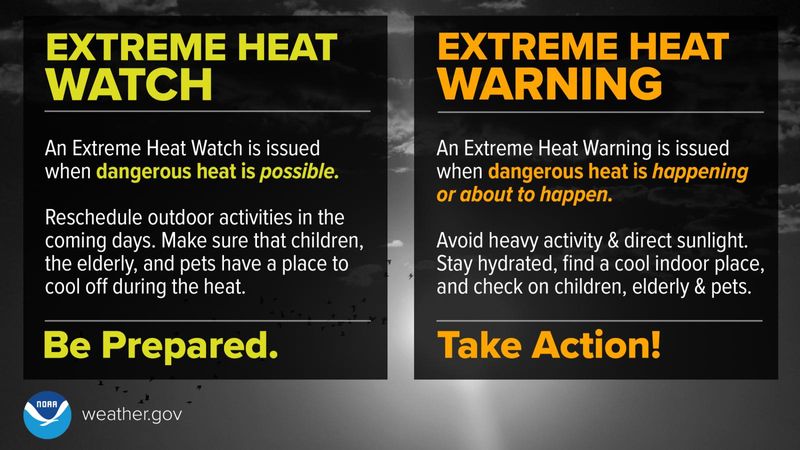
If an extreme heat warning is issued for your area, the National Weather Service is saying dangerous heat conditions are expected or occurring.
What to do:
What should you do if an extreme heat watch is issued?
If an extreme heat watch is issued, the National Weather Service is saying conditions are favorable for an extreme heat event but its occurrence and timing is still uncertain.
What to do:
What should you do if a heat advisory is issued?
The National Weather Service issues a heat advisory if dangerous heat conditions are not expected to reach warning criteria.
What to do:
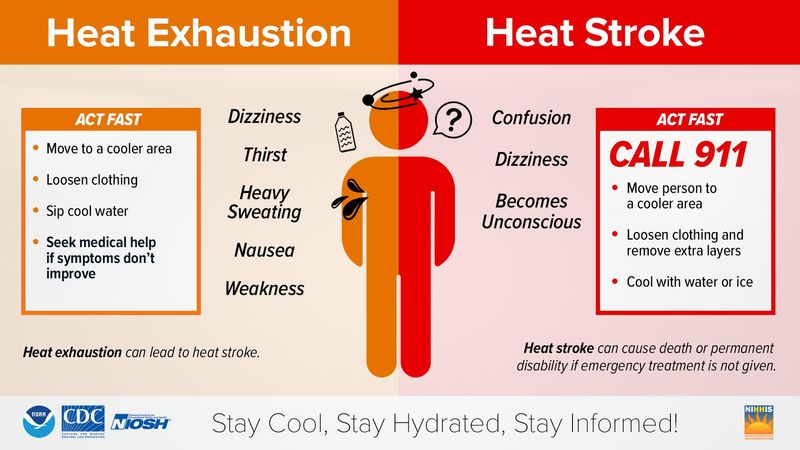
What’s the difference between heat stroke and heat exhaustion?
When your body can’t cool itself, your body temperature rises. If it goes too high, it can be life-threatening.
The Centers for Disease Control and Prevention provided a list of warning signs and symptoms of heat-related illnesses and what you should do.
What are heat cramps?
Heat cramps usually affect workers who sweat a lot during strenuous activity. This sweating depletes the body’s salt and moisture levels. Low salt levels in muscles cause painful cramps. Heat cramps may also be a symptom of heat exhaustion, according to the CDC.
What is heat exhaustion?
Heat exhaustion is the body’s response to an excessive loss of water and salt, usually through excessive sweating, according to the CDC.
What is heat stroke?
Heat stroke is the most serious heat-related illness. It occurs when the body can no longer control its temperature: the body’s temperature rises rapidly,
➤ Heat myths vs facts as Florida residents face summer temps
What are worst months for humidity in Florida?
Florida’s humidity starts to increase in late May and generally continues through July and August and even into September, Law said.
What does heat index mean?
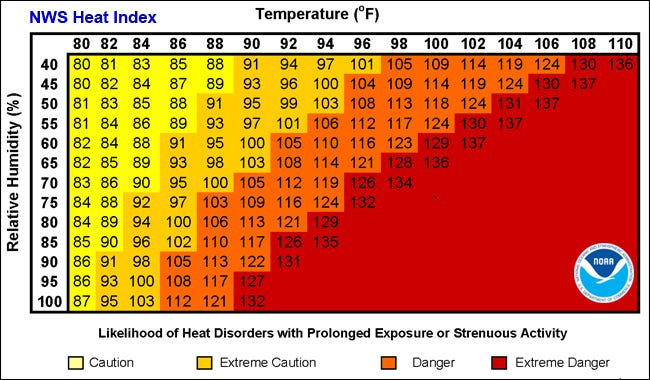
Heat index or the “feels-like” temperature is the combination of humidity and air temperature.
➤ How hot is too hot to exercise?
Also known as the apparent temperature, the heat index “is what the temperature feels like to the human body,” according to the National Weather Service.
It’s important to note the heat index chart calculates the apparent temperature based on conditions in the shade.
In direct sunlight, the “feels-like” temperature could be up to 15 degrees higher, according to the National Weather Service.
What does heat index above 100 really mean?
The National Weather Service said a heat index equal or greater than 103 “can lead to dangerous heat disorders with prolonged exposure and/or physical activity in the heat.”
Here’s what those heat index numbers really mean: according to the National Weather Service:
➤ Florida’s excessive heat is deadly to dogs. How to keep them safe
“If you’re experiencing heat exhaustion for an extended period of time, it can lead to heat stroke. Heat stroke can come on quickly if it’s very hot or you’re overexerting yourself,” Healthline said.
How do you know if you’re dehydrated?
“Dehydration is a condition in which you lose so much body fluid that your body can’t function normally. It occurs when you lose more fluids than you take in,” according to Cleveland Clinic.
“Water is important to your body, especially in warm weather. It keeps your body from overheating.”
A simple way to see how well hydrated you are is to check your urine.
According to Dartmouth Health, pale, light yellow, or mostly clear urine that is relatively odorless usually means you are well-hydrated.
If your urine is a dark or medium yellow, or if you urinate infrequently, it is a sign you are becoming dehydrated and need to increase your fluid intake.
The fastest way to cure dehydration is to drink water, according to Cleveland Clinic.
Should you ‘pre-hydrate’ if you’ll be outside in Florida heat?
“Thirst is a signal, but it’s not instantaneous,” according to Laura Acosta, instructional associate professor of food science and human nutrition at the UF/IFAS.
➤ Heat myths vs facts as Florida residents face summer temps
“By the time you feel thirsty, your body may already be slightly dehydrated. This is especially true in certain situations, such as prolonged exercise (60 to 90-plus minutes), hot or humid environments and heavy sweating or fluid loss.
“Waiting when you are in these situations until thirst kicks in can be dangerous, as dehydration can escalate quickly. Athletes and people working or exercising in the heat are often advised to begin activities well hydrated and continue drinking fluids at regular intervals.
“Pre-hydrating is a wise idea when you’re planning to exercise or spend time in the heat.
“Drinking a cup or two of water ahead of time, and taking regular hydration breaks throughout, can help you feel and perform your best and prevent complications from dehydration.”
Stay informed. Get weather alerts via text
What’s next?
We will provide weather coverage as conditions warrant. Download your local site’s app to ensure you’re always connected to the news. And look for our special subscription offers here.
Cheryl McCloud is a journalist for the USA TODAY Network-Florida’s service journalism Connect team. You can get all of Florida’s best content directly in your inbox each weekday day by signing up for the free newsletter, Florida TODAY, at palmbeachpost.com/newsletters.
This article originally appeared on Palm Beach Post: What weather service heat alerts mean, what you should do in Florida
Reporting by Cheryl McCloud, USA TODAY NETWORK – Florida / Palm Beach Post
USA TODAY Network via Reuters Connect
By Cheryl McCloud, USA TODAY NETWORK – Florida | USA TODAY Network
