The St. Johns County Sheriff’s Office defended its practice of removing arrest mug shots from its jail website after a resident challenged the policy at a County Commission meeting on June 17.

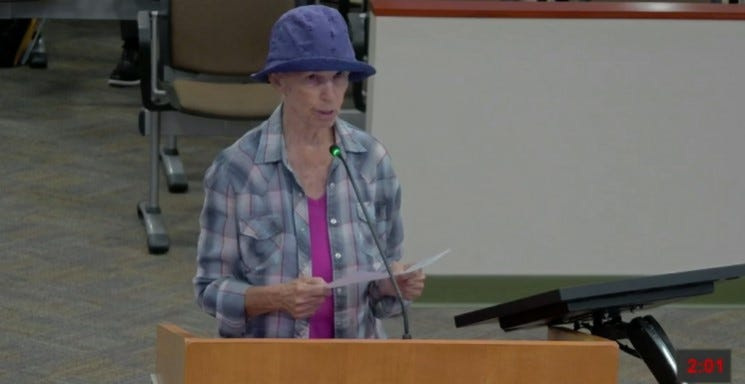
St. Augustine resident B.J. Kaladi demanded the public availability of online mug shots during public comment at the board’s June 17 meeting, which included a budget overview for the department from Sheriff Robert Hardwick.
“Where, in the sheriff’s $139 million budget, are the function with mug shots to protect the community?” Kaladi asked. “This is more than an inconvenience since December 20, 2024, seven months. This failure to fix the inmate search site jeopardizes the safety of everyone in St. Johns County.”
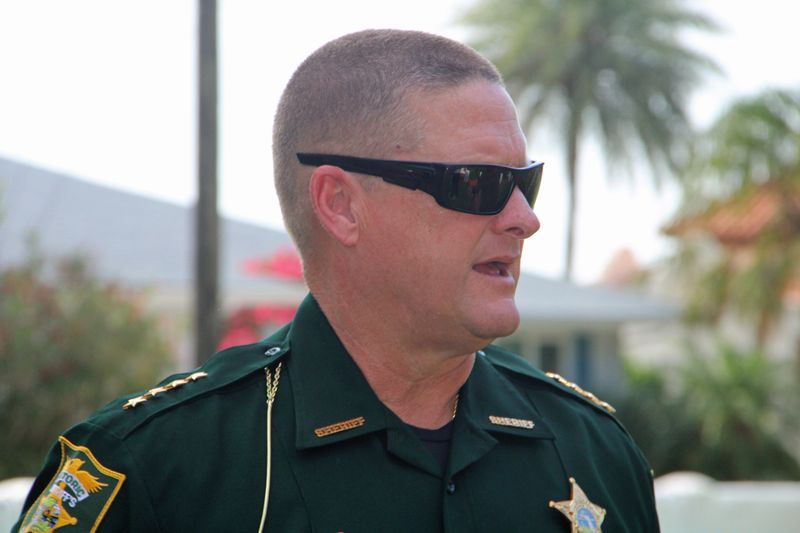
Hardwick stopped posting arrest photographs late last year after experiencing an uptick of scams and ID fraud perpetrated with mugshots stolen directly from the SJSCO’s website, he said.
During his initial presentation, Hardwick said he believes in giving inmates the opportunity to “get back on their feet” described those incarcerated as temporary guests who made mistakes.
“They’re not dirty people,” he said. “They’re people who made mistakes and our job is to get them where they don’t want to come back in our jail.”
Hardwick acknowledged that he was on his way to Orlando to received accreditation for “great things we did in our jail.” He touted programs such as the re-entry outreach program and its homeless initiative, while also underscoring what happens to those who commit crimes in St. Johns County.
“I’ve made it crystal clear; it doesn’t matter what you look like and believe in, if you commit a crime in the state of Florida, we’re going to charge you and hold you accountable for that crime,” he said.
In her presentation, Kaladi insisted on using the word inmate as a safety measure.
“We can change the words all we want,” she read aloud from a prepared statement after Hardwick spoke. “To rehabilitate is fine, but the safety of everyone should be taken into consideration. I need answers, and we don’t have answers.
“So, remember you can change the words, but can you change the behavior?” she said. “And some people can’t change behavior, and I do not believe that those being arrested for illegal actions are helped by just changing a word and calling them something else.”
Following Kaladi’s comments, Commissioner Ann Taylor requested that Hardwick “answer the question that comes up a lot.”
“I’ve been tasked to put people back into society, so they don’t reoffend,” Hardwick said. “Call it what you want to, I really don’t care, but what we’re doing is making a difference to people in St. Johns County.”
Hardwick said that under his jurisdiction, those in custody and their families would not fall prey to scammers who use database information, including online mug shots taken directly from the SJSO website, to falsify IDs to scam and commit bail bond fraud and other crimes.
“My detectives are busy doing detective work on scams, making it more difficult for us to do our job because we’re tied up with that,” he said. “Bondsmen trying to make a living are also being victimized.”
Hardwick underscored the importance of protecting everyone, including those in custody and their families, by questioning the idea of victimizing an individual who made a “bad decision.”
“Five percent of the inmate population is in for heinous and atrocious crimes,” he said. “Ninety-five percent are in for DUIs, domestic battery and mistakes that feed the addiction of substance abuse or a mental health issue.”
Hardwick said about 414 people are currently being detained, a number half the capacity of the county’s available jail “beds.”
According to the SJSO website, those incarcerated can participate in a variety of programs in partnership with nine organizations that conduct more than 15 different recovery, educational and certificate programs on a regular basis. Sixteen different churches and ministries are represented on a monthly or weekly basis in the jail with clergy volunteers and two part-time chaplains that serve regularly. Programs include Alcoholics Anonymous, Narcotics Anonymous, GED, parenting, anger management and domestic violence prevention.
As an example, Hardwick mentioned a man brought in wearing purple lipstick and purple eyebrows. The sheriff said he refused to entertain those looking to ridicule others.
“It’s not funny,” he said. “He’s got a mental health and substance abuse issue. There’s a social media platform trashing a grown man because he doesn’t look like us. I’ve got to stand up for him.”
Hardwick added that Florida law does not require jail booking photos.
Taylor didn’t speak and Board Chair Krista Joseph acknowledged that Hardwick had made himself very “clear.”
With Hardwick in Orlando, The St. Augustine Record reached out to Cmdr. George Harrigan, SJSO’s public information officer, who said that the Sheriff’s Office would not allow “bad actors to victimize those in custody or their families with a click of a button.”
Harrigan underscored the tenants of privacy and the presumption of innocence, stating that an arrest doesn’t equal a conviction.
“There’s a legal sentiment that suggests sharing mugshots can undermine the presumption of innocence,” he told The Record. “The entire world gets to see mug shots before due process can determine the individual’s guilt or innocence.”
According to Harrigan, after the uptick in scams directly related to those incarcerated in the SJSO jails, the department dove into “best practices research” and chose a third-party software that will give families and lawyers the ability to access the information of those in custody without using arrest photos formerly available for public consumption.
Although laws vary by state, the public generally has access to criminal records, including mug shots. Over the years, websites and social media sites sprung up with the sole purpose of publishing jail booking photos and names without context about the alleged crime, or whether the charges had been dismissed. Many of these sites would charge a fee for removing jail mugs.
In 2021, Florida passed a law, signed by Gov. Ron DeSantis, that prohibited publishers from charging a fee to remove the material. The law applies only to publishers whose primary business model is disseminating jail mugs; it does not apply to images used in news coverage. However, Gannett, which owns The St. Augustine Record, advises its newspapers nationwide to refrain from using jail booking photos in their coverage unless the case is particularly high profile.
Harrigan added that the Sheriff’s Office remains proactive with the dissemination information regarding sexual predators and major crimes that pose a community threat.
“It’s a balancing act,” Harrigan said. “We remain sensitive to those who are genuinely concerned about their safety while protecting every citizen from frauds and scams, even those who are detained in our jail.”
This article originally appeared on St. Augustine Record: St. Johns County sheriff defends the removal of booking mug shots from jail website
Reporting by Lucia Viti, St. Augustine Record / St. Augustine Record
USA TODAY Network via Reuters Connect