We kinda bounce around on the whole “best fish” label around here.
Like many subjective contests involving multiple entries, there are categories. In this instance, regarding our year-round inshore and nearshore fish: best fighter, best tasting, prettiest, biggest challenge and maybe a few other things.

(By the way, my votes in the above categories: Jack, pompano, snook and sheepshead.)
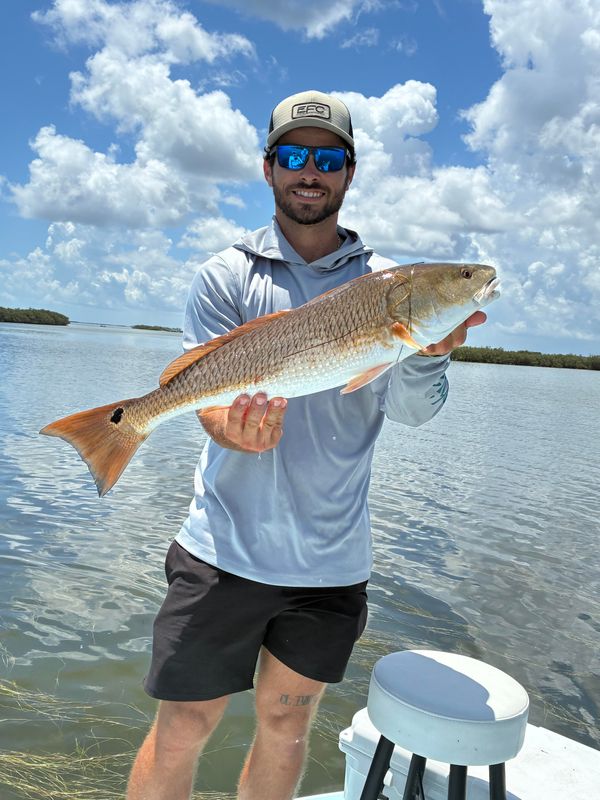
As for “best all-around,” as a group we generally land on the snook, which covers all the bases (great fight, sporty look, marvelous on a plate). Except for those who prefer redfish for the same reasons.
Or even the sheepshead, in spite of a mouth that would even spook Austin Powers. Or maybe the flounder, in spite of that creepy eyeball thing.
But as the summer heat takes hold, a certain seasonal fish begins making waves locally, and we’re forced to rethink our hierarchy, at least for summertime.
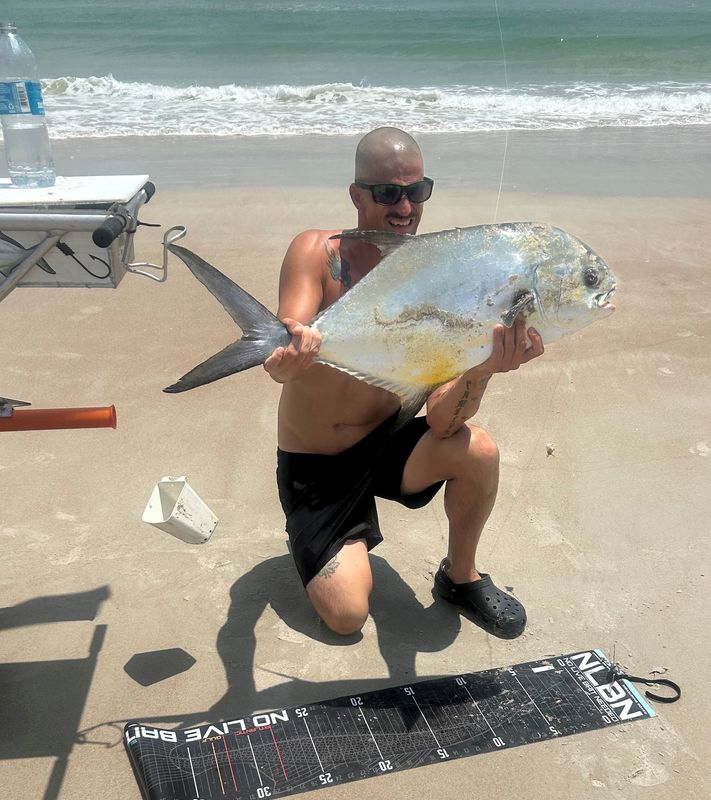
That’s right, I’m talking about the permit, whose aquarium-worthy beauty belies an ability to fight like hell. And on the plate? You’ve heard folks talk about the quality of pompano, or if lucky you’ve partaken yourself.
Well, the permit is basically a meatier, denser pompano. White, flaky flesh that passes the sweet and clean test, with just enough fat content to keep it moist.
These days, permit are being found passing through the surf, just over the first break, foraging through the trough looking for sandfleas and other goodies.
A lot of surf anglers, upon hooking and beaching a permit, suspect they have a pompano, given the similarities. If it’s a very big “pompano,” then it’s probably a permit, since they grow comfortably larger than their close cousins.
The permit’s sleek and angular looks alone deem it worthy of protection, but that’s probably not the only reason it gets stricter regulations than the pompano: Slot of 11-to-22 inches (you can keep one larger than 22) and a bag limit of two per day. For the pomp, the bag limit is six and there’s only an 11-inch minimum.
Finally, the name. Permit? Where’d that come from?
Short answer: Nobody knows.
Halifax/Indian River
Trout are available down south around Oak Hill. How available?
Art Mowery says he caught his limit, released some oversized catches, and eventually had to move to shallow water to keep the dolphins from chasing the catches.
The mangrove snapper are now in their full summertime mania, and so are the fishermen, apparently.
“I’ve been fishing around the inlet, and man, has it been crowded,” says Capt. Jeff Patterson (Pole Dancer charter). “I’ve been trying to stay away from the pack of boats for the most part.”
Meanwhile, however …
“The flounder bite has been good,” Capt. Jeff said midweek. “We had nine keepers yesterday.”
Surf
Along with the permit talk from above, you can still find a local pompano (the migrators have already come and gone), along with the steady flow of whiting.
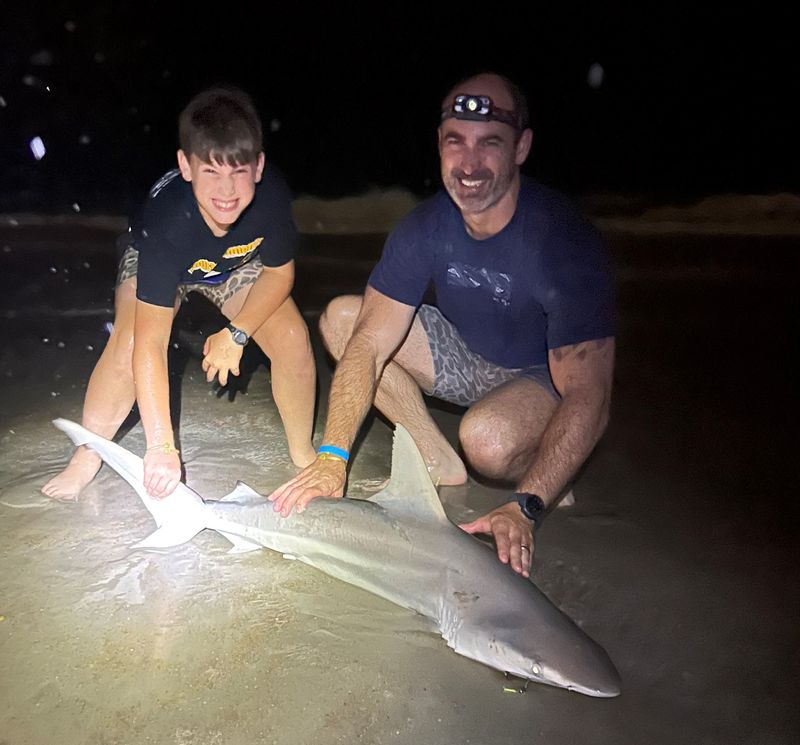
“Lots of ladyfish, too,” Marco Pompano says. “And sharks.”
Offshore
Forgot to congratulate the winner of the 38th annual Lady Angler tournament, organized by the Halifax Sport Fishing Club earlier this month.
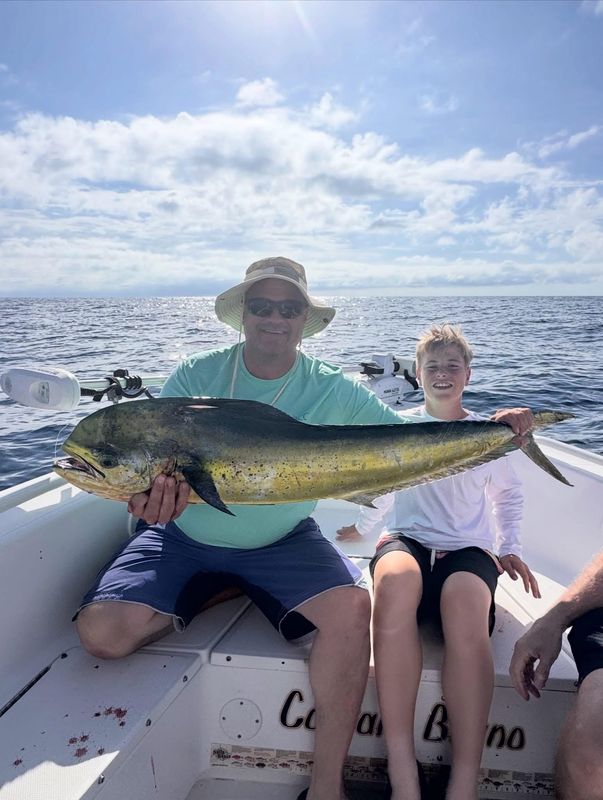
The “Go Fish” team took top honors with Michelle Lewis catching kingfish that weighed in at 36.1 pounds, and a 15½ -pound mahi. The “Go Fish” crew included Todd Dabbe and Daniel Brindisi.
St. Johns
The speck bite has slowed with the increase in water temps, but the bass are still there if you go early or late. Or both!
Capt. Ronnie Paige (Highland Park) says this time of year it’s best to use “an artificial that mimics a threadfin shad, such as topwater plugs or lipless crank baits.”
“You can also use shiners,” he adds.
Bluegill and shellcracker have moved into deeper waters recently.
Hook, line and clicker: Send us your fish pics
We want to see your most recent catch. Email your fish photos to ken.willis@news-jrnl.com.
Please include first and last name of angler(s), as well as type of fish (we’re occasionally stumped). Some may be used in print, but all appear in the online version of the fishing roundup.
Do I need a fishing license?
You can find all the license info, including exemptions, on Florida’s Fish and Wildlife Commission website: MyFWC.com. But the basics are: No: If you’re 65 or older, 15 or younger, you don’t need a license. “Probably” Not: If you’re fishing with a licensed guide or charter boat, both of which often purchase commercial licenses that cover their customers. Yes: Most everyone else, including visitors from other states. Yes: Even if you’re a shore-based angler (shoreline, dock, pier, bridge, etc.), and even if fishing with a shore-based guide. However: The shore-based license is free . . . But: You still need to register for that free license.
Where do I get a license and what does it cost?
Many bait shops sell licenses, as do the bigger retailers (Bass, Dick’s, Walmart, etc.). Florida’s FWC uses a third-party site for buying or renewing fishing licenses: GoOutdoorsFlorida.com. The cost: $17 for an annual license. Don’t forget: Whether you’re fishing fresh or saltwater, you need the specific license. Freshwater and saltwater licenses are both $17 annually.
I’m here on vacation, do I need a license?
Yes you do, and some are available at GoOutdoorsFlorida.com, but what you need probably isn’t. Short-term: Three-day ($17) and seven-day ($30) licenses are no longer available online, but only at local tax-collector offices and many bait shops. Long-term: The yearly visitor pass is still available online for $47. “Some” exceptions: If you’re fishing on a charter boat (saltwater only), that guide should have a license that covers all his clients. If you’re hiring a shore-based guide, no such coverage exists and you must go purchase a license.
What if I get caught fishing without a license?
Florida residents: First-time violation is usually $50, plus the cost of the license you should’ve had. Non-residents: Fines range from $100-250, plus cost of license. Both go up exponentially with future violations.
This article originally appeared on The Daytona Beach News-Journal: Snook, redfish and flounder are great, but don’t overlook the summertime permit
Reporting by Ken Willis, Daytona Beach News-Journal / The Daytona Beach News-Journal
USA TODAY Network via Reuters Connect
By Ken Willis, Daytona Beach News-Journal | USA TODAY Network