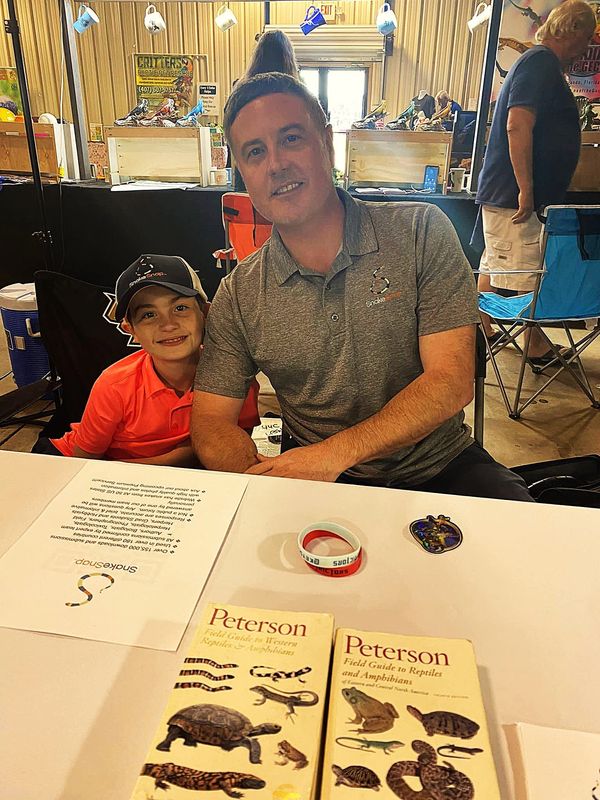
EUSTIS — Jason Compton admits that he, like so many of us, was once deathly afraid of snakes.
Before his life-changing pivot to the tech industry, the Eustis High 1997 graduate and dad of two worked as a financial adviser in The Villages for 15 years.

An unexpected encounter with a snake at his pool in 2018, while his then 2-year-old son was there, inspired the idea for his app.
“The more educated you are, the less fear you have,” the founder of the snake-identification app SnakeSnap said.
Compton told us that a harmless ring-necked snake had shown up at his pool that fateful day. Having the ability to readily ID a snake and alleviate others’ fears inspired him to create SnakeSnap, which officially launched in 2019.
“Snakes like to eat, they like to sleep and they like to mate. That’s what they’re there to do; they’re not there to chase people,” he said.
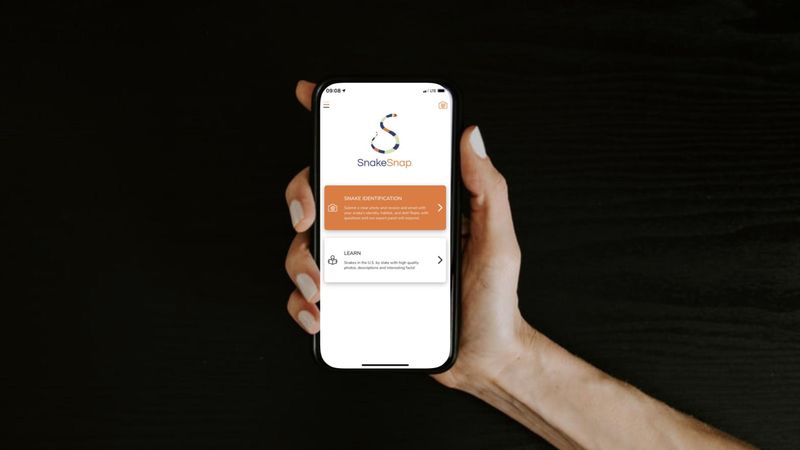
Compton gathered a team of biologists, herpetologists, toxicologists and medical doctors to work on his app, which allows users to upload a photo of a snake that is almost instantaneously reviewed by a team of experts who provide information about the snake’s identity, diet and habitat.
How do they do it? When app users upload a photo to SnakeSnap, the image is sent directly to the team’s email box, which has 15 people waiting at any given time who can respond in seconds, Compton explained.
“We charge for subscription, only $9.99 a year or $1.99,” Compton explained. “While there are those who provide snake ID services for free, we try to be available on the spot for concerned parents or anyone else who tries to contact us, and some of the profits we earn will go to supporting wildlife and the herpetology community. It’s a great group that deserves our support.”
The app also connects users with resources like fire departments or other emergency services if needed.
Compton’s original vision involved using artificial intelligence for instant identification through photo submission, but the costs at launch were too prohibitive, so he began with a manual process.
“Over time, I’ve realized that even the most advanced AI struggles with absolute accuracy, especially given the nature of the images we receive,” he said.
Many snakes are killed before being photographed, Compton explained, and the quality of the photos — often taken from a distance, in water, trees or with poor visibility — presents a challenge. Additionally, people are understandably nervous while taking these photos, which can affect image clarity.
“Despite these hurdles, we’re starting to see real progress. After years of refining our manual process, we now respond to submissions quickly and efficiently. While we remain fully manual, this has allowed us to offer a personal touch that users genuinely appreciate.”
What does he think of the growing reptile-owner community and the Repticons across the Southeast U.S.?
“I’ve attended several Repticons and plan to participate in more throughout the year,” he said. “I’ve also connected with organizations across the country with a goal of growing the platform significantly, both to support these groups and to help users connect with them more directly.”
One of his frequent collaborators, Jack Facente, is one of the few venom extractors in Florida. They were interviewed together on Orlando news station WESH-Channel 2.
“This is a Central Florida issue,” he told the station. “I think there’s probably going to be more snake bites in the next year or two as this development continues to drive them out and make them more active.”
Use SnakeSnap to learn about Florida’s venomous snakes
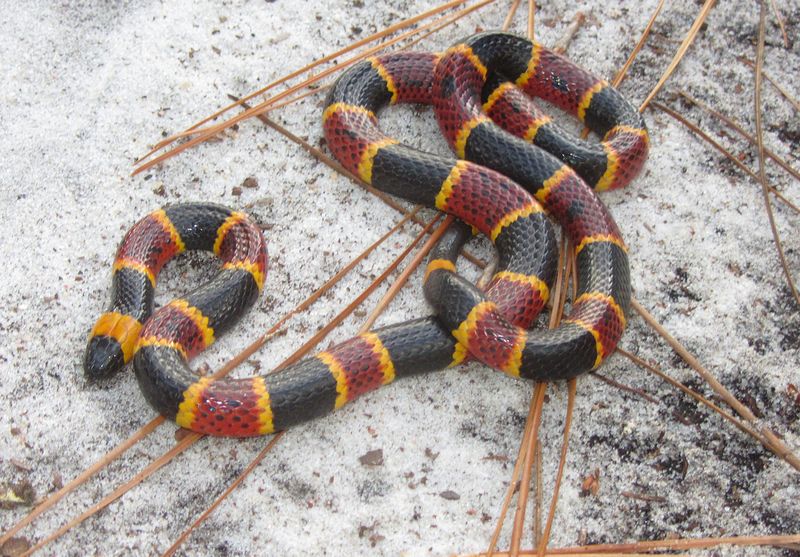
“A bite from any of the first three will almost immediately burn and cause swelling, but a bite from the coral snake can take longer to show symptoms, anywhere from two to 18 hours,” Facente told WESH.
“If you don’t pick them up or you don’t try to kill them, then your chance of being bit almost goes to nothing.”
Four venomous snakes, the cottonmouth, eastern diamondback rattlesnake, dusky pygmy rattlesnake and the eastern coral snake, are native to the Ocala National Forest.
If you’ve been bitten by any venomous snake, you should go to a hospital immediately and request that hospital staff contact the Florida Poison Control Center.
When do we see snakes most often in our region?
Summer is when you are most likely to encounter snakes throughout Florida.
Snakes are more active during the warmer months, usually from April to October, with peak activity in the summer months. This is because they emerge from brumation (a state similar to hibernation) in the spring and remain active to hunt, mate and take in the warmth
With the Ocala National Forest in our area, where many locals and visitors recreate during the summer, herpetologists recommend we follow guidelines set by the U.S. Forestry Service when approaching the slithering reptiles.
“Before venturing out into the wilderness, familiarize yourself with the snakes of your area, both venomous and non-venomous species,” the U.S. Forestry website says.
This article originally appeared on Daily Commercial: SnakeSnap! A poolside scare inspired Eustis’ Jason Compton to create snake-ID app
Reporting by Julie Garisto, Leesburg Daily Commercial / Daily Commercial
USA TODAY Network via Reuters Connect