

As Florida voters consider a proposed constitutional amendment limiting the use of property taxes to core government services, much of the debate has focused on taxes. That’s understandable. Voters are feeling pressure from every direction. Property taxes have risen, insurance premiums have skyrocketed, HOA fees continue to climb, and many Floridians understandably want relief.
But the property tax amendment raises a much bigger question, one that has received far less attention: Why did cities in Lee and Collier counties incorporate in the first place?

The answer matters because this debate is not really about taxes. It is about governance.
Recently, Florida CFO Blaise Ingoglia has traveled the state arguing that local governments are spending too much money. His office has relied on a simple formula: if spending grows faster than population growth plus inflation, taxpayers should be asking questions.
On that point, I agree.
Taxpayers should always ask questions. Government should be accountable. Elected officials should explain how taxpayer dollars are being spent and what citizens are receiving in return.
The problem is that asking questions and assuming you already know the answers are two different things. As Will Rogers famously observed, “It ain’t what we don’t know that gets us into trouble. It’s what we know for sure that just ain’t so.”
The state’s methodology sounds straightforward enough. If population grows by 2% and inflation grows by 3%, spending shouldn’t increase much more than 5%.
Simple. Perhaps too simple.
The formula may identify spending growth, but it does not identify waste. Those are very different things.
As a retired CPA, I spent decades reviewing financial statements. When expenses increased significantly, that wasn’t the end of the analysis. It was the beginning. The first question was always: Why?
Maybe management was wasting money. Or maybe the company built a new facility, invested in technology, expanded operations, or solved a problem before it became a crisis. The variance told you where to investigate. It didn’t tell you the answer.
The same principle applies to government.
Take Southwest Florida International Airport. Lee County is investing hundreds of millions of dollars to expand RSW because passenger traffic continues to grow. More people are flying into Southwest Florida for business, vacations, family visits, and retirement. The airport expansion is responding to demand. It has nothing to do with whether population growth happened to be 2%, 3%, or 4% in a particular year.
Nobody standing in a crowded airport terminal says, “At least spending stayed within the formula.”
The need exists regardless of the formula.
The same is true in Bonita Springs. The city is investing millions of dollars to improve drainage in the East Terry Street neighborhoods. Residents have waited years for those improvements. Flooding problems don’t care what inflation is. Stormwater doesn’t stop rising because a spreadsheet says spending should be lower. The need exists, and the project addresses that need.
The formula also overlooks one of the biggest challenges facing coastal Florida communities: resiliency.
Property owners are increasingly concerned about flooding, storm surge, drainage, water quality, and the rising cost of insurance. These aren’t theoretical issues discussed only in government reports. They affect property values, business investment, quality of life, and ultimately the future economic health of a community.
When local governments invest in drainage improvements, canal maintenance, stormwater systems, flood protection, beach renourishment, or water quality projects, they are not simply spending money. They are protecting homes, businesses, property values, and the local tax base itself.
In many coastal areas, buyers are already paying closer attention to flooding risks and insurance costs. Communities that fail to address these challenges may see slower appreciation, declining competitiveness, or reduced investment compared to communities that make necessary improvements.
That’s why a formula based solely on inflation and population growth misses something important. Some expenditures are not simply costs. They are investments designed to prevent much larger costs in the future.
Imagine applying the same logic to your own home. Your roof starts leaking. You spend $40,000 replacing it. Your spending increased much faster than inflation.
Was it wasteful? Only if you enjoy catching rainwater in buckets.
Which brings us back to incorporation.
When Bonita Springs incorporated in 2000, residents were not seeking another layer of government. They wanted greater control over public safety, transportation planning, growth management, infrastructure, and the future direction of their community. They wanted local officials accountable to local residents. Most importantly, they wanted decisions made by people who understood local conditions and local priorities.
The same basic motivation drove incorporation efforts throughout Southwest Florida. Residents believed local problems required local solutions. That is the purpose of local government. Local government exists to solve local problems.
That is also why municipal elections are nonpartisan. When a road floods, traffic backs up, or a hurricane approaches, party affiliation becomes largely irrelevant. Republicans and Democrats alike sit in the same traffic, experience the same flooding, pay the same insurance premiums, and worry about the same public safety concerns.
The problems are local. The solutions should be local too.
Which raises an important question. If the purpose of incorporation was to give residents greater control over solving local problems, why would we want to make local governments increasingly dependent on decisions made in Tallahassee? Why would we want nonpartisan city governments, created specifically to address local needs, to become more dependent on a Legislature and Executive Branch that naturally view issues through the lens of statewide politics and partisan priorities?
That is not a criticism of Tallahassee. State government has an important role to play. But state government and local government have fundamentally different responsibilities. The governor and Legislature must think about issues affecting more than 23 million Floridians. City councils and county commissions focus on whether neighborhoods flood, roads function, parks are maintained, drainage systems work, and public safety services meet local expectations.
A policy that makes sense from a statewide perspective may not fit every community equally well. Bonita Springs is not Naples. Naples is not Fort Myers. Fort Myers is not Marco Island. Every community faces different challenges, different risks, and different priorities. That is why Florida’s tradition of home rule has been so important. It recognizes that local residents are often in the best position to determine what services their communities need and what investments are worth making.
Reasonable people can disagree about the proposed property tax amendment. Some will see it as necessary taxpayer protection. Others will view it as a limitation on local flexibility.
But before we decide that Tallahassee should play a larger role in determining local priorities, we should remember why so many communities fought to incorporate in the first place. They did not do so because they wanted someone else solving their problems. They did so because they wanted the ability to solve those problems themselves.
Government should always be accountable. Taxpayers deserve transparency. Spending decisions should be carefully scrutinized. But the ultimate question is not whether spending exceeded inflation and population growth. The ultimate question is whether local governments are effectively solving the problems their citizens expect them to solve.
That’s the reason cities were created in the first place, and it remains the best measure of whether local government is succeeding today.
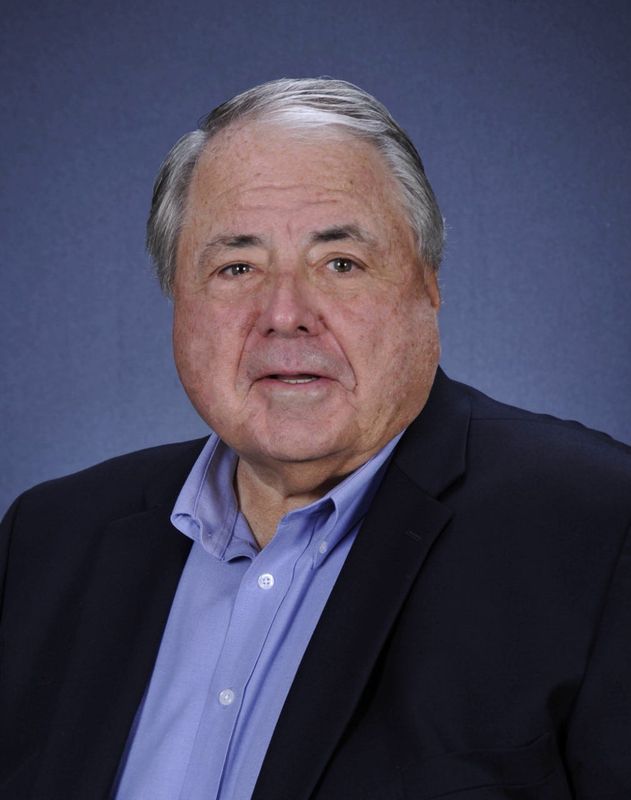
Chris Corrie is a Bonita Springs City Council member. He was a certified public accountant and partner with PricewaterhouseCoopers.
This article originally appeared on Naples Daily News: When problems are local, the solutions should be local too | Opinion
Reporting by Chris Corrie / Naples Daily News
USA TODAY Network via Reuters Connect
By Chris Corrie | USA TODAY Network
