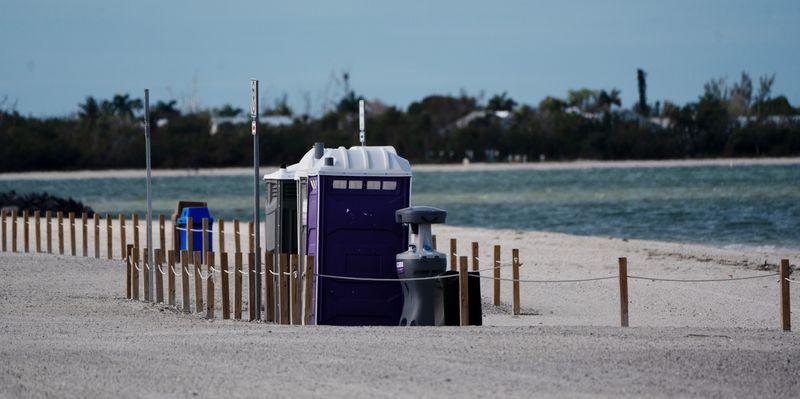
Anyone headed out to the Sanibel Causeway this weekend might want to think twice about getting into (or even touching) that lovely turquoise water.
That’s because the water tested “poor” for fecal indicator bacteria, according to state health officials.

Swallowing or swimming in such waters can make people sick with diarrhea, nausea, rashes or eye irritation. However, the concentration of the bacteria ― and where, exactly, on the 3-mile-long causeway the troubling samples came from ― is not available on the state website that’s supposed to provide that information.
Warm water promotes bacteria growth
Enterococci, the tested-for bacteria, comes from the poop of warm-blooded animals, which could be mating manatees (as it was in 2022 on Lovers Key), humans or birds.
“We did have a good rain on Sunday morning,” said Rick Bartleson, Sanibel-Captiva Conservation Foundation reserach scientist. “That could’ve washed some of the bird (or other warm-blooded animal) droppings into the water.”
And warmer water promotes the growth of bacteria, points out Calusa Waterkeeper board member Jason Pim.
Whatever the cause, “Water quality … does not meet the recreational water quality criteria for Enterococcus bacteria recommended by the Florida Department of Health,” the Lee County branch wrote in a news release sent out late in the afternoon of June 18 before the long Juneteenth/Father’s Day weekend.
Test results not on state website
Officials advise “against any water-related activities at this location due to an increased risk of illness in swimmers. Sampling conducted during regular water quality monitoring showed that the level of bacteria exceeds the level established by state guidelines.”
The state’s Healthy Beaches program monitors enteric bacteria then posts the results online. It rates each site’s water quality as good, moderate or poor for bacteria, then issues an advisory if the result is confirmed, which means there’s an increased risk of illness in swimmers at that location.
In its release, the department said, “Test results are available at FloridaHealth.gov/HealthyBeaches.”
Except not really.
A would-be beachgoer who heads to the website intending to dig deeper is out of luck.
Just how concentrated are the bacteria? That’s not on the site.
Where were the samples taken? That’s not on the “interactive” map — although other Lee County sites appear as blue dots, such as Sanibel’s Lighthouse Beach and Fort Myers Beach’s Bowditch Park, the causeway is not marked.
Complicating things further, another state website for the Florida Healthy Beaches program shows no warning about the causeway at all. Under “Current Water Quality Status,” it says “Good. Water quality is good for swimming and recreational activities.”
Lee County officials did not immediately explain the inconsistencies.
This article originally appeared on Fort Myers News-Press: Sanibel Causeway tests ‘poor’ for bacteria; state site lacks details
Reporting by Amy Bennett Williams, Fort Myers News-Press & Naples Daily News / Fort Myers News-Press
USA TODAY Network via Reuters Connect
By Amy Bennett Williams, Fort Myers News-Press & Naples Daily News | USA TODAY Network