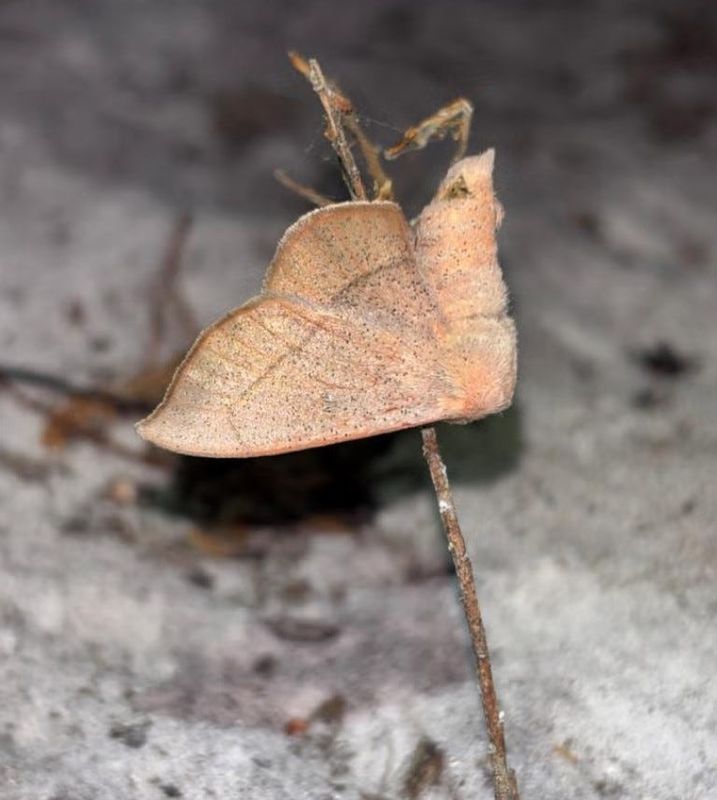
Pleistocene age spasms of swelling and retreating seas grew inland islands of sandy quartz in Florida, ancient dunes that curated a mosaic of unique wildlife including a modest beige moth lost in the annals of entomology.
The moth was thought extinct by the only man who knew, beyond a doubt, that it existed. Last year he proved based on aging specimens that it was an unnamed species living solely in Florida’s desert-like landscape of scrub habitat. He named it C. albarenicolus or white sand dweller.

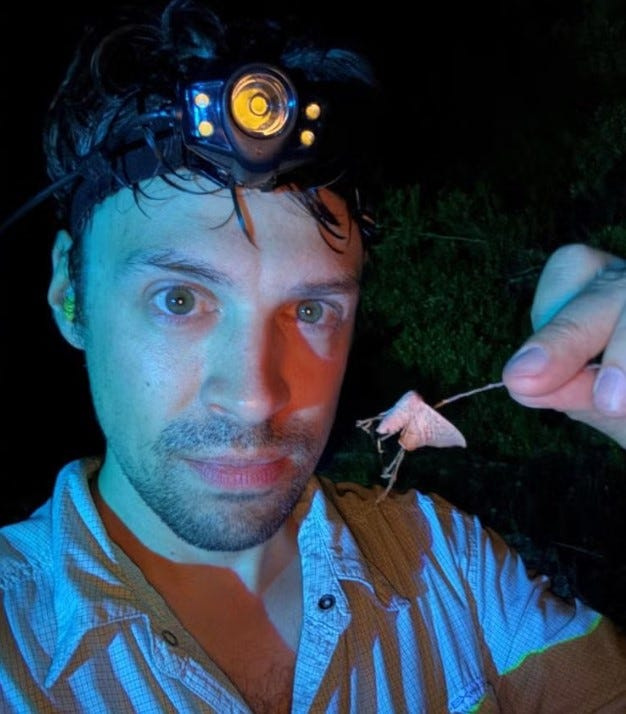
But just as University of Colorado researcher Ryan St Laurent readied to publish his findings, he heard from a “guy who knew a guy” who found a white sand dweller in Ocala National Forest.
“We are talking 12 years of me being the only person really aware of this species, thinking it was extinct, and then everything kind of comes together all at once,” said St Laurent, a UC Boulder assistant professor of ecology and biology. “It’s been persisting in Florida for a very long time. I don’t have exact dates, but my inclination is this is an ancient species that has existed in the Florida scrub for the past couple million years.”
What role does the moth play in Florida’s ecosystem?
St Laurent’s moth is a new species of Mimallonidae, or sack-bearer moth. It’s a family of insects more than 100 million years old, and one that St Laurent began studying when he was still an undergraduate working with museum insect collections. He had been encouraged to study something unusual, something fewer people were interested in.
He said at the time he was working with big showy moths, like the ethereal luna moth with its elongated wings that narrow like ribbons at the ends, and the meatier hawkmoth. The movie “Silence of the Lambs” featured a species of the hawkmoth.
But he was drawn to the less flashy sack-bearer moth, whose extensive distribution tells a tale of Earth’s evolution.
And that’s one reason why the discovery of a new species in the family is important. What role does it play in its unique ecosystem and what happens if it disappears? Nothing is definitively known about the history of the new moth except that it flies exclusively during spring months.
“It’s the most localized, the rarest,” St Laurent said about the newly-discovered moth. “It’s part of Florida heritage and U.S. heritage, and we need to protect it.”
After St Laurent learned about the moth found in Ocala National Forest, he quickly flew to Florida and set up traps in similar white sand scrub habitat in Seminole State Forest.
What and where is Florida scrub habitat?
There are other areas the moths might exist, although Florida scrub is a vulnerable and dwindling habitat. It’s popular with developers because it’s high and dry and the sandy soil drains well. That means much of Florida’s scrub was lost to human endeavors, especially before its unique ecosystem was recognized.
At one time, scrub habitat stretched along the Atlantic Coastal Ridge from North Miami to Cape Canaveral. It still forms a semi-intact spine of the state called the Lake Wales Ridge, which stretches about 100 miles in Central Florida, and a more northern type of scrub parallels the coast in the Florida Panhandle, including its barrier islands.
Patches of it are found in Palm Beach County’s Juno Dunes Natural Area, Jonathan Dickinson State Park in Martin County, Weeki Wachee north of Tampa and Archbold Biological Station in Highlands County.
Scrub habitat is marked by tangles of spikey saw palmetto, scrub oak and, in some areas, the needle-leaved evergreen shrub rosemary. It is also the only home of the federally-threatened cerulean-blue Florida scrub jay, a songbird that exists solely in the Sunshine State. The federally endangered Asimina tetramera, or four-petal pawpaw plant, only grows in scrub habitat in Martin and Palm Beach counties.
The presence of these vulnerable species has helped preserve scrub habitat, including in 2024 when there was a push by the state to put golf courses at Jonathan Dickinson State Park.
“We can’t protect things if we don’t know they exist,” St Laurent said about the new Florida moth.
‘I found one!’ Discovery of moth in Florida was once in a lifetime moment
St Laurent said despite his enthusiasm, he didn’t expect to find his moth. He had searched before, took a break during the pandemic, and had mostly resigned himself that he would only ever see the moth in specimen books.
But at 8:59 p.m. on Saturday, April 18, 2026, one flew out of the darkness. Then, two more.
“He sends me a text message in the middle of the night and says ‘I found one!’” remembers Akito Kawahara, director and curator of the McGuire Center at the Florida Museum of Natural History, about St Lauren’s discovery. “We were there a week earlier and couldn’t find them. He comes from Colorado and puts up a light and finds three females.”
Kawahara is working with St Laurent to learn more about the new species and help rear moths from eggs that the collected females produce.
Kawahara said his museum has about 20 aging specimens of the new species but that no one had recognized them as being unique until St Laurent took an interest. Differences in male genitalia was one giveaway, but there are also other subtle clues, such as a little spot on the leading edge of the wing that is more faint on the Florida species and variation in color. Genetic testing was the final piece of the puzzle proving that the Florida species was unique.
“It’s kind of a weird moth and a lot of people have neglected it,” Kawahara said. “They are hidden. Their lifestyles are hidden.”
Before the recent sighting in the Ocala National Forest that launched St Laurent on his April trip, the moth hadn’t been seen since the 1960s.
“I thought I was just writing a paper on an obscure moth that may be extinct, but fortunately we found it,” St Laurent said. “It’s part of Florida’s multimillion-year history, and Florida is the only place in the world where it occurs.”
Kimberly Miller is a journalist for the USA TODAY NETWORK FLORIDA. She covers weather, the environment and critters as the Embracing Florida reporter. If you have news tips, please send them to kmiller@pbpost.com. You can get all of Florida’s best content directly in your inbox each weekday by signing up for the free newsletter, Florida TODAY, at palmbeachpost.com/newsletters.
This article originally appeared on Palm Beach Post: Sixty years later, Florida-only moth reappears, but habitat is in peril
Reporting by Kimberly Miller, USA TODAY NETWORK – Florida / Palm Beach Post
USA TODAY Network via Reuters Connect