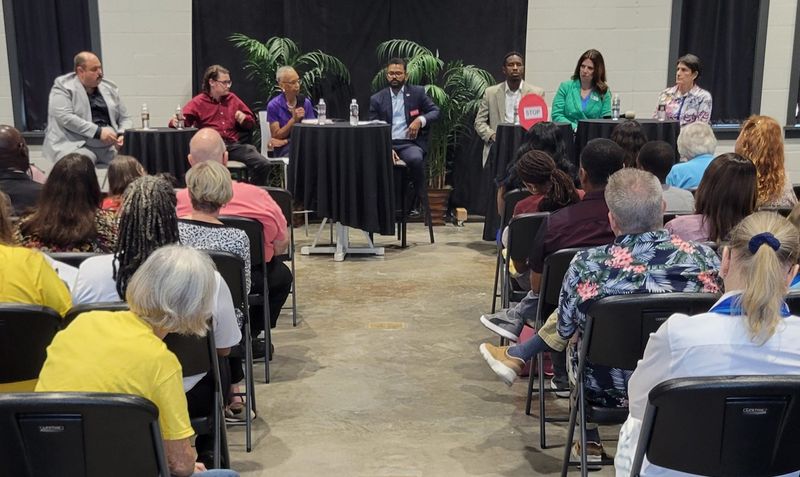
LAKELAND — The seven candidates running for three spots on the Polk County School Board fielded questions covering such topics as achievement gaps, teacher shortages and educational vouchers during a forum held July 16.
The event, organized by LkldNow and the Polk County League of Women voters, drew an audience of about 125 at The Well in Lakeland. Moderators from LkldNow asked the candidates a series of prepared questions and then presented a few more submitted by spectators.

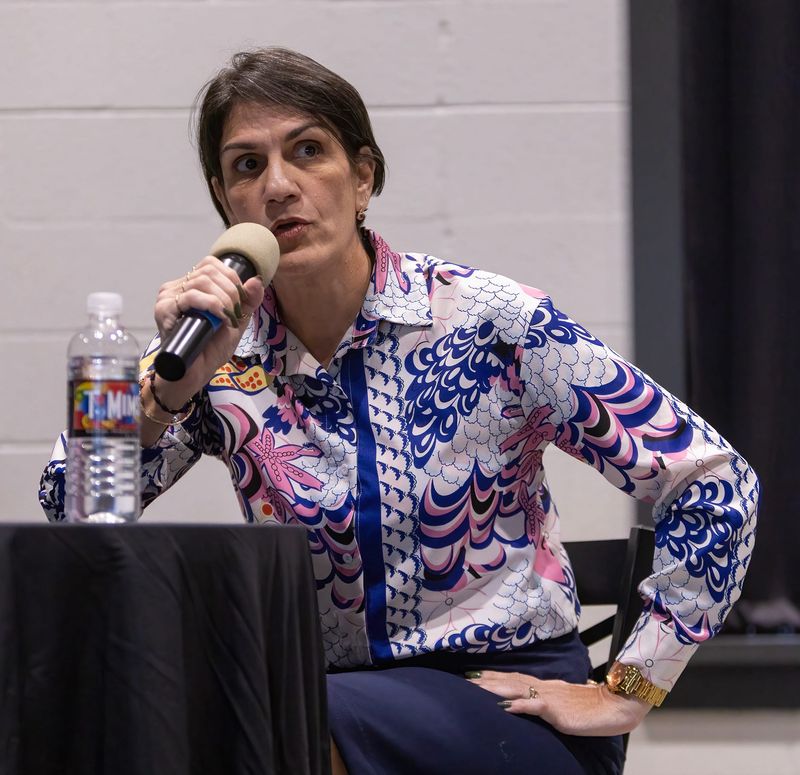
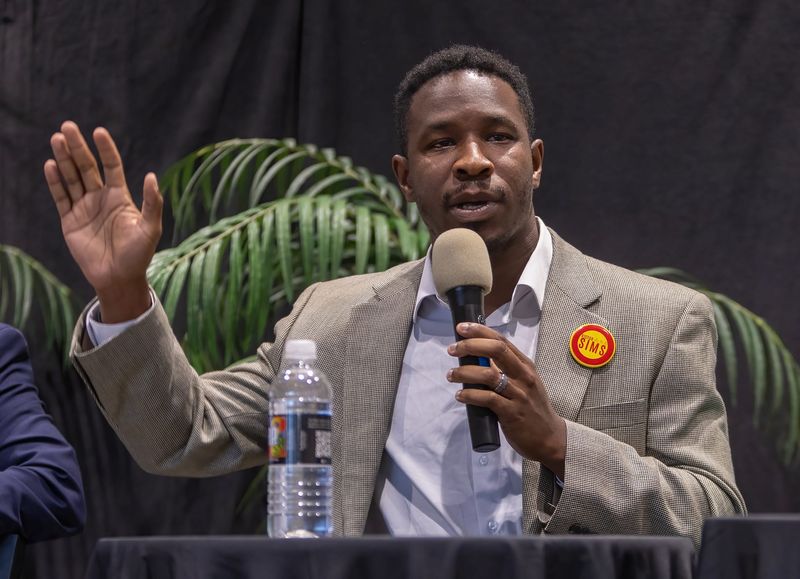
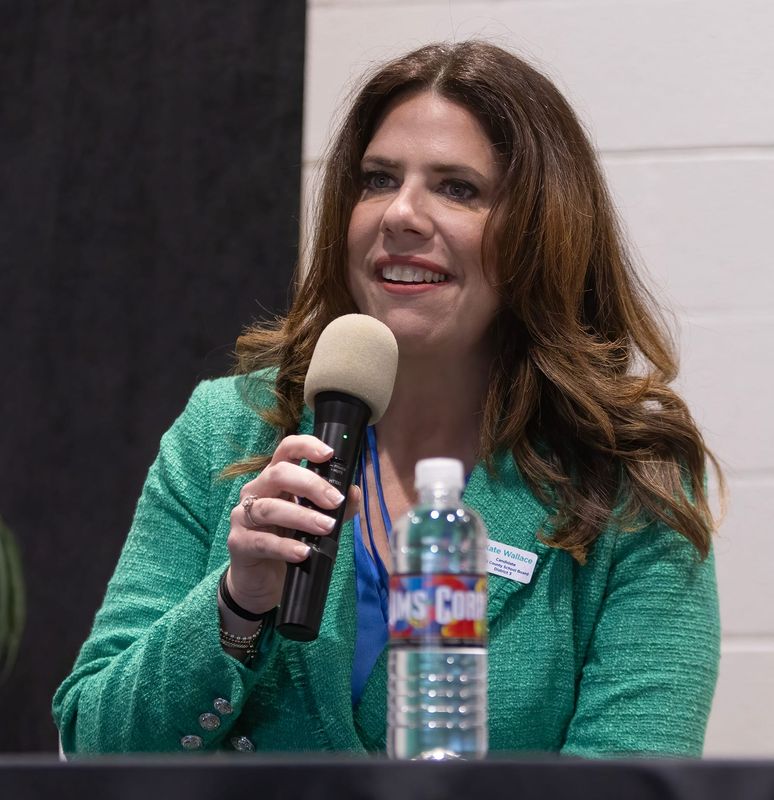
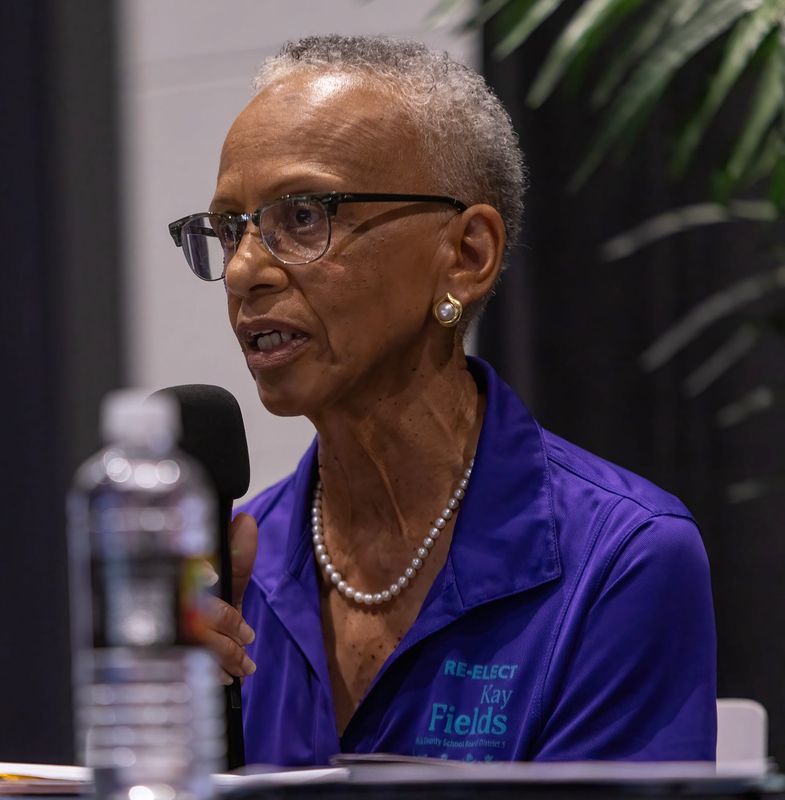
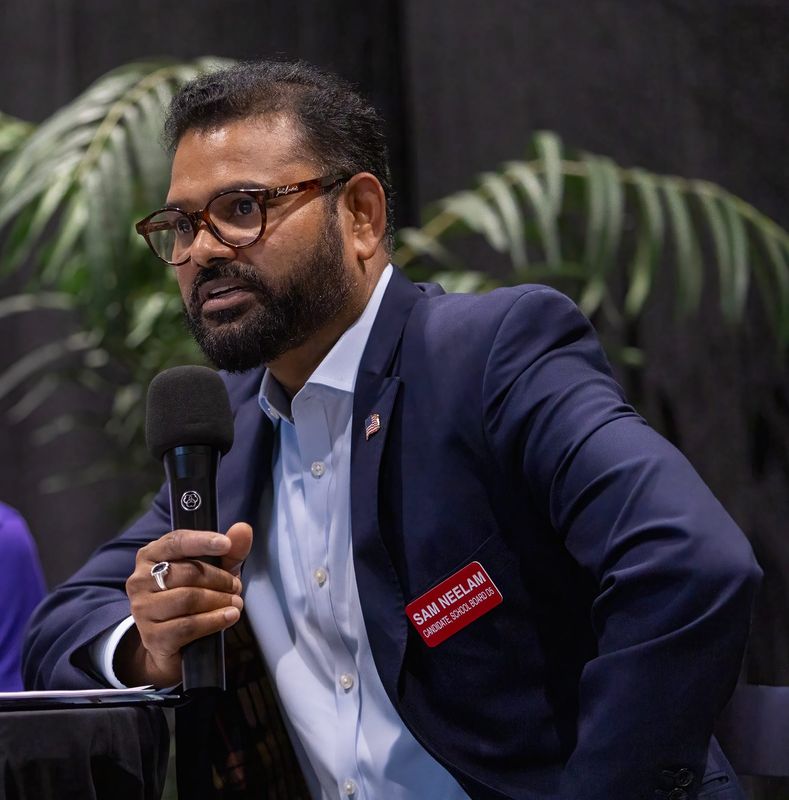
In District 3, Kate Wallace, who was appointed to the School Board in December, is vying with Sarah Corona and Victor Sims. In District 5, six-term incumbent Kay Fields faces a challenge from Sam Neelam.
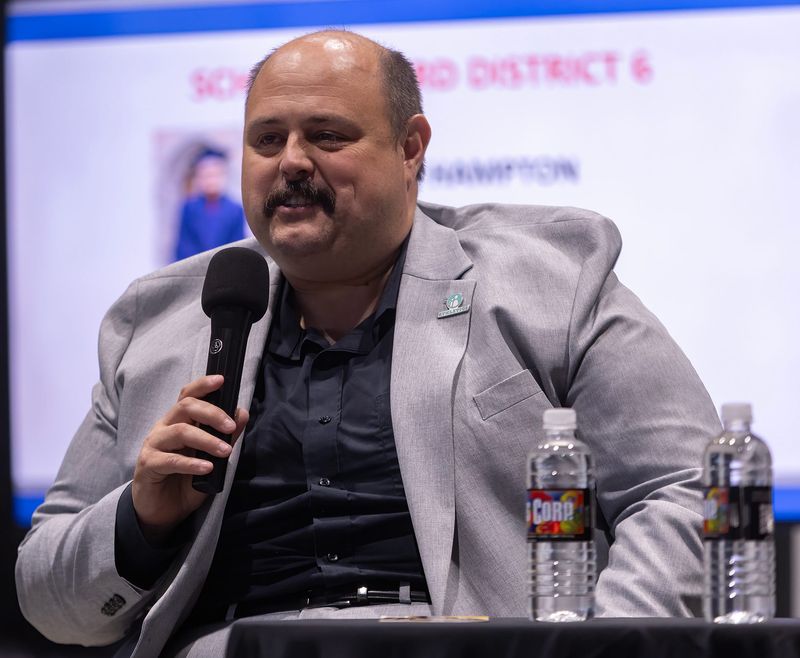
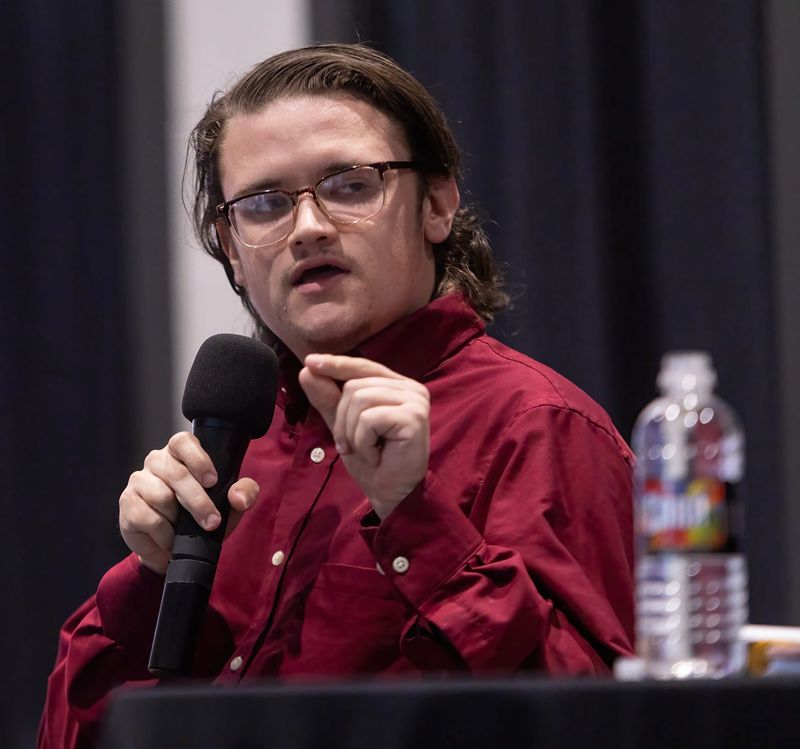
In District 6, challenger Kasen Hampton is taking on first-term incumbent Justin Sharpless. The nonpartisan School Board elections will be held Aug. 18. Mail ballots have already begun going out to voters, and early voting begins Aug. 8.
Wallace, who was appointed after the death of School Board member Rick Nolte, emphasized her years of experience with a nonprofit that promotes school choice and equal opportunities.
Corona highlighted her expertise with mental health and her management background as CEO of a behavioral health network. Sims spoke about passing through multiple schools as a child in foster care before earning both master’s and law degrees.
Fields said she continues to have a passion for education after nearly 24 years on the Polk County School Board. Neelam, who said he immigrated from India with only a few dollars, emphasized that educational opportunities helped him rise to become a software engineer and CEO of a real estate company.
Sharpless touted his experience with the School Board, which he now chairs, and his status as vice president of the Florida School Boards Association. Hampton, a student at Polk State College, said he was motivated to run because he felt that schools failed to provide the services entitled to him as a student with an Individualized Education Plan.
Below are highlights of candidates’ responses to some of the questions asked during the roughly 75-minute forum. (Some quotes have been edited to remove repeated words and sentence fragments.) Video of the full event can be found on LkldNow’s YouTube channel.
District 3
A moderator asked the candidates whether they believed that private and charter schools receiving tax dollars should be held to the same standards as public schools on certified teachers, financial oversight, transportation and state testing requirements.
“Oh, definitely,” Corona said. “If they are funded by public funding, they have to be held accountable with the same standards. As a parent, I know what is best for my children. I mean, nobody can tell me what is best for my child. I mean, I have to decide where to send my kids. But we have to make sure private, public, charter, magnet, we hold them accountable with the same standard of education because they’ve been funded in the same way.”
Sims agreed with that concept. A trained social worker, he said that former Gov. Jeb Bush sought to privatize Florida’s child-welfare system, which had previously been run by the government.
In doing so, Florida placed the same accountability on private contractors that had been in place for state workers, he said.
“And so, I believe that that should be the way we work (in education),” he said. “Everybody should be accountable to tax-paying dollars. This governing body, whoever gets elected, they’ll be responsible for the tax-paying dollars. Why isn’t it the same for private schools? It’s just common sense to me.”
Wallace, a longtime advocate for school choice, said private and charter schools should face accountability but not required to meet all the same standards as public schools. She noted that in higher education, private institutions do have the same government requirements as public schools.
“So, public schools right now in Florida, if they’re small, if they’re starting out, if they don’t serve higher grades, they don’t generate a school grade,” Wallace said. “And if they have fewer than 30 students, like a lot of private schools do, in particular tested grades, they’re not legally, for FERPA (federal law) reasons, allowed to publish their data. So, there’s a lot of considerations here that a lot of my colleagues up here with me don’t understand.”
District 5
Fields and Neelam were asked about the impact on traditional public schools of “public tax money going to private schools in the form of vouchers.”
“I think that every parent should be able to choose where their child goes to school, and I think that as a public school, we have to make sure that we are competitive and that we are able to entice and encourage existing families to continue to be a part of our school district,” Fields said. “I think competition is good. I think that we have to understand that when we have our students that are a part of a private school or a school that’s not affiliated with the public schools, that those are dollars that are being taken away, we have to figure out how we can again encourage our students to stay within the school district.”
Neelam, who serves on the Board of Trustees of Florida Polytechnic University, said that school choice is crucial because students have differing educational needs.
“It’s not about defunding public schools,” he said. “It is about accountability everywhere, wherever the student sits, whether that’s their own school or somewhere else. My focus is making sure every option is available, and also, we need to create certain quality standards for every school, including the public schools. So this way, we’ll make sure the competition is fair between public schools, charter schools and private schools.”
District 6
A moderator asked Sharpless and Hampton about test results showing that Polk County has improved its scores but continues to trail the state average by about 10 points in reading and math. The candidates were asked how the district can close that gap.
Sharpless said that School Board members regularly discuss the issue and compare the district to others in Florida. He said the School Board set a goal of 2% improvement each year on test scores for reading, writing and math.
“The one question I had was, is that aggressive enough to close the gap?” he said. “Here’s part of the other problem with closing the gap is, when we get better, the state average gets better.”
Sharpless said that the use of tutors holding one-on-one meetings with students is one way the district is addressing the issue.
“I think we need to give our students more support,” Hampton said. “I’ve read stories about students who are denied their IEPs. I think we need to hold our private and charter schools accountable, for one, and make sure that every child, no matter what school you go to, no matter where you are in the district, no matter where your zip code is, that you get the support you need, for one.”
Gary White can be reached at gary.white@theledger.com or 863-802-7518. Follow on X @garywhite13.
This article originally appeared on The Ledger: Polk School Board candidates address range of issues at Lakeland event
Reporting by Gary White, Lakeland Ledger / The Ledger
USA TODAY Network via Reuters Connect
By Gary White, Lakeland Ledger | USA TODAY Network