Pensacola doctors are reporting the first measles case in Escambia County in 20 years.
While the Department of Health only releases official numbers once a week, local doctors began warning their patients of the case on Tuesday.

“We have been notified of a confirmed case of measles in our area,” Pensacola Pediatrics wrote on its social media pages late Tuesday. “Measles is highly contagious, and unvaccinated individuals are at increased risk if exposed.”
At this time, infants 6 months to 11 months are eligible for early MMR (measles) vaccination, and children 12 months of age and older are eligible for routine, on-time vaccination, Pensacola Pediatrics wrote.
“If your child has not yet received the measles (MMR) vaccine, we strongly encourage you to contact our office to discuss early or on-time vaccination options.”
The measles case was not a patient of Pensacola Pediatrics, but like other health providers statewide, staff are acting early to prevent transmission of the virus.
“We understand that news about measles creates concern,” Baptist Hospital wrote in a prepared statement. “While measles is a preventable illness, those who are vaccinated are well protected. For the most accurate and up-to-date guidance, please refer to our community’s public health authority — the Florida Department of Health in Escambia County — at escambia.floridahealth.gov. You can also visit cdc.gov/measles for additional trusted information on symptoms, vaccination, and how to protect your family’s health.”
The measles is extremely contagious. “If 10 people without immunity are exposed, up to nine may get sick,” says the Florida Department of Health.
It spreads among people through the air when an infested person breathes, coughs and sneezes. The virus can live in the air and on surfaces for up to two hours, according to the Florida Department of Health.
How many measles cases are in Florida?
A certified physician assistant at the Mater Dei Clinic in Ave Maria told Naples Daily News that as of Feb. 2 there were 12 confirmed measles cases and 14 more cases pending testing results.
“We officially have 12 (cases),” Anthony Musingo, certified physician assistant at Meter Dei, told Naples Daily News. “For testing we have around 14 for outstanding results.”
Three to four of those students have been hospitalized.
This is the first measles outbreak reported in Florida in 2026, but news sources have written about a handful of one-off cases in Hillsborough, Manatee, St. Johns and Duval counties. The CDC reported nine confirmed cases as of Jan. 29, which does not include all of the cases in the outbreak.
Over the past 20 years, Florida has reported an average of three measles cases per year. The highest number of cases was reported in 2024 (12) and 2018 (15). Florida reported just eight measles cases in 2025.
The last measles case in Escambia County was 20 years ago, while Santa Rosa County reported one case in 2011.
What is measles?
Measles is an illness caused by an extremely contagious virus called rubeola. People typically don’t report serious illness, but it’s ability to spread can quickly lead to large outbreaks among people who are not vaccinated.
Measles is typically known for the rash it can cause, but it can lead to other medical complications that include pneumonia and encephalitis, in rare cases.
Encephalitis is swelling of the brain that requires hospitalization and intensive treatment. It can cause seizures, hallucinations, permanent brain damange, blindness, hearing loss and memory loss, accoording to the FDOH.
How contagious is the measles?
The measles is extremely contagious. “If 10 people without immunity are exposed, up to nine may get sick,” says the FDOH.
It spreads among people through the air when an infested person breathes, coughs and sneezes. The virus can live in the air and on surfaces for up to two hours, according to the Florida Department of Health.
What happens if you get measles?
It can take between a week and two weeks after contact with the virus before symptoms can show up.
The Mayo Clinic says that the first symptoms typically include:
Tiny white spots inside the mouth, called Koplik spots, may occur about two to three days after the first symptoms appear.
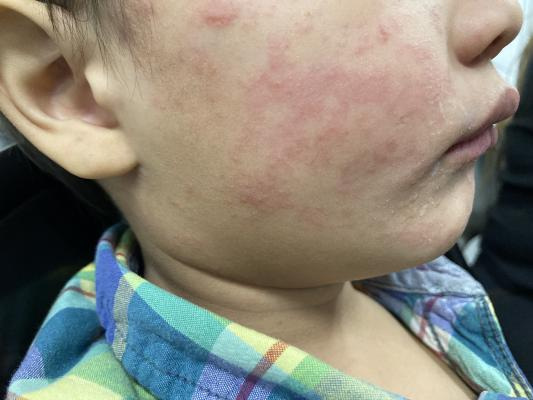
A blotch rash made up of large, flat spots and small raised bumps starts to appear three to five days after symptoms, or about 14 days after coming into contact with the virus.
There are several complications that can arise from measles, including:
How serious is the measles?
While most people infected with measles aren’t hospitalized, the disease is so infectious that its impact can quickly become a numbers game. Before the measles vaccine was licensed and introduced in 1963, it was responsible for 48,000 annual hospitalizations and 400-500 deaths, according to the CDC.
How long does measles last?
Most people recover from the measles in about 10 days, according to the Mayo Clinic.
Can adults get measles?
Yes, adults can get measles, especially if they are unvaccinated.
How can you prevent getting measles?
With a 97% effective rate, receiving two doses of the MMR vaccine offers the best protection against measles.
Can you still get the measles if you’re vaccinated?
The short answer is yes. Two doses of the MMR vaccine are 97% effective at preventing measles; one dose is 93% effective.
Looking at the total number of measles cases in the U.S. in 2025 (2,267), these figures hold up pretty well. People who were unvaccinated or whose vaccination status was unknown made up 93% of those cases. People with one or both MMR doses made up 3% and 4% of cases, respectively.
Why are measles cases rising in the US?
The U.S. officially declared the measles eliminated in 2000, which can be attributed to the high percentage of people receiving the measles, mumps and rubella (MMR) vaccine.
The sudden rise in measles cases is the result of the inverse now being true: U.S. national MMR coverage among kindergarteners has fallen below the 95% coverage target, and it’s much lower in some areas.
Florida is among the worst offenders, reporting that only 88.8% of kids entering kindergarten were vaccinated in the 2024-2025 school year. It is among 13 other states where vaccination rates have dipped under 90%.
This article originally appeared on Pensacola News Journal: Measles case reported in Pensacola, first in 20 years
Reporting by Brandon Girod, Pensacola News Journal / Pensacola News Journal
USA TODAY Network via Reuters Connect