

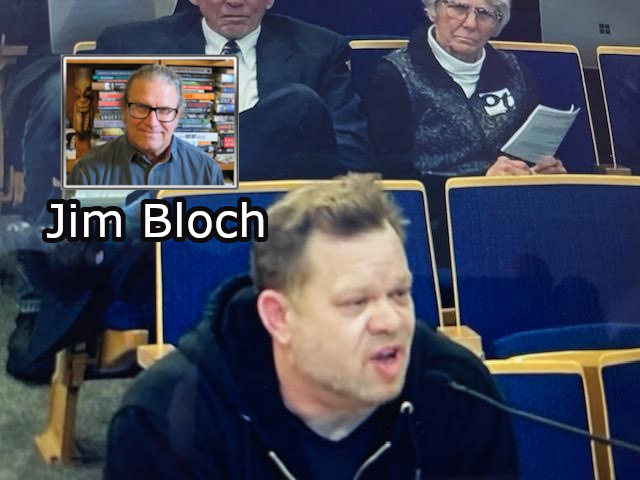
By Jim Bloch

At its only meeting in December, against the apparent wishes of residents, the Port Huron City Council voted 4-3 to break the public comment period into two parts. Residents and business owners are now allowed to speak early in council meetings. Nonresidents must wait until the end of council meetings to address the council. All speakers must fill out a signup sheet maintained by City Clerk Cyndee Jonseck.
The resolution approving the new rules contained the reasons behind the change. The proponents hoped that the new arrangement would 1) allow for “an orderly meeting that encourages public participation in the political process and the meetings and at the same time maintains the decorum of a professional business meeting”; 2) allow the council “to conduct its business in a time efficient manner”; and 3) help encourage family-friendly proceedings that are appropriate for children, who “regularly attend meetings or watch broadcasts of the meetings for a variety of reasons or purposes” and that “encourage minors to participate or watch public meetings.”

Are the new procedures working?
There have been two regular council meetings, Jan. 12 and Jan. 26, since the rules changes were approved. It’s too small of a sample size to conclude anything definitively. But the rules appear to be having an impact.
Encouraging public participation? No
The new rules appear to have suppressed public participation instead of encouraging it.
On Jan. 12, the first meeting after the changes, three residents or business owners addressed the council, and three nonresidents, a total of six.
On Jan. 26, eight residents and one nonresident addressed council, a total of nine.
That compares to Dec. 8, the night the resolution was passed, when 19 people addressed council.
On Nov. 24, 15 people addressed council. On Nov. 10, 15 people spoke.
On Oct. 27, 12 people spoke. On Oct. 13, 14 people spoke.
On Sept. 22, 19 people addressed council. On Sept. 8, 24 people spoke.
That’s an average of 16.9 public commenters in the four months preceding the changes and an average of 7.5 public commenters in January.
Perhaps Januarys are slow months for public comments. During the Jan. 13, 2025, meeting, eight people spoke; on Jan. 27, nine spoke.
On Jan. 8, 2024, nine spoke; on Jan. 23, 11 spoke.
That’s an average of 9.2 speakers at the four meetings in January 2024 and 2025, 18.5 percent more than 2026.
Several people who objected to the rule changes predicted decreased public participation.
“What you’re going to do tonight is chase people away,” said resident and former council member Ken Harris, Dec. 8. He noted that local township residents pay the city for water and sewer services, yet they’ll be relegated to a separate public comment session at the end of meetings. “What we’re trying to do is make them a different type of people than we have here in Port Huron.”
Shorter meetings? Yes
Have the meetings become more “time efficient,” that is, shorter? The answer appears to be yes.
The council meeting on Jan. 26 ran 49:36 minutes. On Jan. 12, it ran 1 hour and 17 minutes. The average for the month was 1 hour and 3 minutes. That’s about 40 minutes shorter than meetings in the final four months of 2025. (In January 2025, the two meetings averaged 1 hour and 24 minutes.)
The Dec. 8 meeting ran 1 hour and 48 minutes.
The Nov. 24 meeting went 1 hour and 35 minutes. The Nov. 10 meeting ran 1 hour and 51 minutes.
The Oct. 27 meeting lasted 1 hour and three minutes. The Oct. 14 meeting last 1 hour and 31 meetings.
The Sept. 22 meeting ran 1 hour and 25 minutes. The Sept. 8 meeting last 2 hours and 46 minutes.
That’s an average of 1 hour and 43 minutes.
It should be noted that public comment is not the only thing that lengthens meetings. The number of items on the agenda, including presentations and public hearings, also have an impact.
The Sept. 8 meeting, for example, which went 2 hours and 46 minutes, had two presentations, four FCM (From the City Manager) items, 17 resolutions and two ordinances.
The Jan. 8 meeting, which ran 46 minutes, had no presentations, one FCM item, five resolutions and no ordinances.
Family Friendliness? About the same
The language used by public commenters is protected by the First Amendment of the US Constitution.
There have been several instances of swearing by public commenters in Port Huron over the past few years. But they have tended to have come primarily from the lips of minority of speakers, maybe as few as two.
It’s not clear how dividing public comment periods in two would have any impact on the language used by speakers. Before the changes, the city’s Rules of Procedure already had
required that people addressing the council were prohibited from making “profane remarks.”
On Jan. 26, one speaker said “sh–” and “f—.” Another said “he-.”
In general, the meetings have been relatively clean.
Jim Bloch is a freelance writer based in St. Clair, Michigan. Contact him at bloch.jim@gmail.com.
