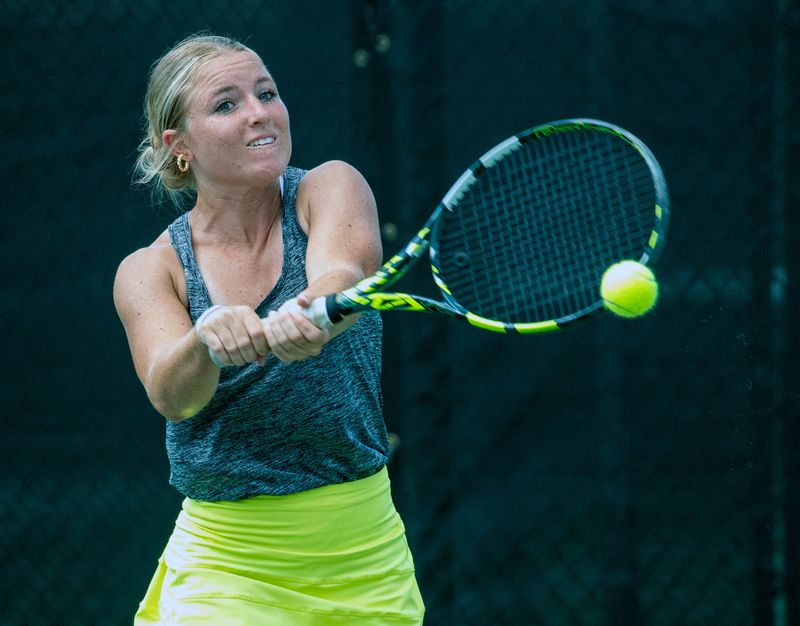
As the girls soccer district tournament reached its championship game last season, the athletic life of Auburndale’s McKenna Battilla, then a sophomore, couldn’t have been better.
She was fresh off a freshman season where she was a first-team, all-county selection in girls soccer, the Polk County girls tennis player of the year, and in her sophomore season, she was one of the two favorites to be girls soccer player of the year and was looking to repeat as tennis player of the year. Oh yeah, she also had just been selected to the U.S. Youth Soccer Southern Region ODP Girls 2008 roster (2023-24 season).

And then …
“I think what happened was I was going at such a high pace that the ball got kind of behind me and I took a big step with my left foot,” Battilla said. “And since the ball was behind me, I tried to stop myself, and when I stopped my knee hyperextended and kind of buckled inward. So it was more of like I was going all out and just like an abrupt stop.”
Battilla’s athletic career suddenly was put on hold. She sustained a tear on both ends of her anterior cruciate ligament. Instead of preparing to lead Auburndale, which won the district title after she got hurt, in the playoffs then play her sophomore tennis season, Battilla’s focus became having surgery, rehabbing her knee and getting her athletic career back on track.
Just over one year later, Battilla is back. She is again the top girls tennis player in the county. She has returned to playing club soccer, regaining the form that drew raves among county coaches her freshman season, and has committed to the University of South Florida for soccer.
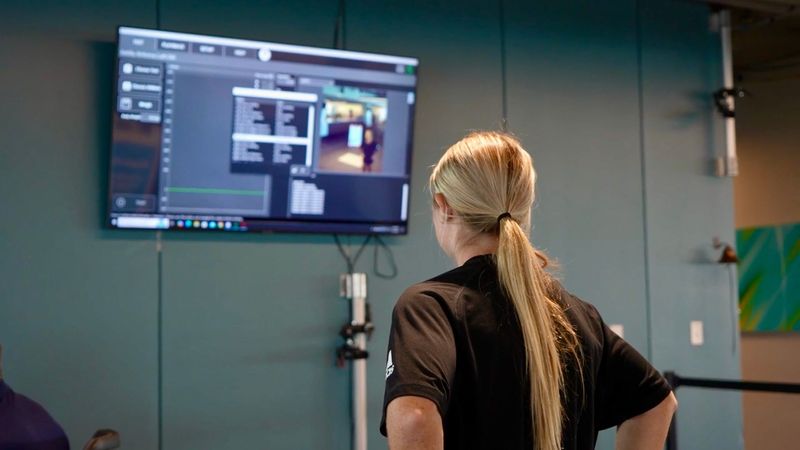
She has accomplished all this after a grueling rehab program that feature advanced technology in a system called the 3D Motion Lab in Orlando, which is the only one of its kind in Florida.
Battilla knew she was hurt
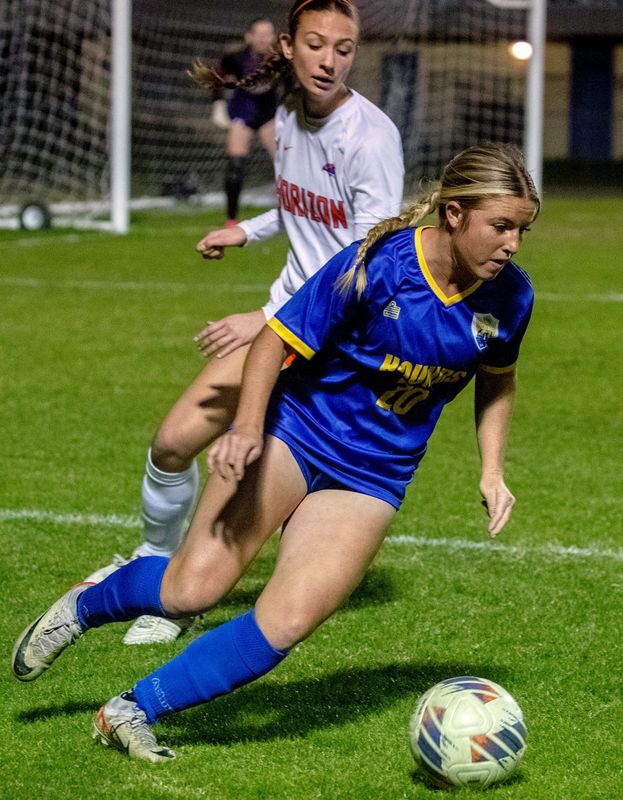
Battilla had scored her 34th goal in the season on a penalty kick early in the district championship game against Horizon on Feb. 1, 2024. It was late in the first half as she was making a run toward the goal when she went down, and she knew right away something was wrong.
“I don’t really remember a lot of it just because I was in so much shock, but like as soon as that happened, my heart dropped and I just had a feeling,” she said. “I just started like screaming, not only because I was in pain but I was just scared because I wasn’t sure that it happened because I didn’t hear a pop or anything. I didn’t for sure know it was my ACL, but I was like, something’s wrong.”
After the ACL tear was confirmed, Dr. Daryl Osbahr, the executive medical director of the AdventHealth Orthopedic Institute, performed surgery on Battilla on Feb. 27 in Winter Park, and almost immediately — three days later — she began rehab.
“Obviously, it wasn’t high end stuff, but it was just trying to get the mobility back bending, straightening it,” she said. “It was so painful. It would like bring me in tears. I would be sweating on the table, biting my shirt.”
The initial period after surgery was toughest. Her life had been school, soccer, tennis, extra training. She would find herself crying, not because of the pain but trying to adjust to her condition.
Battilla credited her mother, Kristin Spencer, with getting her through this tough time, pushing her yet being encouraging at the same time.
“She was always there,” Battilla said. “Either on days where I was too lazy to do something, she would give me dumbbells and be like, do upper body or something. At the time, I probably was so mad at her. I’m so thankful that she was there to push me because if she wasn’t, I probably wouldn’t recover as well as I did without her. She was always there to either push me on days that we were arguing about it or just to be proud of me for days that I did get pushed through the hard times or always be there to make sure I had the best opportunity to get back.”
The rehab was done with Todd Furman, a senior physical therapist at Rothman Orthopedics AdventHealth. She was going over there three days a week, often time driving two hours because of traffic.
For the first month or so, the focus was on getting her motion and mobility back and it progressed to building up strength.
Battilla began feeling she finally was on the road to recovery when she was able to start running and squatting. One of the biggest challenges early on was to regain the muscle in her injured leg.
“My sure surgical quad was 10 times smaller than my good left,” she said.
Rehab goes high tech
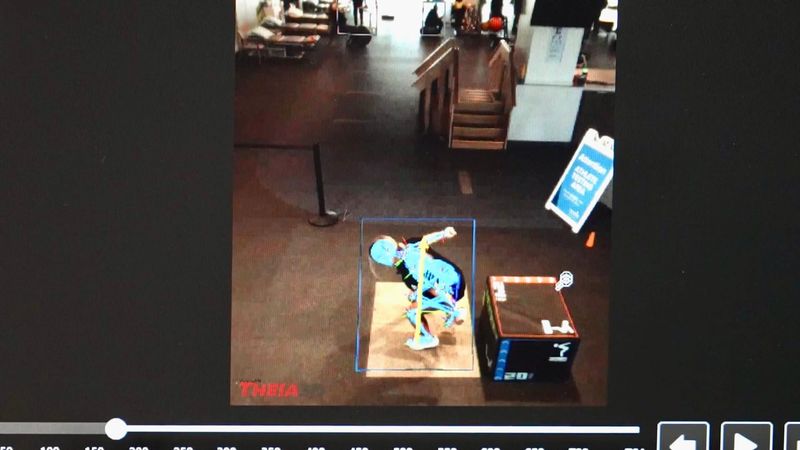
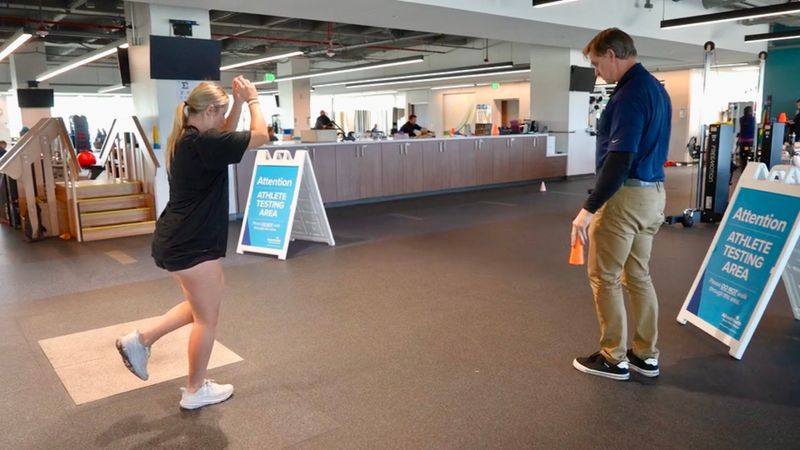
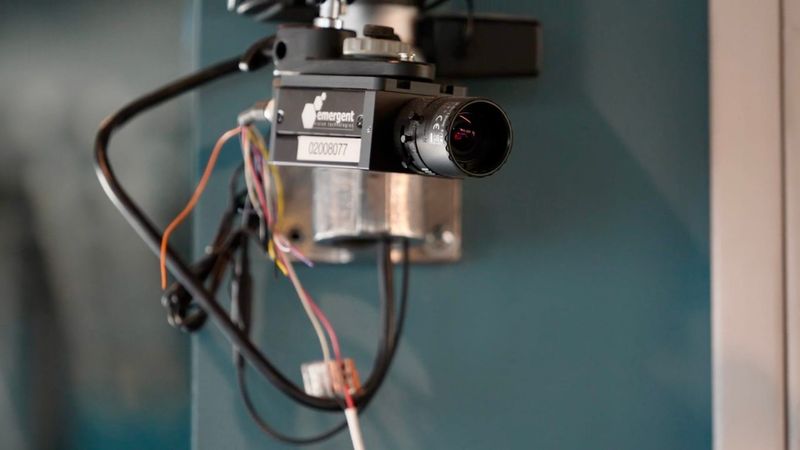
As Battilla progressed in her rehabilitation, she went into a pilot program at Advent Health Sports Med & Rehab Innovation Tower in Orlando. Known as the 3D Motion Lab, the system captures data from video — there are eight ceiling-mounted cameras and force places — that create three-dimensional images on the computer. The system can overlay a skeleton that shows how a patient’s bones are moving.
Furman said they started using the system in August of 2024 and have been gradually ramping it up.
“It gives you a more in-depth assessment of what could potentially trip up a return to play continuum,” Furman said. “It allows you to to look at things that you can’t see with the naked eye. Even with regards to motion and the quality of movement, you can really slow it down and get specific on how they’re positioned at key points during a force reduction phase, for example. It shows you joint moments, which lets you know how much torque is occurring about the center of the joint, and it can be critical in determining how protective the athlete can be of that particular structure whenever they load.”
The results can tell a physical therapist if there is something that needs more focus along with giving a status update of where the patient is at that point in the rehab.
“It’s both. Usually you’re getting information, but it’s a snapshot certainly so it lets you know are they where they need to be, are they behind, are they ahead of where they need to be. But there’s always several things that you’re that getting from a test and subsequent report that you can include in the note to help the therapist focus on those specific deficits,” he said.
“Maybe they’re landing with too shallow of a knee flexion angle. Maybe they’re not getting good co-contraction with their hamstring versus the quadriceps, so they’re out of balance with their sagittal plane joint moments. Maybe they’re too loose in through the trunk when they load. Maybe their lateral force vectors are are too high for patella procedure or patella femoral dislocation patient. Those are examples of things that you can use to help fine-tune a treatment regimen to give the treating therapist more specific information on what clearly is a deficit for that particular athlete.”
Prior to this system, much of what the system shows was evaluated with the naked eye. Certain things could be measured. For example, the patient could do a single leg triple hop and the distance of the healthy leg and the injured leg could be compared.
“When you have the ability to capture multiple frames and break it down, you can really see things that uou couldn’t see just with the naked eye,” Furman said. “So in terms of analyzing movement quality, it really helps quite a bit in that regard. And then you get the force measures, which you couldn’t get previously. You get joint angles at certain points in time, you can figure out or you can direct which point in time you want to look at, whether it’s mid stance or breaking for propulsion transition or initial loading. You can look at it at hundreds of different data points at each particular point of the movement.”
The entire objective of the system is to get the athlete back to 100 percent as soon as possible.
“I think it just gives the therapist, the whole sports medicine team, the physician better information to determine if an athlete’s ready to go back to play their sport,” Furman said. “Even a couple of years ago, there haven’t been really definitive criteria or protocols for determining when somebody’s ready to play again.”
There’s also a big focus on trying to prevent re-injury. Furman said the re-injury rate for ACL injuries is 30 percent, whether it’s the same leg or the opposite leg, which can result in another year away from the athlete’s sport.
Making sure she was healthy enough with the best chance of not re-injuring her knee was a major concern for Battilla during her recovery.
“She’s my patient,” Furman said. “I would be devastated if she got hurt again. So when I’m testing her, I’m looking for things to hold them out because you don’t want them to get re-injured. That’s the neat thing about this technology. It gives you that hard objective data to make a more educated decision on whether they should return to play.”
Back to play, enter USF
Battilla’s rehab went well. She returned to the soccer practice field in December and played her first club match in February.
“It’s been good,” Furman said. “She’s hit her marks on time. She’s had a few hiccups, a little bit of a pain in the knee here and there. Those are things that you expect, especially when somebody’s going back to playing a demanding sport like soccer.”
Battilla said she has dealt with issues with scar tissue and there was talk of having surgery to clean it up, which would have set her back only a couple of weeks. She wasn’t thrilled at the prospect of surgery.
“So I worked really hard like trying to rub out the scar tissue myself doing my extension exercises four times a day, just trying to really prevent another surgery,” she said.
Along the way, she worked on getting recruited and USF entered beginning in December and she kept contact with the coaches throughout January. After she returned to play in February, she performed well, scoring two goals. She received an offer from USF on Feb. 10 and committed.
“It felt right,” she said.
While Battilla’s main focus is getting back to 100 percent on the soccer field, her passion for tennis never diminished. She got the OK to play tennis. She had last played in December of 2023, a month before her injury, and didn’t pick up a tennis racket until a couple of weeks before the season.
Although rusty to start the season, she has begun to show the form that put her in the state semifinals her freshman year. She has dominated her opponents during the season and plans to practice a bit more as districts approach.
“I definitely missed it a lot,” Battilla said. “That’s what I’ve realized throughout the injury is the love I’ve had for those sports because there wasn’t a day that went by where I didn’t miss it or be like, oh, I’m kind of like happy I don’t have tennis or soccer today. Every day I was like wow I missed this. That’s another thing I told my mom throughout this and after this injury, I really like realized how much I like actually enjoy doing these sports.”
This article originally appeared on The Ledger: McKenna Battilla used advanced technology system, only one in Florida, during ACL rehab
Reporting by Roy Fuoco, Lakeland Ledger / The Ledger
USA TODAY Network via Reuters Connect