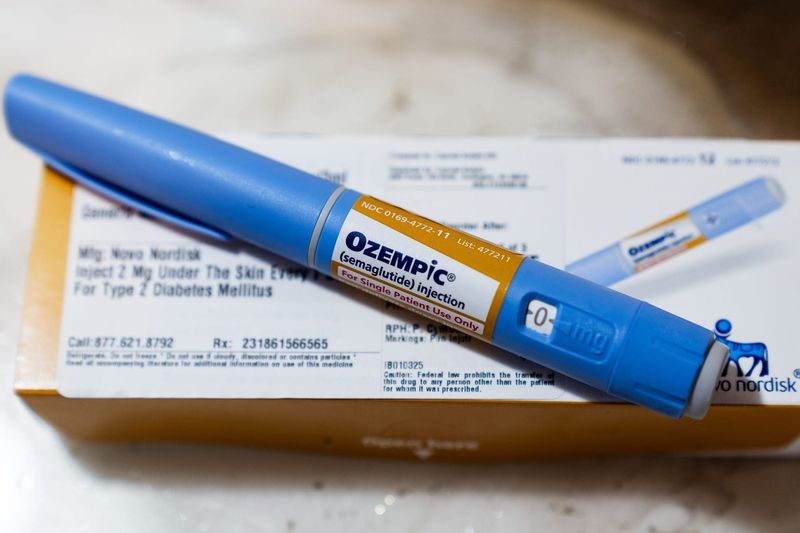
The Palm Beach Post recently reported that the nationwide popularity of injectable weight-loss medications for is having effects across multiple industries.
Major retailers like Walmart and Target have reported decreased foods sales and are thus altering how they stock their shelves, WeightWatchers recently filed for bankruptcy and airlines reportedly are anticipating that they’ll be able to spend less on jet fuel as the passengers they transport become lighter.

To add to that, on May 21 Eli Lilly said its experimental weight-loss shot retatrutide delivered dramatic weight loss in a late-stage study of people with obesity.
Lilly said people on the next-generation weight loss medication across three different dosages achieved weight loss of 19% to 28%. The results for some people in the study were on par with weight-loss surgery.
Lilly reported the results Thursday in a news release, so the study results have not been peer reviewed or reported in a scientific journal. Lilly has not yet filed for Food and Drug Administration approval but could do so this year.
If the medication is approved, it will join a growing market of weight-loss medications that includes Lilly’s existing anti-obesity medications Zepbound and the weight-loss pill Foundayo. Novo Nordisk markets the drug Wegovy, available as an injectable and once-a-day pill.
Lilly reported results for retatrutide that suggest more dramatic weight loss than other available medications. Those who took a 9 milligram dose lost an average of 64 pounds, or nearly 26% of their body weight. Those who took a higher 12 milligram dose lost 70 pounds, or more than 28% of body weight.
“These are the most significant weight loss numbers ever seen with a pharmaceutical treatment of obesity,” said Dr. Christopher McGowan, gastroenterologist and obesity medicine specialist at Everself, a medical provider that specializes in obesity management.
Those who were in a smaller 4 milligram dose of retatrutide lost an average of 47 pounds, or about 19% of their body weight.
Participants who received the three different doses all lost more weight than a placebo group, which lost an average of more than 2% of body weight.
Nearly 2 in 3 people in the study who took a 12 milligram dose over 80 weeks lost enough weight to fall below the obesity measure based on a person’s height and weight.
Nearly half of people on the 12 milligram dose version of the drug over 80 weeks lost an average of more than 30% of their body weight, a result on par with weight-loss surgery.
Are side effects worrisome?
As a triple agonist, retatrutide works differently than existing medications because it mimics three hormones − GIP, GLP-1 and glucagon triple hormone receptor agonists. Existing weight-loss drugs such as Wegovy, commonly referred to a GLP-1s, mimic the effects of glucagon-like peptide-1, a hormone that regulates metabolism.
Lilly said the most common side effects of study participants included nausea, constipation, vomiting and upper respiratory tract infection.
McGowan said two other side effects among study participants – urinary tract infections and dysesthesia, or a painful burning sensation to touch – had not previously been linked to weight-loss medications.
About 11% of participants on the highest dose of retatrutide discontinued the study, a higher drop out rate than past studies of weight-loss drugs, McGowan said.
“What we’re seeing is a greater potential for adverse events, which makes sense because we’re now treating three different pathways and patients are experiencing far more weight loss,” McGowan said.
Lilly’s latest study data on retatrutide tracks earlier data released about the medication, said Dr. Angela Fitch, cofounder and chief medical officer of knownwell, an obesity care and primary care provider.
“We’ve known retatrutide is going to provide superior weight reduction versus the treatments we have today,” Fitch said. “The downside is the side effects weren’t better, and in fact, might be a little greater.”
If retatrutide is approved, Fitch said it could be an option for people with a greater body mass index, a ratio of a person’s height and weight used to calculate obesity.
The Centers for Disease Control and Prevention defines obesity as a person who has a BMI of 30 or more. As of March 2020, nearly 42% of U.S. adults had obesity, according to the CDC.
Fitch said doctors might recommend this medication, to patients with a BMI of 35 of greater – people who could benefit from more dramatic weight loss. Those with lower BMIs might choose existing weight-loss shots or pills, she said.
Fitch added that medical supervision for people on weight-loss drugs is important because weight loss carries potential for other risks such as muscle loss or osteoporosis.
“The more weight you lose, [the more] it creates other risks for you,” Fitch said.
This article originally appeared on Palm Beach Post: Industries change with weight-loss drugs, now Eli Lilly has a new one
Reporting by Ken Alltucker, USA TODAY Network / Palm Beach Post
USA TODAY Network via Reuters Connect