John Johnson might be happier if his business weren’t such a smashing success.
That would mean the invaders weren’t winning; that burrowing owls and blooming hibiscus were safe from egg- and flower-eating iguanas and that people wouldn’t be asking how they could franchise his very bright idea.

No such luck.
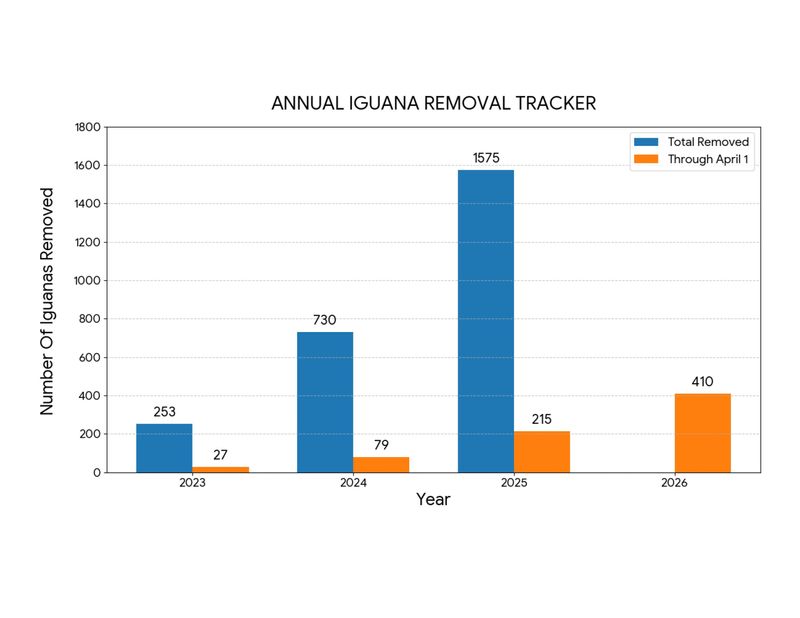
Instead, Johnson is still very much employed as the island’s most colorful, high-tech iguana terminator. His annual numbers have been steadily rising. In 2023, he shot 253, followed by 730 in 2025 and 1,575 last year.
Crisscrossing the island in his Iguana Mobile, packing a pneumatic Brocock Sniper XR rifle, Johnson says he’s already “way ahead of last year.”
By April 1 this year, he’d taken out 410 of the cold-blooded critters ― almost double what he’d bagged by April 1, 2025: 215.
Clients pay by the head: $50 for first; $25 each additional per trip. “And if I come and I miss, no charge,” he says.
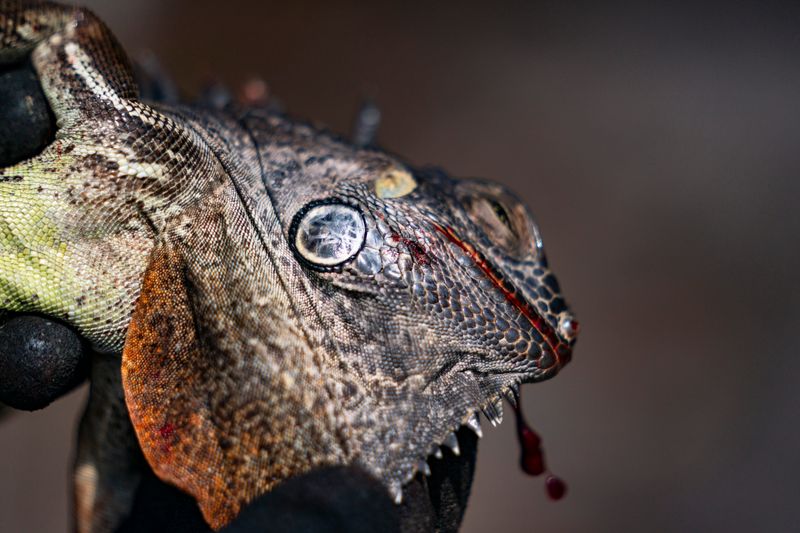
Johnson aims to be quick and humane. “A soft lead pellet through the brainstem,” he told the Naples Daily News last year, “they never know what hit them.”
What ick factor? Protein is protein, right?
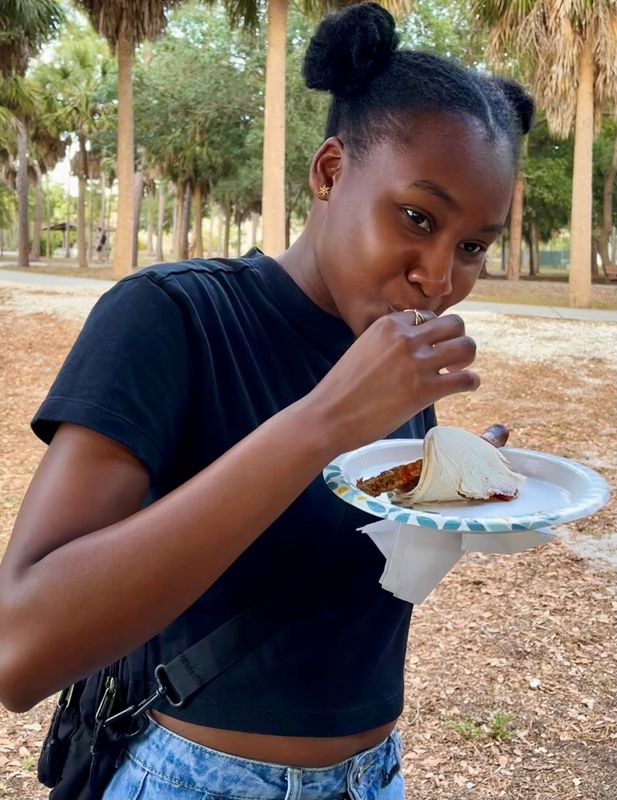
Johnson’s generous with his prey, sharing them with FGCU students studying international cuisine (think taquitos de iguana), with Tampa Bay Discovery Center for dissections and with crabbers for bait.
Every so often, they wind up on his breakfast table. When egg prices climbed last year, Johnson could live off the fat of the land.
A TV segment about his scrambled iguana eggs traveled around the nation. To those complaining about the ick factor, Johnson says:
“Eggs are eggs.”
More reptilian invaders ‘than anywhere else in the world’
Pet trade escapees, iguanas have joined a most-wanted list of reptilian invaders in the Sunshine State including Burmese pythons, veiled chameleons and Nile monitors. Florida now has “more established nonnative reptile and amphibian species than anywhere else in the world,” the University of Florida reports. “Over 60 species of introduced reptiles and amphibians have established breeding populations (and) Florida has three times as many established species of introduced lizards as native lizards.”
Two iguana species in particular bedevil Southwest Florida: The black spiny-tailed iguana has established a beachhead on Gasparilla Island, where it outnumbers humans five to one, undermining sea walls and dunes, gobbling native plants and gopher tortoise eggs and pooping promiscuously.
Lee County paid renowned FGCU biologist Jerry Jackson $16,000 in 2006 to strategize their removal. Jackson warned islanders to expect a pitched battle ― “These animals eat almost anything they can get in their mouths” ― and the fight is far from over.
Farther south, the green iguana has settled on Sanibel, Fort Myers Beach, Cape Coral and Marco Island, spawning a minor barrier island industry offering trapping, removal and even guided hunts (for a fee, the Lizard Kings will take you out to bag your own trophy).
One man, two years, 20,000 eggs that won’t hatch
Since Johnson entered the regional ― heck, the international ― spotlight last year with his company Down Goes Iguana, business has been booming, which is a good thing and a bad thing.
Good because he’s able to take the reptiles off the landscape, but bad because they multiply faster than one man can work. At his last field dissection, he took 56 eggs from a single female, though they can drop up to 70 a time.
Not quite Burmese python tier ― they’ve been observed with up to 95 eggs per female ― but still enough to cause serious problems and make it hard for hunters like Johnson to get ahead of the growth curve.
Taking hatchling mortality into account, Johnson figures in two years, he can keep some 20,000 eggs from being laid. That’s where the impact is.
“Now, killing the animals does not really make a dent in the population here,” he says. “I’m sorry. But stopping 20,000 eggs from being hatched, that’s a dent.”
Not a big enough dent though, he says. Ultimately, Johnson thinks it’ll take a concerted municipal effort, something the city of Marco Island has not taken nearly seriously enough, he says. The city’s environmental management department did not immediately respond to a request for comment.
“But they did it with mosquitoes, the whole neutering the males and that kind of stuff ― reducing the mosquito population through chemistry,” he says. “So I would hope there’s some smarter people than us out there trying to figure out ways to deal with the iguana population, because there’s no stopping it.”
Meantime, Johnson says, he’ll keep doing his bit.
“As long as I can move my index finger, I have a future.”
Amy Bennett Williams is a senior reporter. Reach her at at awilliams@news-press.com.
This article originally appeared on Marco Eagle: Iguana fight is far from over – Marco’s famed hunter busier than ever
Reporting by Amy Bennett Williams, USA TODAY NETWORK – Florida / Marco Eagle
USA TODAY Network via Reuters Connect