Did you know that one of Fort Myers most famous residents is indirectly responsible for Hollywood becoming a movie mecca?
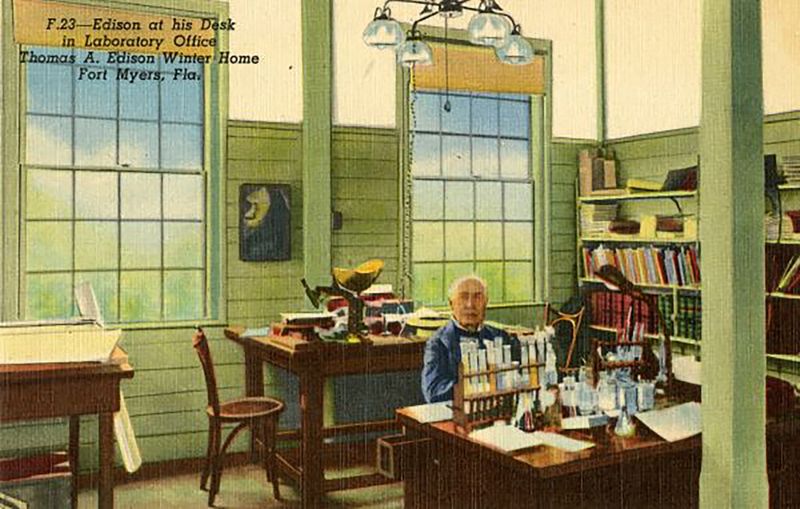
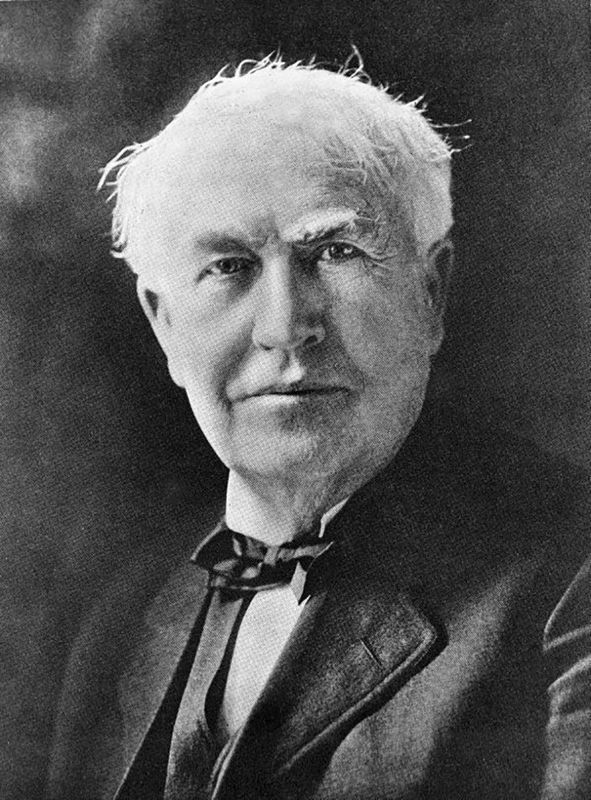
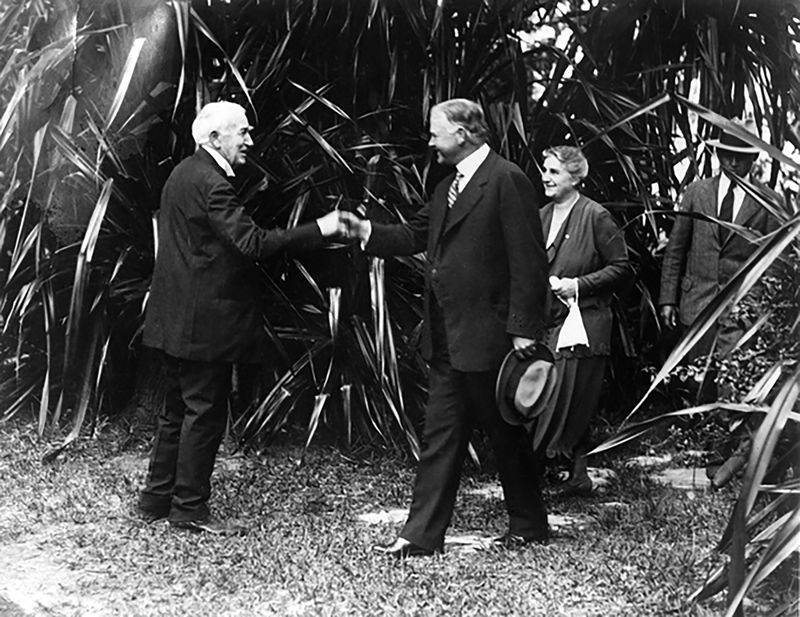
Thomas Edison spent winters in Fort Myers from 1885 until his death in 1931, completing his winter home here in 1886. During that time, he made significant contributions to the film industry.

1891
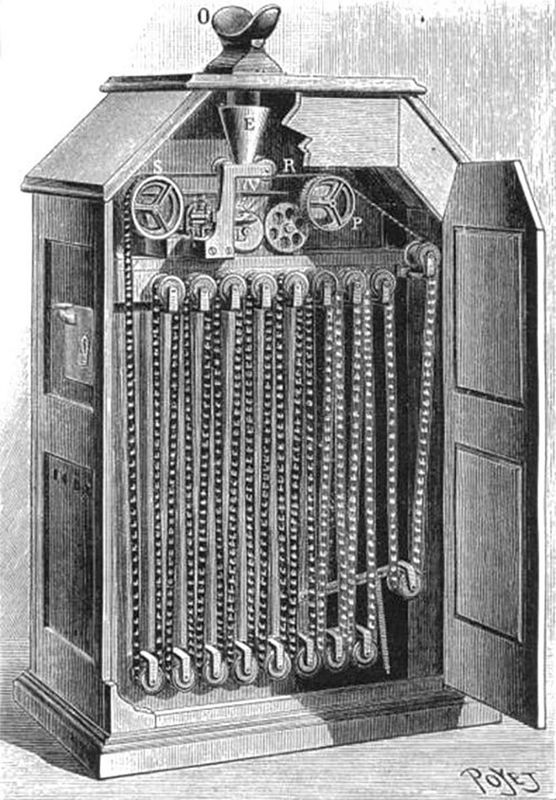
Edison patented the Kinetoscope, a motion-picture device in which the images were viewed through a peephole and the Kinetograph, the first motion picture camera.
The Kinetograph recorded moving images on celluloid film with sprocket holes. The Kinetoscope allowed for individual viewing of the pictures.
The inventions marked a significant step in cinema and laid the foundation for future filmmaking technology.
1893
The Kinetoscope was expected to debut at the Chicago World’s Fair but was not ready on time. Instead on May 9, 1893, the first public demonstration of the Kinetoscope took place at the Brooklyn Institute of Arts and Sciences.
On April 14, 1894, the first commercial Kinetoscope parlor opened in New York City making it widely accessible to the public. Parlors then started to open across the United States and the world.
The Kinetoscope is displayed publicly at the World’s Fair in Chicago.
1896
Edison introduces the Vitascope, a renamed version of a device developed and patented a year earlier by Thomas Armat and C. Francis Jenkins, for projecting films onto a screen.
The Vitascope was manufactured and marketed by Edison.
Its success popularized projection in vaudeville theaters across the United States.
1904
Edison Studios releases “The Ex-Convict,” a film addressing social problems. A jobless ex-convict is forced by circumstance back into a life of crime. That is followed a year later by “The Kleptomaniac,” another film that highlighted the justice system.
1908
The Motion Picture Patents Company (aka the “Film Trust” and the “Edison Trust”) is formed by Edison and other major film companies to monopolize the American film industry through control of patents and licensing agreements. It effectively ended foreign film domination, standardized distribution and limited creativity and feature film production.
Hollywood era begins
Due to its favorable weather for outdoor shooting and to escape the MPPC’s restrictive influence, many independent filmmakers migrated to Hollywood, California, which became the new film capital. Edison’s main film studios were located in West Orange, New Jersey and his influence was seen as stronger on the East Coast.
The MPPC’s restrictive practices and opposition from independent filmmakers led to a 1915 antitrust suit. The Supreme Court’s decision in Motion Picture Patents Co. vs. Universal Film Manufacturing Co. in 1917 made the trust’s appeal futile, and it was formally dissolved in 1918.
End of the Edison film era
After the ruling, Edison’s company struggled with declining sales, failed to keep pace with innovation and faced the rise of Hollywood and independent filmmakers, leading to the end of its motion picture equipment manufacturing.
Hollywood became the hub for film production and over time, the area grew into a global entertainment capital, with films produced there becoming a major cultural and economic force worldwide.
So, there you have it. In addition to all of his inventive success in the film industry, Edison also indirectly contributed to the rise of Hollywood.
Sources: The News-Press archives; Wikipedia and The Library of Congress, “History of Edison Motion Pictures.”
This article originally appeared on Fort Myers News-Press: From the Archives: How Thomas Edison indirectly created Hollywood
Reporting by B.D. Green, Fort Myers News-Press / Fort Myers News-Press
USA TODAY Network via Reuters Connect