If you struggle with growing vegetables in the Florida heat, don’t sleep on okra. It’s a beginner-friendly, tough-as-nails crop that just keeps going no matter how hot it gets. You may think to yourself, “Even if I had a pile of okra pods, what would I do with them?”
Maybe you don’t enjoy the slimy texture that some okra dishes have. Perhaps you avoid fried okra for health reasons. I understand that. That’s why my favorite way to cook okra is by roasting the pods. I slice each pod in half lengthwise down the center, and then toss them in olive oil, salt, and pepper. Then they go onto a foil-lined baking sheet and into the oven at 400 degrees for about 20 to 30 minutes. You end up with an easy, delicious side dish with no trace of slime. Roasted okra has been in heavy rotation in my meal planning this summer, and it comes right from my raised beds.

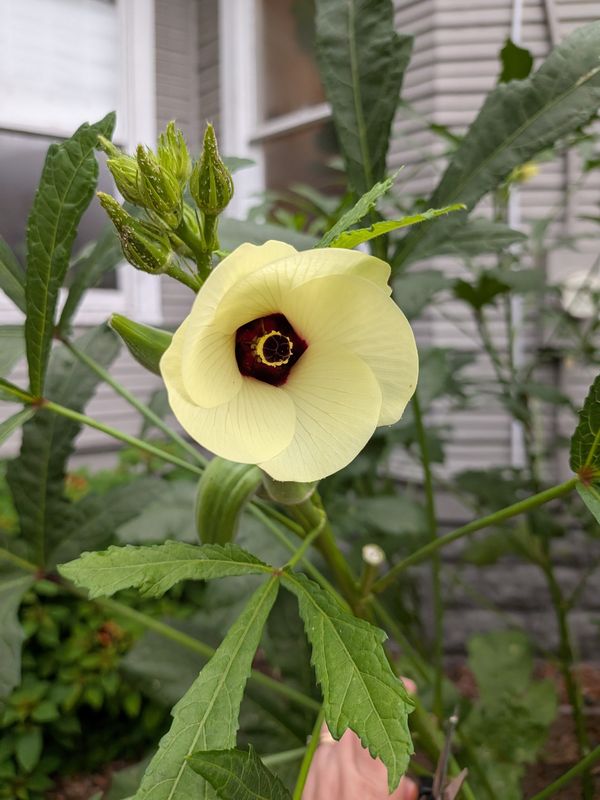
Okra can be grown just about anywhere that receives at least 6 hours of sun per day. It is a tall, slender crop, which makes it easy to fit just about anywhere. I have a dozen okra plants in my 4’ by 8’ raised bed. The only problem is I am going to need a step ladder to keep harvesting, as they grow up to six feet tall, and my raised bed is already a foot off the ground. Okra is in the Malvaceae, or mallow family, which also includes cotton, roselle, and hibiscus. I know a lady who grows okra in her front yard in an HOA because its butter-yellow blossoms look like ornamental hibiscus to those who aren’t in the know.
The seeds can be planted in North Florida anytime from mid-March to July. You will want to soak them in water for six hours before planting for the best results. Space your seeds about 10”-12” apart and keep the soil moist as they germinate and start growing. Once the plants are a good size, they become drought-resistant, thanks to the aforementioned slimy stuff, called mucilage, that helps them with water retention.
‘Clemson Spineless’ is the most popular seed variety, but ‘Emerald’ and ‘Cajun Delight’ will grow well too. ‘Burgundy’ has striking red stems and pods. You will start harvesting just 60-90 days after planting. Once you start harvesting, you will need to keep harvesting every other day — and sometimes every day if we get rain. This is because the pods grow very quickly and should be picked when they are about 3” long.
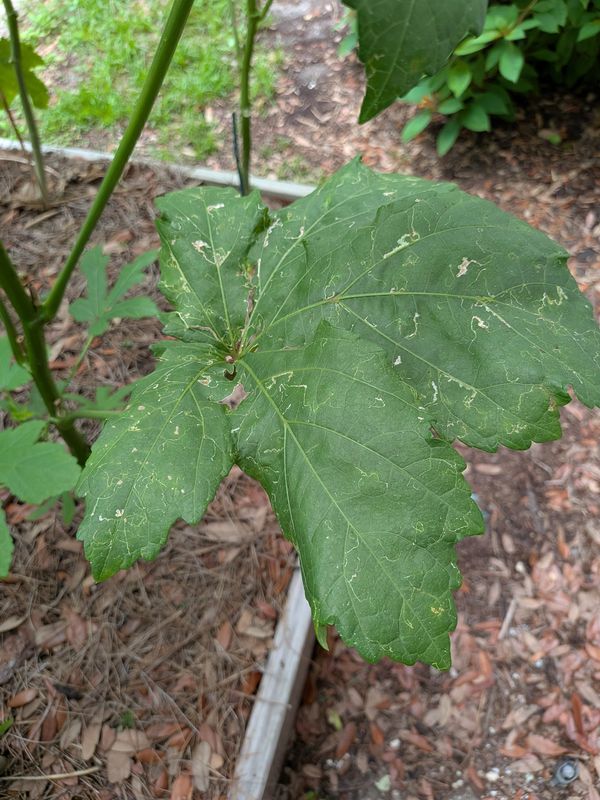
Okra will usually attract aphids to the new pods, but they can be removed with a blast from the water hose. Leaf miners are common pests, but they don’t really do much damage. Their squiggly feeding lines just make the foliage a little less attractive. The main pest of okra is the root-knot nematode, which is a microscopic worm that lives in our sandy soils and feeds on the roots. They can severely stunt the growth of your okra plants, as well as almost any other vegetable you try to grow. The best way to deal with them is through prevention. They don’t do well in rich soil, so add as much compost and organic matter to your beds as possible before planting.
Okra is a staple of Southern gardens and dinner tables. It was brought to the United States from West Africa by enslaved people. African women hid the seeds in their braided hair as they were brought here under the worst imaginable circumstances. Much of our rich culture and delicious cuisine in the American South is due to their contributions. May we always, and especially this weekend, grow and enjoy okra with a heart of gratitude for them.
Tonya Ashworth is an extension agent and environmental horticulture and Master Gardener coordinator with UF/IFAS in Duval County.
This article originally appeared on Florida Times-Union: Don’t sleep on okra: A Florida-friendly summer garden staple
Reporting by Tonya Ashworth, For the Jacksonville Florida Times-Union USA TODAY NETWORK / Florida Times-Union
USA TODAY Network via Reuters Connect
By Tonya Ashworth, For the Jacksonville Florida Times-Union USA TODAY NETWORK | USA TODAY Network