PORT ST. LUCIE – Two years ago, Lulu Gribbin and friends were swimming at Seacrest Beach on Florida’s Panhandle, searching for sand dollars when a friend screamed the dreaded word.
“Shark!”

A bull shark had attacked the group. When the 15-year-old Gribbin looked down, she could see flesh on her arm. The shark had bitten her twice. Beachgoers helped get her out of the water and tourniquets were applied.
Gribbin was life-flighted to Ascension Sacred Heart Hospital in Pensacola where her left hand and right leg, just above the knee, were amputated. She almost lost her life – she had lost two-thirds of her blood.
“I made it,” were the first words she said to her parents, Joe and Ann Blair, when she awoke at the hospital. She later said, “One leg and one arm don’t define who I am.”
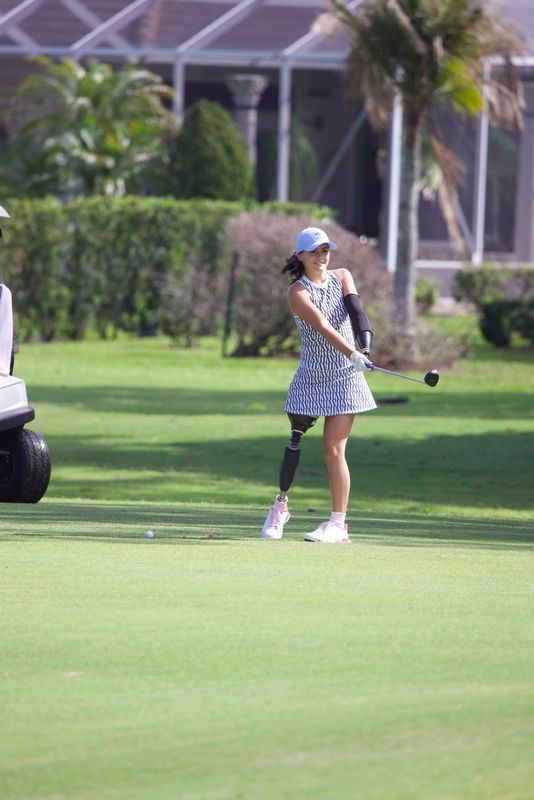
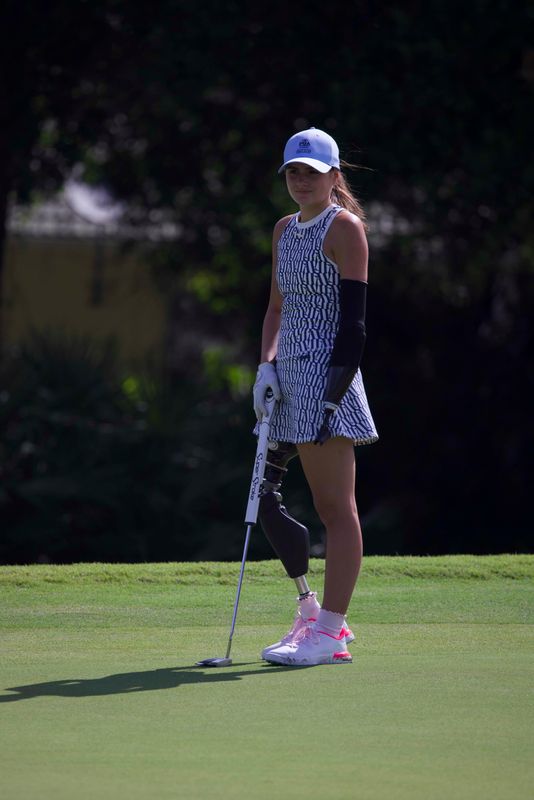
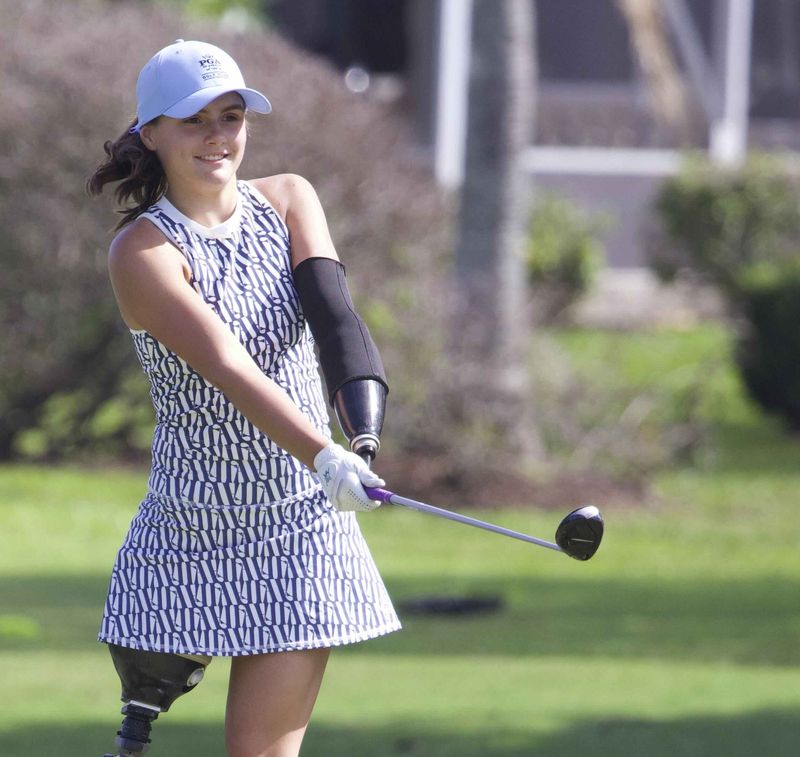
Gribbin, thanks to a friend she met while recuperating, got into golf after her recovery and this week is playing in the PING USDGA Championship, formerly known as the U.S. Golf Disabled Open, at PGA Golf Club in Port St. Lucie.
Three months after the shark attack, Gribbin was swinging a golf club
Gribbin was an all-around athlete growing up in Birmingham, Alabama, water skiing among her favorites. Her family were members at the Country Club at Birmingham, where Lulu occasionally played golf.
Chris Biggins, a PGA Professional at the club, knew Lulu from when she started attending summer golf camps a half-dozen years earlier. Like everyone else in Birmingham, Biggins followed the harrowing news after the shark attack.
“We were just hoping she was going to survive,” Biggins said of Gribbin, who spent 77 days in the hospital. Biggins, who was born with cerebral palsy and played competitive adaptive golf, knew he might have a role in Gribbin’s recovery.
While still in the hospital, Gribbin and her parents reached out to Eric Eshleman, PGA of America Secretary and Director of Golf at the Country Club at Birmingham, explaining her desire to get serious about golf.
“Lulu is a twin, so she’s been competitive since she’s been in the womb,” her father Joe said. “Having a sport like golf has really allowed her to continue her competitive drive.”
Lulu Gribbin swinging golf club three months after attack
Three months after the attack, Gribbin was swinging a golf club. She soon had her first lesson with Biggins, who couldn’t believe she already was walking around in prosthetics.
“During the first lesson, I told her the best players I know that have that disability hit the ball a long way,” Biggins said. “She wanted to be aggressive. Once she started hitting the ball, she said she wanted to be as good at golf as possible. As a coach, that’s what you want to hear.”
But to hit the ball far enough to be competitive, Biggins knew Gribbin needed a two-handed swing. The key was finding an attachment that would allow her left arm to be affixed to the club.
Biggins designed an attachment, which mimics the wrist joint, and took it to Mark McColl, a retired engineer in Birmingham. McColl took Biggins’ design and programmed it into a 3D printer.
After many attempts, Gribbin had an attachment that fits the club. It has “LULU” engraved on it in purple, her favorite color, for her now-favorite game.
“I really like golf because it lets me just be myself and stay competitive,” she said. “When I’m on the golf course, I’m just a normal golfer. It might look a little different, but it really helps me to just take my mind off how different I am.”
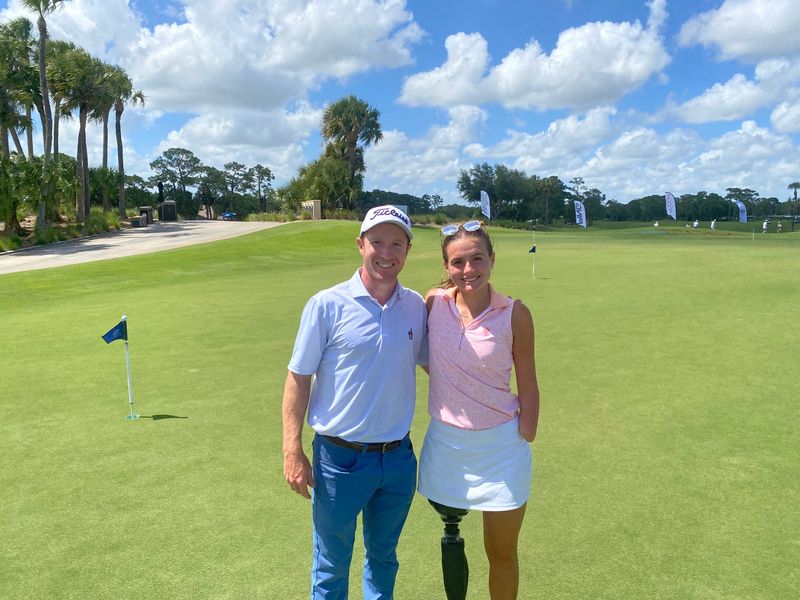
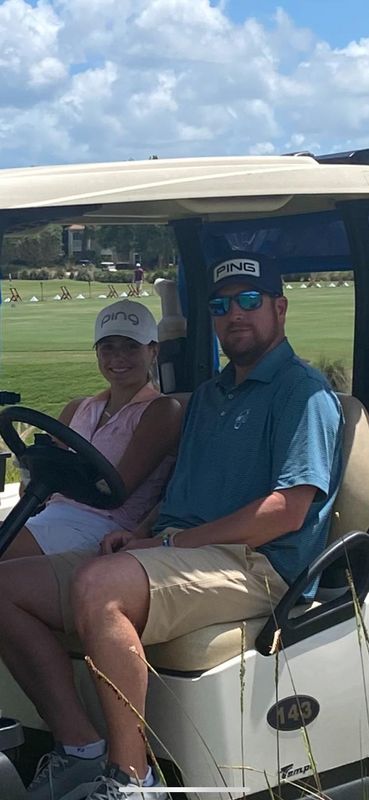
After months of practice, Biggins knew the next step for Gribbin would be to play in her first adaptive tournament. That tournament was this week’s PING USDGA Championship at PGA Golf Club in Port St. Lucie. It’s no coincidence that Biggins is among the 89 players in the field; they played a practice round together on the Ryder Course.
“This week was about two things for Lulu,” Biggins said. “Joining the disabled community, which is a big community, and let’s see where her game stacked up.”
Now 17, Gribbin shot rounds of 126 and 123 this week – not that it matters a bit – as she continues her remarkable recovery from the shark attack. She finished with two bogeys on her last four holes on the second day.
“It was great being out here and great being with the other adaptive golfers,” said Gribbin, who putts with her right hand. “I had the best time. And just can’t wait to get better.”
Lulu’s Law passed in Alabama with her help
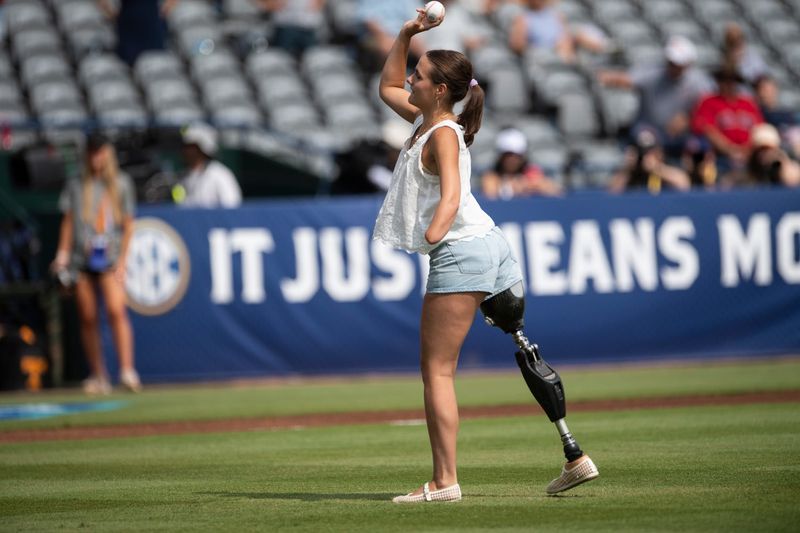
Gribbin’s life is not just about golf. She’s a junior at Mountain Brook High School and continues to enjoy water-skiing, even on one leg and with one hand.
More importantly, when she learned a shark attack had happened near hers a short time earlier, she helped pass Lulu’s Law in Alabama. Now, alerts are sent to mobile devices and first responders when a confirmed unprovoked shark attack occurs near the shoreline. A similar federal law has passed the U.S. Senate and is working though the U.S. House of Representatives, perhaps as soon as next month.
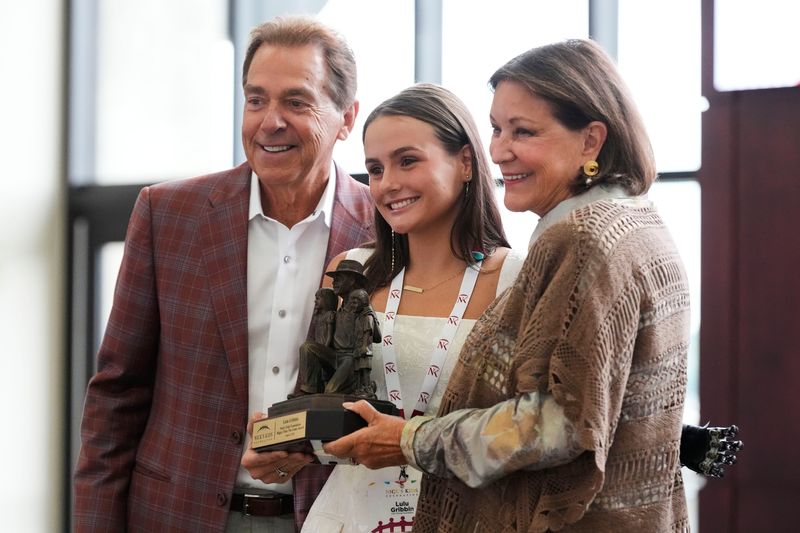
Gribbin and her family also started a non-profit, Lulu Strong Foundation, which recently awarded its first $100,000 grant to AXOLO Health Group to support research into virtual reality therapy designed to treat phantom limb pain. Lulu also does many motivational speeches.
“Her resiliency is astounding,” her father said. “Starting the foundation and everything she’s done … the first grant was a really full-circle moment for us and for her to really give back and see positive change come out of something that’s been so tragic.”
This article originally appeared on Palm Beach Post: A shark took her arm and leg but 15-year-old is now competing in golf
Reporting by Craig Dolch, Special to The Post / Palm Beach Post
USA TODAY Network via Reuters Connect