Two local ballot measures that Shasta County voters rejected in 2024 could be making a return in the November 2026 general election.
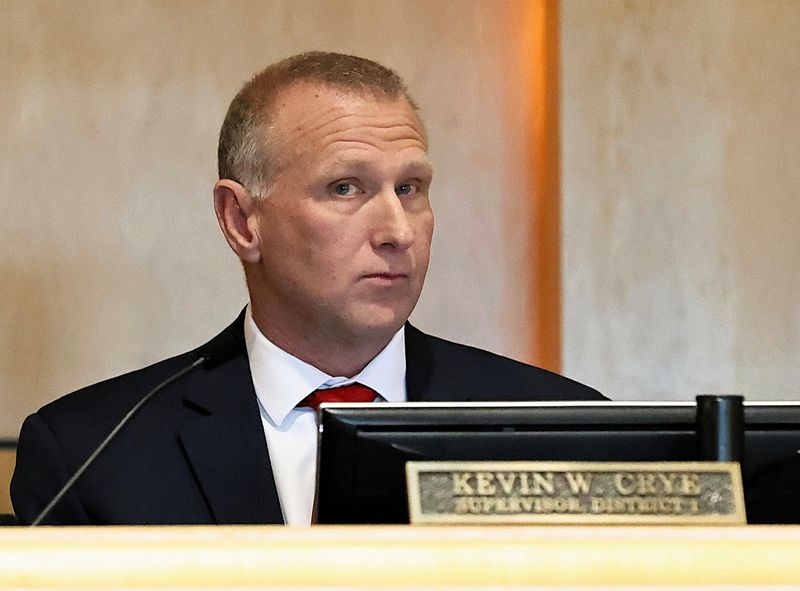
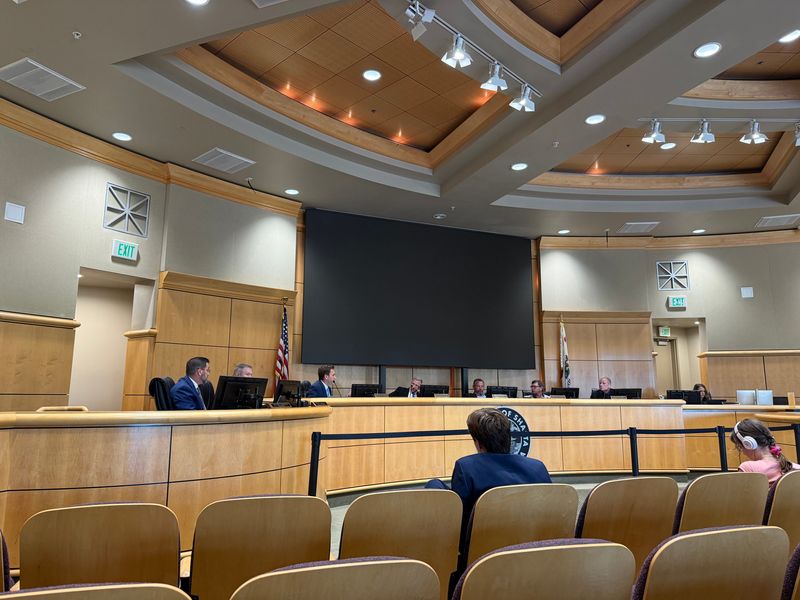
At a June 16 meeting, the Shasta County Board of Supervisors directed staff to bring back two proposed measures for discussion at a future meeting. Spearheaded by Supervisor Kevin Crye, the pair will bear similarities to the two measures previously rejected by voters in the 2024 general election: the eminent domain Measure P, and Measure Q, which proposed alterations to the procedure that takes place to fill a position when an elected official leaves office before their term is up.

If approved, the two new items would likely appear for a public vote on the ballot in the 2026 general election.
What is the new eminent domain ordinance?
Regarding the new eminent domain proposal, Crye said he’d like it to be “very similar to the one that was already written,” referencing Measure P.
Measure P proposed restrictions to the county’s ability to seize private property. It would have made it so that the county could only seize private property for the public’s good and not for private parties.
A point of contention at the meeting, County Counsel Joseph Larmour noted that such actions are already protected against by Proposition 99 of the California Constitution, which prohibits the government from forcibly seizing private property to transfer it to another private party.
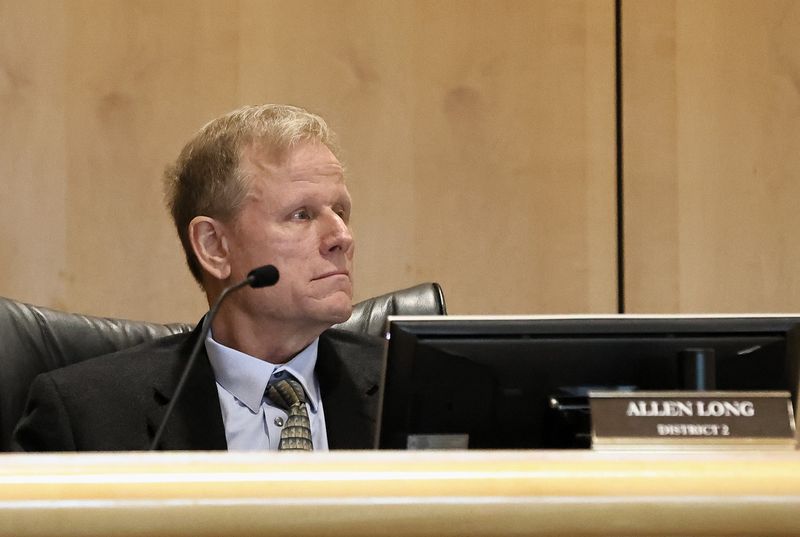
The board voted 3-2 to bring the new ordinance back for discussion, with Crye joined by Supervisors Corkey Harmon and Chris Kelstrom in the majority, and Supervisors Matt Plummer and Allen Long dissenting.
How is the new proposal similar to Measure Q?
Regarding the second proposed ordinance, which would alter the procedure that takes place in the event that an elected official unexpectedly leaves office, Crye and Plummer collaborated during the meeting to shape the ordinance into something they mutually agree upon.
The ordinance, as they decided, would require that, if an elected official leaves office before their term is over, the position would go up for a vote on the ballot of the next regularly scheduled election within 12 months of the position being vacated. If there is no election scheduled within those 12 months, the board could appoint someone to the position with a 4/5 vote.
The board would not have the ability to call a special election to fill the position.
The ordinance would only apply to the offices of elected officials other than the supervisors, including the assessor-recorder, district attorney, county clerk/registrar of voters, sheriff-coroner, auditor-controller, and treasurer-tax collector/public administrator.
Though positions can be temporarily filled, currently, the only way to officially fill a vacated position before it comes up for reelection is if the board appoints an individual with a majority 3-2 vote.
The board voted 4-1 to bring the new ordinance back for discussion, with Long dissenting.
The original Measure Q dealt with the same scenario planned to be addressed by this new ordinance, but did it in a different way.
Measure Q would have allowed the board to call an immediate special election to fill a position, or appoint someone to the position with a 3-2 vote. The measure stipulated that, if the board chose to appoint someone, that individual could only serve until the next general election or the originally scheduled end of term for that position, whichever came first.
Why are Measures P and Q returning in these new forms?
Crye acknowledged that Proposition 99 already protects against the actions addressed by Measure P, but said he decided to bring the measure back in a new form because of Proposition 50. Voters last November approved an amendment to the California Constitution that redrew congressional district lines in the state to increase the amount of U.S. House of Representative seats held by members of the Democratic Party. The proposition easily passed, with 64.42% in support and 35.58% opposed.
“We’re seeing what happened with Prop 50, I mean the state can just make stuff up, do whatever they want, so if Prop 99 is ever repealed I want us to have what Orange County, San Bernardino (County), and others do where we have local control and we can stop that as well,” said Crye.
Long, however, questioned the necessity of such an ordinance, emphasizing that it would be “duplicative” of Proposition 99 and highlighting that the scenario the ordinance would attempt to address has only come into play three times in the history of the county.
Plummer expressed disapproval as well, and said, because the proposed ordinance would only restrict the ability of the county to transfer private land to another private party, and would not protect against actions from the state should they decide to repeal Proposition 99 at some point in the future, he was not too concerned about taking action as a county at this time.
Referring to both of the proposed ordinances, Long made the critique that Measures P and Q were recently rejected by popular vote in November 2024, and voters could again reject the new measures.
In the 2024 election, 50.22% of voters voted no on Measure P and 58.52% of voters voted no on Measure Q.
Crye said, regarding Measure P’s failure, that the vote was close enough that it was worth bringing back. He attributed the measure’s initial failure to a lack of sufficient “public engagement.”
Plummer said Measure Q failed because voters believed they were deciding whether to give the board the ability to appoint individuals to an elected position, when in fact the board already has that power and that was not the intent of Measure Q.
Long critiqued the ordinances again, and said it would be too expensive to be worth placing new measures on the ballot.
“I think we have to be very mindful of the cost of this and Q going forward, in the sense that the estimate here was $20,000 to $50,000 per item, so it could be an exposure anywhere from $40,000 to $100,000 for these two items,” said Long.
Plummer voiced his support for the new ordinance that would address the process of filling vacant elected offices, and said “ideally, when we fill an elected official position, that goes to the vote of the people.”
Drew Askeland covers Redding and Shasta County government issues, as well as anything else that needs reporting for the Record Searchlight and USA Today Network. Reach him at drew.askeland@redding.com or (530) 225-8247. Please subscribe today to support our newsroom’s commitment to public service journalism.
This article originally appeared on Redding Record Searchlight: Shasta County eyes return of 2 rejected ballot measures
Reporting by Drew Askeland, Redding Record Searchlight / Redding Record Searchlight
USA TODAY Network via Reuters Connect
By Drew Askeland, Redding Record Searchlight | USA TODAY Network