The wait continues.
Potential Tropical Cyclone One remains … a potential tropical cyclone, but are you prepared for this hurricane season?

Predictions June 16 the low-pressure system would become a tropical storm early this morning, June 17, have been revised.
➤Track Potential Tropical Cyclone One
Shop Amazon for hurricane prep
The National Hurricane Center is still predicting the system will become Tropical Storm Arthur but not until the afternoon. If or when it strengthens into a tropical storm, it will become the first named storm of the 2026 Atlantic hurricane season
That doesn’t mean the system won’t have an impact. Up to 5 to 10 inches of rain is expected and up to 20 inches in isolated areas across portions of the southeastern United States.
➤ Weather alerts via text: Sign up to get updates about current storms and weather events by location
In Florida, multiple rounds of rain could bring a threat for a “significant flood event” June 18 to the western Panhandle, according to the National Weather Service Mobile. The area is under a flood watch June 17.
“Fringe effects” are expected in the Central Panhandle, according to the National Weather Service Tallahassee in a post of X, warning residents heavy rain and severe weather are possible.
Elsewhere in the tropics, the National Hurricane Center is watching four tropical waves. Wind shear and Saharan dust are helping prevent tropical development in the Atlantic basin.
“The first waves that come off Africa are usually too far south, and there’s often too much dry air and wind shear for them to develop,” according to Alex DaSilva, AccuWeather lead hurricane expert, via email.
Countdown to end of 2026 Atlantic hurricane season
Heavy rain expected in parts of Florida from Potential Tropical Cyclone One
“A steady plume of tropical moisture will bring multiple days of rainfall and flooding concerns to the Panhandle and Big Bend,” the Florida Division of Emergency Management said June 16 in its five-day outlook.
A flood watch was in effect early June 17 for nine counties in the western Panhandle, where multiple rounds of heavy rain are expected to fall.
Four to seven inches of rain are expected through June 19, with locally higher amounts of 10+ inches possible, the National Weather Service Mobile warned.
“Widespread flash flooding is likely and significant flash flooding is possible June 18.”
➤ WeatherTiger: Florida could see heavy rain, severe weather
In the Central Panhandle, the National Weather Service Tallahassee said Potential Tropical Cyclone One poses “no direct concerns for us, but fringe effects are on the table this week, including heavy rain and severe weather.”
In addition to the heavy rain, the National Hurricane Center included Florida’s western Panhandle in the area where tornadoes may be possible.
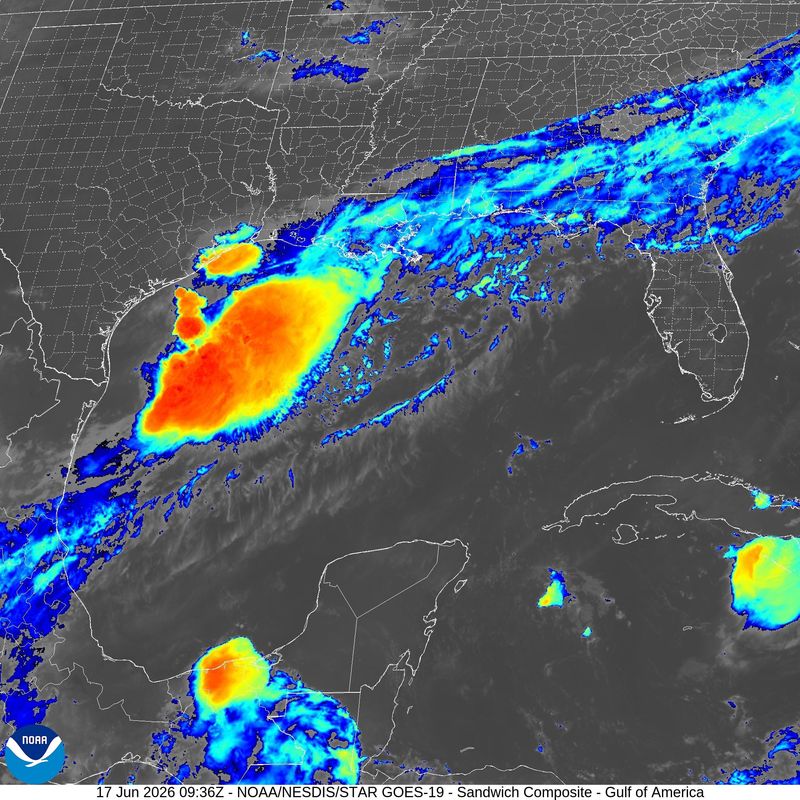
Where is Potential Tropical Cyclone One?
As of the 5 a.m. June 17 advisory, highlights on Potential Tropical Cyclone One include:
Some strengthening is forecast, and the disturbance could become a tropical storm today, the National Hurricane Center said.
Weakening is anticipated once the low moves inland, and it could dissipate by tonight or early June 18.
A tropical storm warning is in effect for Sabine Pass, Texas, to Morgan City, Louisiana, and a tropical storm watch is in effect for Sargent, Texas to Sabine Pass.
➤ Hurricane Center testing new cone: What’s changing this season?
National Hurricane Center tracking 4 tropical waves
There are tropical waves being watched by forecasters:
What is a potential tropical cyclone?
A potential tropical cyclone is used to describe a “disturbance that isn’t a tropical cyclone but which which poses the threat of bringing tropical storm or hurricane conditions to land areas within 48 hours,” according to the National Weather Service.
National Hurricane Center meteorologists names a potential tropical cyclone “when they want to issue watches and warnings for a system that technically hasn’t formed yet but is expected to impact land,” said Dr. Ryan Truchelut, chief meteorologist at WeatherTiger, who works with the USA TODAY Network.
“A tropical cyclone is partly defined as having a closed center of circulation, which Potential Tropical Cyclone” doesn’t yet have.
What is a tropical wave?
“Tropical waves are clusters of showers and thunderstorms that act as the seedlings for many tropical storms throughout the Atlantic season,” DaSilva said.
➤ Explanation of hurricane terms we hope not to hear in Florida this year
“There are about 60 tropical waves that move across the Atlantic each year, and roughly 10 percent to 15 percent of them develop into a tropical system. That’s about one in seven.
“Tropical waves are important because they contribute to about 80 percent of all major hurricanes.”
When is hurricane season?
The Atlantic hurricane season runs from June 1 through Nov. 30.
Ninety-seven percent of tropical cyclone activity occurs during this time period, NOAA said.
➤ 2026 Atlantic hurricane season begins today. What can Florida expect?
The Atlantic basin includes the northern Atlantic Ocean, Caribbean Sea and Gulf of America, as the Gulf of Mexico is now known in the U.S. per an order from President Trump.
What are predictions for 2026 hurricane season?
Here are some of the predictions released for this year’s hurricane season.
➤ El Niño odds rise again, which could mean fewer hurricanes for Florida
A major hurricane is a storm that is a Category 3 or stronger, with maximum sustained winds of at least 111 mph.
How many tropical storms, hurricanes are in a typical season?
The 30-year average, from 1991 to 2020, is for 14 named storms, seven hurricanes and three major hurricanes.
Could Florida be hit by a hurricane in 2026? See which counties have highest chance
What are names for 2026 Atlantic hurricane season?
Names for the 2026 Atlantic hurricane season, and how to pronounce them, are:
Florida weather radar for June 17, 2026
Weather watches and warnings issued in Florida
When is the peak of Atlantic hurricane season?
The peak of the Atlantic hurricane season is Sept. 10, with the most activity happening between mid-August and mid-October, according to the Hurricane Center.
Interactive map: See how many hurricanes, tropical storms have passed near your home
Stay informed. Get weather alerts via text
What’s next?
We will update our tropical weather coverage daily to bring you the most current information you need to protect your home and family.
Cheryl McCloud is a journalist for the USA TODAY Network-Florida’s service journalism Connect team. You can get all of Florida’s best content directly in your inbox each weekday day by signing up for the free newsletter, Florida TODAY, at https://heraldtribune.com/newsletters.
This article originally appeared on Tallahassee Democrat: Parts of Florida brace for heavy rain from Potential Tropical Cyclone One
Reporting by Cheryl McCloud, USA TODAY NETWORK – Florida / Tallahassee Democrat
USA TODAY Network via Reuters Connect
By Cheryl McCloud, USA TODAY NETWORK – Florida | USA TODAY Network