When Clayton Herman was released on a federal magistrate judge’s order in June after eight months of immigration detention in June, amnesia hit.
To his relief, memories of guards’ faces, mold in bathrooms and sleepless nights started to fade almost immediately, replaced by the feeling of returning to his home outside of Ojai and seeing his cats, Poquito and Butters.

Now, Herman is in detention again, wearing a blue jumpsuit and navigating lockdowns and what he described as broken plumbing at the Adelanto ICE Processing Center in San Bernardino County.
The 54-year-old Canadian national was arrested on July 21. He said the return to custody came because he missed a deadline in filing an appeal to his removal order. Federal officials said the arrest came because he didn’t follow a judge’s order to voluntarily leave the country.
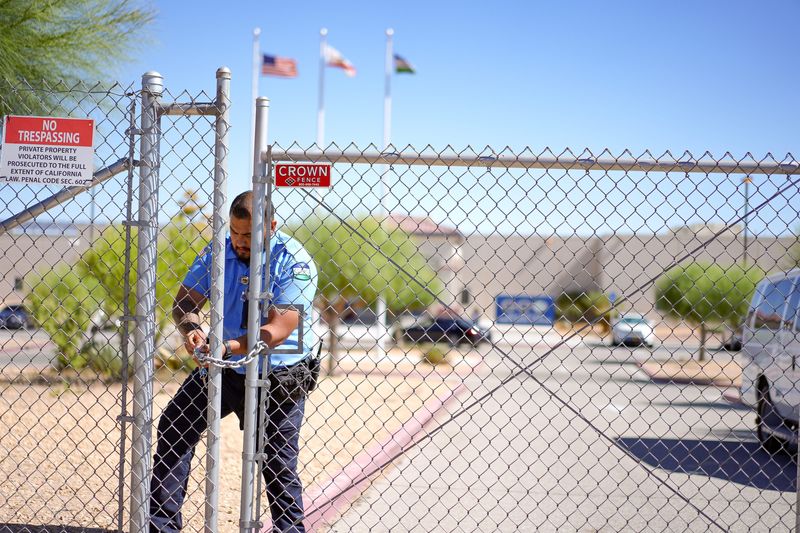
“Horrid. Awful,” Herman said of his return to a detention center that has made headlines repeatedly during President Donald Trump’s immigration crackdown, most recently when a federal judge ordered major changes at the site in July.
Herman said his alleged violation means his order of removal has become final, setting the stage for being deported back to Canada. He’s hoping to argue the missed deadline was caused by mail delays and earn at the least a postponement of the removal order and a chance to officially file his appeal.
“I feel like it’s a coin-toss odds right now,” he said of his fate in a phone interview from Adelanto on July 28, contending three days later after a conversation with a lawyer his chances may be improving.
A U.S. Department of Homeland Security spokesperson said in an emailed statement the arrest came because Herman failed to follow an immigration judge’s order to voluntarily deport that came on June 10, two days before a different judge ordered the Ojai man be released from Adelanto.
Herman said he wasn’t made aware of an order involving voluntary deportation. He said he thought the judge issued a removal order, which he then tried to appeal.
“I received nothing in writing about it,” Herman said of voluntary deportation.
‘It was beautiful’
Herman, who immigrated to the U.S. from Canada in 2002 on a visitor’s visa, was detained on Oct. 9 during what he thought was a routine check-in at a U.S. Immigration and Customs Enforcement field office in Camarillo. He spent eight months at Adelanto, a facility he described then and now as a “hellhole.”
He filed a writ of habeas corpus in federal court, alleging the detention constituted cruel and unusual punishment. He was released on June 15 after federal Magistrate Judge Michael Kaufman ruled his rights were violated. He wasn’t given due process and was labeled a flight risk without enough evidence, Kaufman said.
The ruling didn’t end Herman’s immigration case but allowed him to return to the Ojai Valley.
“It was beautiful,” he said of the release. “I was just so enjoying forgetting so much of what happened here real fast.”
He said his appeal carried a July 10 deadline. He said he used priority mail to send out the appeal on July 3. Receipts provided by friends show the document arrived at a U.S. Postal Service site in Santa Barbara on July 6 and then in Dulles, Virginia, on July 15.
“Somewhere between Santa Barbara and Dulles there’s a nine-day blank,” he said.
His arrest came at the ICE field office in Camarillo. He said he saw three officers positioned to take him into custody.
“I knew that’s what they were doing, and there was no talking my way out of it,” he said.
He’s being held in a four-man cell in Adelanto’s west unit. U.S. District Judge Sunshine Sykes ruled in July that detainees at Adelanto are likely experiencing conditions that violate their constitutional rights. She mandated improvements to food, water and medical care, also ordering daily outdoor recreation.
Herman said mattresses are frayed and hard, toilets leak and sinks in many cells are broken. He said there’s no outdoor recreation.
‘Without a chance to return’
Federal officials defended conditions at the facility, saying it provides clean water, clothing, bedding, access to phones and meals evaluated by dietitians.
“ICE has higher detention standards than most U.S. prisons that hold actual U.S. citizens,” a Homeland Security spokesperson said in an email, later urging unauthorized immigrants to voluntarily deport and receive a $2,600 stipend and free airfare. “If not, you will be arrested and deported without a chance to return.”
In addition to fighting for a stay to his deportation order, Herman holds out hope that Kauffman’s June ruling that his rights were violated will mean he’s released again while his case continues.
He said he’s been pressured to sign papers expediting his deporation but has refused. He worries about being sent to Canada without a chance to move his belongings and the cats that make him think of his common law partner, Kathy Francis. She died nearly five years ago.
“We picked them out when they were kittens,” he said.
He was born in Winnipeg but wonders if he would be deported there or elsewhere.
“It’s like jumping off a cliff and not knowing what’s at the bottom,” he said.
Tom Kisken covers health care and other news for the Ventura County Star. Reach him at tom.kisken@vcstar.com.
SUPPORT LOCAL JOURNALISM: To see more stories like this, subscribe.
This article originally appeared on Ventura County Star: Ojai man arrested, returned to ICE detention after June release
Reporting by Tom Kisken, Ventura County Star / Ventura County Star
USA TODAY Network via Reuters Connect

By Tom Kisken, Ventura County Star | USA TODAY Network